
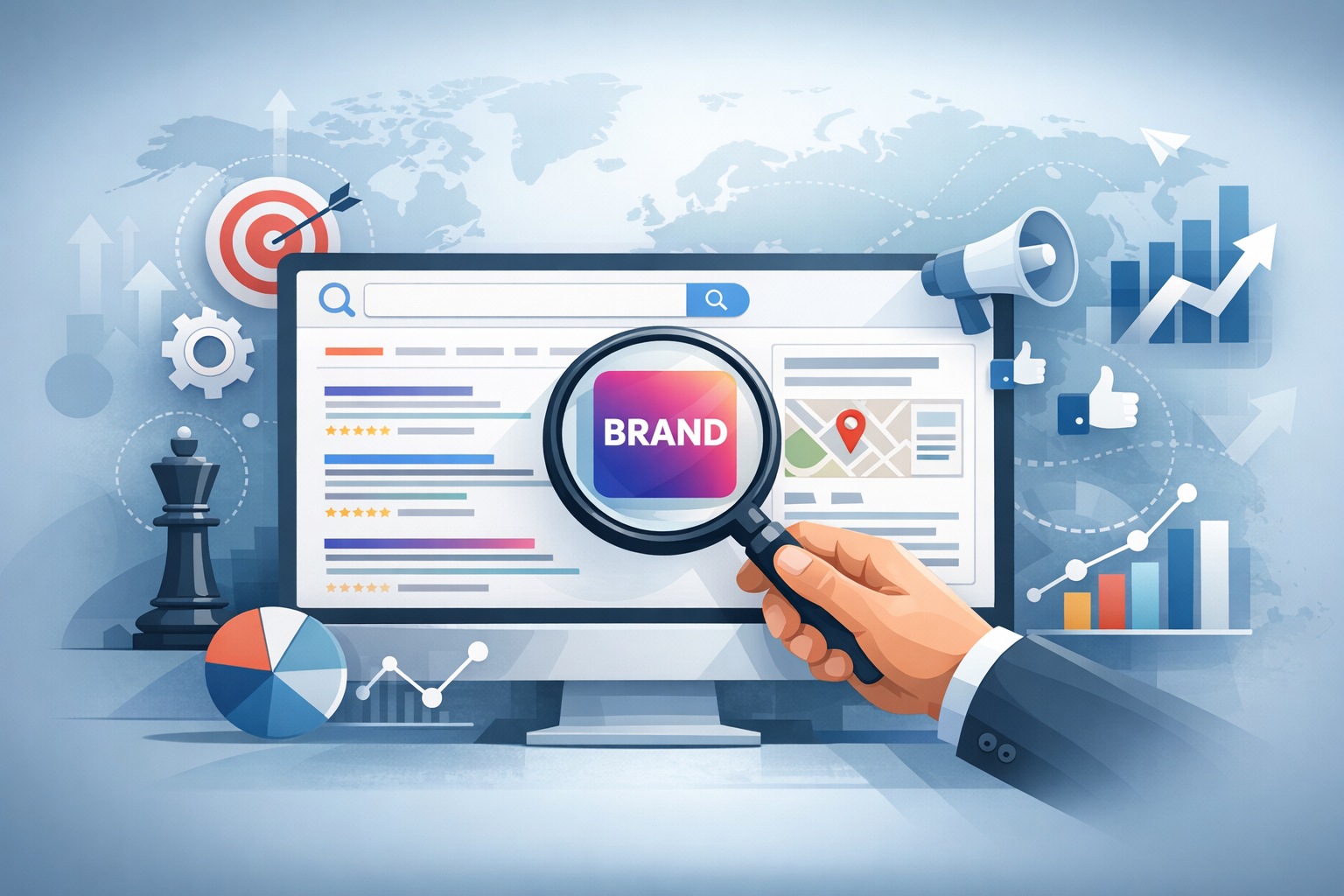
What Is Brand SERP Control?
Brand SERP control is the practice of influencing the Search Engine Results Page (SERP) for branded queries—searches that include your company name, product name, founder name, or unique branded terms. The goal is simple: when someone searches for you, the results they see should be accurate, trustworthy, and aligned with your brand.
Brand SERP control is not about “tricking” Google. It’s about earning visibility across the pages and platforms Google already trusts—your website, your profiles, reputable media mentions, and content that answers real intent.
Why it matters: branded searches are often high-intent. People searching your name might be evaluating whether to buy, invest, partner, apply for a job, or trust your leadership. The SERP becomes your first impression—often before anyone visits your website.
Why Brand SERP Control Matters More Than Ever
Search results are no longer “10 blue links.” A brand SERP can include review stars, knowledge panels, social profiles, “People Also Ask,” news results, videos, images, sitelinks, and AI-generated summaries depending on the market. That makes brand SERP control both more complex and more valuable.
It protects revenue and conversions
If prospects see negative press, outdated pages, competitor ads, or misleading review snippets, your conversion rate can suffer—even if your product is excellent. A well-managed SERP reduces friction and increases confidence.
It strengthens credibility and trust
When your brand results show consistent messaging across authoritative sources (your site, Wikipedia or Wikidata where appropriate, high-quality media, trusted directories), it sends trust signals to both users and algorithms.
It reduces brand risk during crises
During a PR issue, a product recall, or an executive controversy, the SERP becomes the public “dashboard” of the situation. Proactive SERP control helps ensure accurate information is easy to find and reduces the long-term footprint of low-quality or speculative content.
What Shows Up on a Brand SERP (Key Elements to Understand)
To control a brand SERP, you first need to understand what you’re trying to influence. Common branded SERP features include:
- Your homepage and key site pages (often with sitelinks)
- Knowledge Panel (for entities: companies, people, organizations)
- Google Business Profile (for local brands and locations)
- Review sites (G2, Trustpilot, Capterra, Yelp, Glassdoor, etc.)
- Social profiles (LinkedIn, YouTube, X, Instagram, Facebook, TikTok)
- News and PR results (Top Stories, press releases, coverage)
- Videos and images (YouTube carousel, image pack)
- People Also Ask questions about your brand
- Competitor or affiliate pages that mention you
Not every SERP will show all of these, but understanding the “real estate” helps you plan what to build, improve, or defend.
The Core Strategies for Brand SERP Control
Brand SERP control works best as a system: technical clarity, strong owned assets, reputable third-party coverage, and consistent branding across the web.
1) Strengthen your owned assets (website + content hub)
Your website is the foundation. If Google can’t clearly understand your brand, products, and authority, you’ll have a harder time pushing the right pages to the top.
- Optimize your homepage for the brand name and core value proposition (clear title tag, meta description, on-page H1, and concise messaging).
- Build “supporting” brand pages: About, Contact, Press/Media kit, Careers, Leadership/Team, Case Studies, Security/Compliance, and a robust FAQ.
- Create branded search intent content: “What is [Brand]?”, “[Brand] pricing”, “[Brand] reviews”, “[Brand] vs [Competitor]”, and “How to use [Product].” If you don’t publish it, someone else will.
- Use internal linking to signal importance (e.g., link to your About and Press pages from the footer and header).
2) Build and maintain high-authority profiles
For many brands, the fastest wins come from improving profiles that already rank well. Claim and complete your profiles with consistent branding and up-to-date information.
- Social profiles: Use the same brand name format, logo, and description. Link back to your website.
- Industry directories: Choose reputable platforms relevant to your niche (e.g., Crunchbase for startups, Clutch for agencies, G2/Capterra for software).
- Founder/leadership profiles: Especially if the brand is closely tied to a person. LinkedIn is often a top result for name-based searches.
Consistency matters: mismatched names, old logos, and conflicting descriptions can dilute trust and create confusion in search results.
3) Earn credible third-party coverage (PR + digital authority)
You can’t fully control what others say, but you can influence what ranks by earning reputable mentions.
- Digital PR: Pitch stories that are genuinely newsworthy—funding, product launches, original research, partnerships, executive hires, or market insights.
- Thought leadership: Contribute expert commentary, bylines, or podcast appearances on trusted sites.
- Data-driven content: Publish reports that journalists and bloggers cite; citations can become high-ranking assets for your brand terms.
High-quality coverage can outrank low-quality content and provides strong credibility signals in your brand SERP.
4) Manage reviews and reputation signals
Reviews often show up prominently on brand SERPs—sometimes with star ratings. You don’t want your first page dominated by a single review platform or an outdated narrative.
- Choose your priority platforms based on your category (B2B, local, ecommerce, employer brand).
- Ask for reviews systematically (post-purchase emails, in-app prompts, customer success outreach) while following platform policies.
- Respond professionally to negative reviews—future buyers read responses as much as the complaints.
- Create a “Reviews” page on your site that aggregates testimonials and links to third-party platforms for transparency.
5) Influence SERP features with structured data and entity signals
Many brand SERP elements are driven by entity understanding. Help Google connect the dots.
- Implement structured data where relevant (Organization, LocalBusiness, Product, WebSite, Breadcrumb, Article). Make sure it matches visible content.
- Use consistent NAP (Name, Address, Phone) for local brands across directories and your site.
- Clarify your entity: consistent “About” statements, leadership pages, and authoritative references.
- Optimize Google Business Profile (if applicable): categories, services, photos, updates, and Q&A.
How to Handle Negative Results (Without Making It Worse)
One of the most common motivations for brand SERP control is negative content: bad reviews, complaint posts, low-quality affiliates, or outdated news. The right approach depends on what the result is and whether it’s accurate.
Step 1: Categorize the issue
- Inaccurate or defamatory: Explore legal options, corrections, or takedown requests (where appropriate).
- Accurate but unflattering: Focus on improving the underlying issue and publishing updated, authoritative content.
- Low-quality or irrelevant: Outrank it with stronger assets rather than amplifying it.
Step 2: Reduce visibility by expanding positive, relevant assets
In many cases, the safest strategy is to “push down” negative results by building a stronger first page: your key pages, best profiles, credible media, and genuinely helpful content that matches branded intent.
Step 3: Avoid common mistakes
- Don’t respond emotionally or create public back-and-forth that generates more indexed pages.
- Don’t publish thin “fluff” content purely to rank—it often fails and can weaken your site quality.
- Don’t rely on spammy link schemes that can create long-term SEO risk.
A Practical Brand SERP Control Plan (30/60/90 Days)
If you want a clear, manageable path, here’s a practical roadmap.
First 30 days: Audit and quick wins
- Search your brand name, product name, and key leaders in incognito mode; document the top 20 results.
- Claim/complete major profiles and fix inconsistent bios, logos, and links.
- Update homepage titles/meta and ensure sitelinks point to the pages you want.
- Set up monitoring: Google Search Console, Google Business Profile (if applicable), and brand mention alerts.
Days 31–60: Build supportive assets and content
- Create/refresh core pages (About, Press, Leadership, FAQ, Reviews).
- Publish branded-intent content (pricing explainer, comparisons, “how it works”).
- Improve internal linking and ensure technical SEO basics are solid (indexation, canonicals, speed).
Days 61–90: Expand authority and defensibility
- Run a small digital PR campaign (original data, announcements, expert commentary).
- Develop a review generation system and response process.
- Track ranking changes for branded queries and adjust based on what’s moving.
Measuring Success: What to Track
Brand SERP control is measurable. Focus on outcomes, not vanity metrics.
- SERP composition: Percentage of first-page results you own or influence (website pages, profiles, controlled messaging).
- Branded traffic: Trends in Google Search Console for brand queries.
- CTR on branded queries: Are people clicking your preferred pages?
- Review ratings and volume: Changes over time on priority platforms.
- Knowledge Panel accuracy: Correct logo, description, leadership, and website links (where applicable).
Conclusion
Brand SERP control is about ensuring your brand is represented accurately and credibly when people search for you—across your website, trusted platforms, and third-party coverage. By strengthening owned assets, improving profiles, earning reputable mentions, and managing reviews, you can shape a SERP that builds trust, protects conversions, and reduces risk over time.
