
The Power of Content Marketing and How It Transforms Your Website
Content marketing has become one of the most effective digital strategies for businesses looking to grow online. Rather than relying solely on paid advertising, content marketing focuses on creating valuable, relevant, and consistent content that attracts and retains a clearly defined audience. When done correctly, it builds trust, improves search visibility, and drives long-term growth. Thinkit Media specializes in delivering data-driven content marketing strategies that turn websites into powerful lead-generating assets.
What Is Content Marketing?
Content marketing involves creating and distributing content such as blog posts, articles, videos, social media content, infographics, and guides to educate and engage users. Instead of directly selling, content marketing answers questions, solves problems, and positions your brand as an authority in your industry. Over time, this approach nurtures trust and encourages users to choose your business when they are ready to convert.
The Measurable Impact of Content Marketing
Content marketing is not just a branding exercise—it delivers measurable results that directly impact website performance.
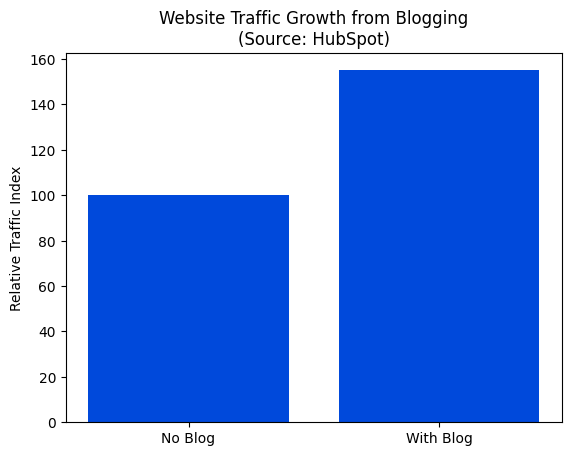
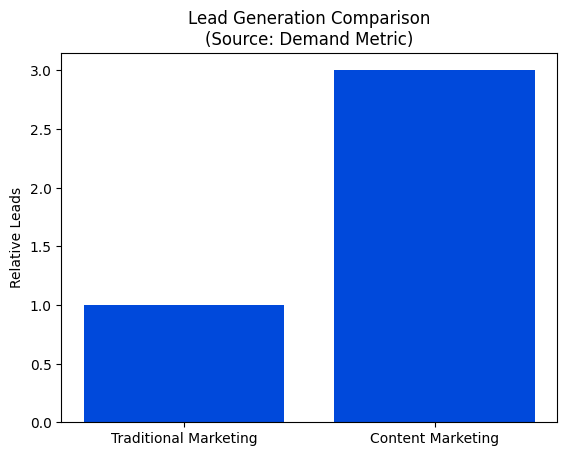
Research shows that businesses with blogs generate 55% more website visitors than businesses that do not publish content regularly. Additionally, companies that prioritize content marketing see three times more leads than those using traditional outbound marketing methods, while costing 62% less per lead. This makes content marketing one of the most cost-effective strategies available.
Content Marketing and SEO Performance
Search engines reward websites that consistently publish high-quality, relevant content. Each new piece of content creates another opportunity to rank for keywords, answer search intent, and attract organic traffic.
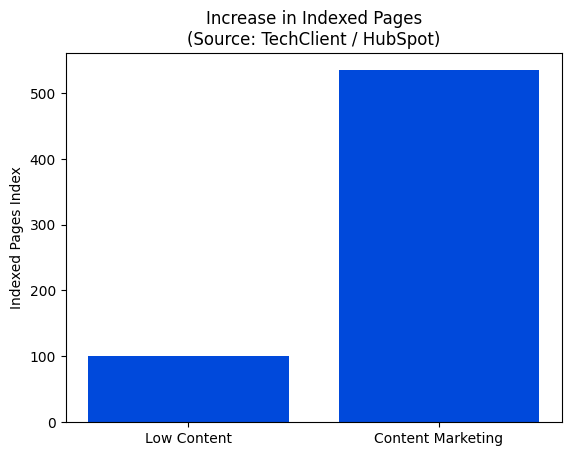
Websites with strong content strategies have been shown to earn 434% more indexed pages, increasing their chances of appearing in search results. Long-form, well-optimized content also earns more backlinks, which remain one of the strongest ranking factors in SEO. On average, content marketing generates 97% more backlinks than websites without a content-driven strategy.
Engagement and Time on Site
High-quality content does more than bring visitors to your website—it keeps them there. Engaging blogs, videos, and guides encourage users to explore multiple pages, reducing bounce rates and increasing time on site.
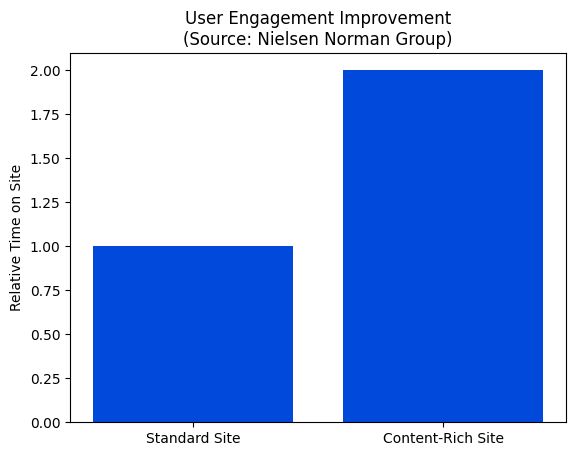
Studies indicate that users spend up to 2x more time on websites with informative and engaging content. Higher engagement signals to search engines that your website is valuable, which can further improve rankings and visibility.
Content Marketing Builds Trust and Authority
Trust is one of the most important factors in online decision-making. In fact, 70% of consumers prefer learning about a company through articles rather than advertisements. Educational content allows businesses to demonstrate expertise without aggressive selling.
Consistent content positions your brand as a thought leader, helping potential customers feel confident in choosing your services. This trust-building effect compounds over time, creating long-term brand equity.
Conversion Rates and Lead Generation
Content marketing plays a major role in guiding users through the buyer’s journey. Blog posts and resources can attract users at the awareness stage, while case studies, guides, and comparison content support conversion decisions.
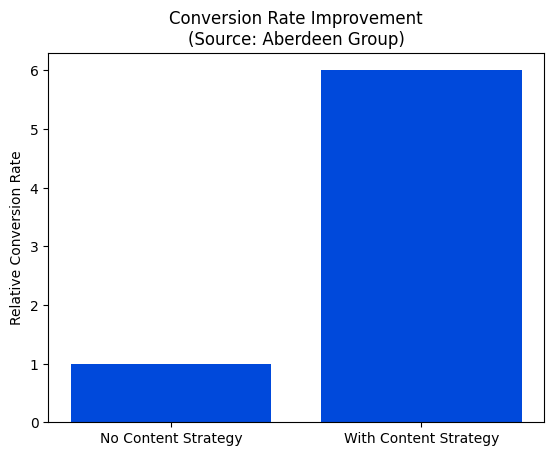
Websites that use content marketing experience six times higher conversion rates than those that do not. Calls-to-action embedded within high-value content convert better because users already trust the information being provided.
Why Consistency Matters
One of the most important elements of content marketing success is consistency. Publishing content regularly compounds results over time. Brands that publish content weekly or more frequently see significantly higher traffic growth compared to those that post sporadically.
Thinkit Media develops structured content calendars that ensure consistency while aligning content with SEO goals, audience intent, and business objectives.
How Thinkit Media Delivers Results
Thinkit Media provides full-service content marketing designed to drive real performance. Their services include content strategy development, SEO-driven blog creation, website copywriting, social media content, and performance tracking. Every piece of content is created with purpose—whether that is increasing rankings, driving traffic, or generating leads.
By combining storytelling with data-backed strategy, Thinkit Media helps businesses turn content into a long-term growth engine rather than a short-term tactic.
Content Marketing as a Long-Term Investment
Unlike paid ads that stop delivering results once the budget ends, content marketing continues to work over time. A single high-performing blog post can generate traffic, leads, and conversions for years.
Businesses that invest in content marketing see stronger brand recognition, more qualified traffic, and higher lifetime customer value. With the right strategy and execution, content marketing becomes one of the most powerful tools for sustainable digital growth.
To Summarize Things Up
Content marketing is no longer optional—it is essential for businesses that want to compete online. With proven statistical benefits across traffic, SEO, engagement, trust, and conversions, content marketing delivers unmatched long-term value. Thinkit Media provides the expertise, strategy, and execution needed to transform content into measurable business growth.
Frequently Asked Questions
Quick definition
Natural language keywords are the conversational phrases people use when searching or talking about a topic, such as "how to fix a leaky faucet" rather than a short, technical term. In content marketing they help you match real user intent and create more helpful, engaging content that answers questions directly.
How to apply them in your content marketing
- Research real queries: Look at search queries, customer service transcripts, social comments, and forum threads to collect natural phrasing your audience uses.
- Map intent: Group phrases by intent—informational, transactional, or navigational—and plan content that satisfies each purpose.
- Write conversationally: Use natural language in headings, subheadings, and body copy so your content reads like a helpful answer rather than a keyword-stuffed page.
- Optimize for featured snippets and voice search: Provide concise answers and clear steps that reflect how people ask questions out loud.
- Maintain topical depth: Cover related natural phrases in the same piece to signal comprehensive coverage to both readers and search systems.
Measure results and iterate
Track changes in organic traffic, click-through rates, and engagement metrics like time on page and bounce rate. Monitor ranking for long-tail, conversational queries and adjust based on which phrases drive conversions.
Tip: Combine natural language keywords with strong content structure—clear headings, bulleted steps, and practical examples—to increase usefulness and shareability.
For a tailored content strategy that leverages natural language keywords and aligns with business goals, Thinkit Media can help create and optimize content that connects with your audience.
Quick definition
Keyword density is the percentage of times a target keyword appears in a piece of content compared to the total word count. In content marketing, it’s a simple metric that can help you check whether a topic is present, but it shouldn’t drive your writing.
Why it matters — and why not to overfocus
Search engines and readers care far more about relevance, clarity, and user intent than a specific percentage. Over-emphasizing density leads to awkward writing, lower engagement, and potential search penalties for keyword stuffing. Think of density as a diagnostic tool, not a rule.
Practical guidelines for content marketers
- Write for people first. Prioritize answering the audience’s questions and guiding them toward the desired action.
- Use a rule of thumb. Aim roughly for 0.5%–2% density depending on length: lower for long-form content, slightly higher for short pages. Adjust for natural phrasing rather than forcing repetitions.
- Include keyword signals naturally. Place the main term in the title, intro, at least one subheading, and meta description when it fits naturally.
- Use variations and related terms. Synonyms and topical phrases help cover intent and reduce the need to repeat the exact keyword.
- Measure with context. Use tools to check density but interpret results alongside engagement metrics like time on page and conversion rates.
If you want a content audit that balances SEO signals with reader experience, Thinkit Media can help you prioritize topics and language that serve both search and human readers.
Use this concise checklist to make sure your content performs for readers and search engines. The steps are practical and focused on content marketing goals like traffic, engagement, and conversions. Think of it as a quick pre-publish and post-publish routine you can run through for every piece.
Content Optimization Checklist
- Audience & intent: Confirm the target audience and the search intent you’re serving. Make sure your content answers a specific question or guides the reader toward a defined outcome.
- Keyword and topic alignment: Validate one primary topic and a few related phrases. Use them naturally in the title, first 100 words, and subheadings.
- Compelling title and meta: Craft a clear, benefit-driven title and a meta description that summarizes value and includes the target phrase.
- Structure and headings: Use H2/H3 headings to break up content, improve scannability, and include topic phrases where relevant.
- Readability: Short paragraphs, active voice, and varied sentence length. Aim for clear takeaways and use bullets or numbered lists for complex steps.
- On-page elements: Optimize images (alt text, compression), include internal links to related content, and add clear calls to action aligned with the content goal.
- Technical checks: Ensure mobile responsiveness, fast load time, and proper canonical tags or redirects.
- Trust signals: Add author info, citations, and examples or case studies to boost credibility.
- Measurement and promotion: Set analytics goals (traffic, engagement, conversions), schedule social and email promotion, and plan to track performance.
- Iterate: Set a review date to update facts, refresh keywords, and improve underperforming pages.
If you want a printable template or help applying this to your content calendar, Thinkit Media can provide a tailored checklist and workflow.
An SEO content outline is a structured plan that aligns a piece of content with search intent, keywords, and conversion goals. In content marketing it helps writers, editors, and marketers stay focused on the user journey while improving discoverability and engagement.
Step-by-step SEO content outline
- Define the goal: Clarify whether the content aims to inform, convert, or retain. Tie the goal to a metric like leads, time on page, or shares.
- Identify user intent: Determine whether searchers want answers, comparisons, local services, or to buy. Match headings to that intent.
- Choose primary and secondary keywords: Use keyword research to pick one primary phrase and 3–5 related terms. Place the primary keyword in the title, intro, and one H2.
- Map the structure: Create H2s and H3s that answer subquestions and follow a natural flow: problem, context, solutions, examples, and next steps.
- Outline key points per section: Add bullet points for data, examples, case studies, and internal links to relevant pages.
- Optimize on-page elements: Note meta title, meta description, image alt text, and suggested CTAs. Include word count range and readability targets.
- Add editorial and SEO notes: Include tone, sources to cite, required visuals, and canonicalization or schema needs.
- Set measurement and publishing details: Record target publish date, owner, and KPIs for follow-up testing.
Quick checklist for content marketing: ensure intent match, internal links, clear CTA, and one measurable KPI. If you want a reusable template tailored to your niche and audience, Thinkit Media can help craft and implement the outline for consistent, search-optimized content.
What content silos are and why they matter
Content silos are a strategic way to organize your website content into tightly focused topic groups. Each silo centers on a core theme and contains a pillar page plus clustered supporting pages that address related subtopics. For content marketing, silos improve topical authority, clarify user pathways, reduce keyword cannibalization, and make it easier for prospects to move from discovery to conversion.
How to build effective content silos
- Define pillar topics. Choose a small set of high-value themes aligned with audience needs and business goals.
- Publish comprehensive pillar pages. Create an authoritative overview that clearly links to detailed supporting pieces.
- Cluster supporting content. Write blog posts, guides, and FAQs that target specific user intents and link back to the pillar.
- Use intentional internal linking. Keep most links within the same silo and limit unrelated cross-linking to preserve focus.
- Measure and iterate. Track engagement and conversions to refine topics and fill gaps.
Common mistakes to avoid
- Posting isolated articles without clear connections to a pillar.
- Stuffing multiple unrelated keywords on a single page.
- Ignoring analytics that show which silos drive leads.
Quick checklist before publishing
- Does the page answer a specific user question?
- Does the pillar link to all relevant supporting pages?
- Are URLs and navigation reflecting the silo structure?
- Is there a plan to measure performance and update content?
When you organize content around silos, you create a clearer journey for visitors and stronger signals for search. At Thinkit Media, we use siloed structures to build topical authority, guide readers through the funnel, and continually optimize for engagement and conversions.
What is topical relevance?
Topical relevance means your content clearly and comprehensively addresses a specific subject so search engines and readers understand the connection between pages, queries, and intent. In content marketing, it’s about building authority on a topic by covering related subtopics, answering real user questions, and signaling depth through organization and links.
Why it matters in content marketing
When your site demonstrates topical relevance you earn better organic visibility, higher engagement, and more trust from prospects. Readers who find complete, logically structured information are likelier to convert, subscribe, or return. For marketers, topical relevance reduces keyword cannibalization and helps guide editorial planning around strategic pillars.
Practical steps to improve topical relevance
- Map topics and intent: Start with user intent—informational, transactional, or navigational—and list core topics plus supporting subtopics.
- Create pillar and cluster pages: Publish in-depth pillar pages linked to concise cluster posts that address specific questions or angles.
- Use consistent internal linking: Link related posts with descriptive anchor text to reinforce the subject area.
- Prioritize depth and clarity: Answer common user questions, include examples, and avoid thin, repetitive pages.
- Refresh and expand: Update content periodically to keep relevance, add new insights, and consolidate overlapping pages.
- Measure engagement: Monitor time on page, bounce, rankings for topic clusters, and conversions to validate improvements.
At Thinkit Media, we focus content strategies on topical mapping, pillar architecture, and ongoing optimization so your site becomes the go-to resource for your core themes. Small, consistent changes to organization and depth often yield the strongest long-term gains in visibility and audience trust.
Faster indexing helps your content show up in search and deliver value to readers sooner. Indexing speed varies by platform and crawl budget, but in content marketing you can influence it with technical and promotional work. Below are practical, prioritized actions you can take so your new posts and pages get discovered and indexed more quickly.
Practical steps to speed indexing
- Publish high-quality, original content. Search engines prioritize unique, useful content that matches user intent. Focus on depth and clarity to earn faster attention.
- Use an updated XML sitemap. Include the new URL and submit it to search consoles. This is a direct signal that helps crawlers find new content.
- Optimize internal linking. Link from strong, frequently crawled pages (like category pages or cornerstone posts) to the new piece so bots reach it through your site structure.
- Fix technical blockers. Ensure the page isn’t blocked by robots.txt, doesn’t use noindex, has correct canonical tags, and returns a 200 status code.
- Improve page speed and mobile experience. Faster, mobile-friendly pages get crawled and ranked more efficiently.
- Promote the content externally. Social shares, newsletter links, and earned backlinks increase discovery and encourage quicker crawling.
- Use structured data where relevant. Schema can make content easier to understand and may speed up visibility for rich results.
When to expect results: You can see initial indexing in a few hours to a few days, but meaningful ranking movement often takes weeks. Track status in search console and focus on consistent publishing and promotion.
If you want help applying these tactics to a content marketing program, Thinkit Media can audit your setup and prioritize the changes that will most likely accelerate indexing and performance.
What an SEO content funnel is
An SEO content funnel organizes your content by the buyer journey so search traffic converts at each stage. At the top you attract broad, high-volume searches with helpful resources; in the middle you target comparison and solution queries; at the bottom you serve decision-ready content that drives conversions. Framing content this way turns organic visitors into leads and customers while improving overall topical authority.
How to build an SEO content funnel
- Map intent to stages: Identify keywords for Awareness (informational), Consideration (comparison/how-to), and Decision (transactional/case studies).
- Create stage-specific assets:
- Awareness: blog posts, listicles, explanatory guides.
- Consideration: in-depth guides, comparisons, webinars, downloads.
- Decision: case studies, product pages, pricing pages, demos.
- Use SEO structure: Build pillar pages and clusters, optimize title tags and meta descriptions for intent, and add internal links to push visitors down the funnel.
- Optimize CTAs and conversions: Add context-sensitive CTAs, content upgrades, and micro-conversions (email signups, downloads) tailored to each stage.
- Measure and iterate: Track organic traffic, bounce rate by content type, conversion paths, and keyword rankings to refine targeting.
Practical tips
- Focus on depth over breadth: a few well-optimized pieces per topic outperform many shallow posts.
- Repurpose content across stages (e.g., a blog post -> downloadable checklist -> case study).
- Thinkit Media often recommends documenting a content map that ties each page to a funnel stage and a single conversion goal.
Start small, measure real user behavior, and expand the topics that consistently move people toward your intended conversion.
What search-based content means
Search-based content is content created to directly match what people type into search engines and the intent behind those searches. It focuses on delivering the exact answers, formats, and signals users expect—so your piece ranks, gets clicked, and keeps visitors engaged. At Thinkit Media we treat it as a user-first approach that connects keyword data to real content decisions.
How it improves content marketing
When you build content around real search behavior, you get measurable benefits:
- Higher visibility: Content aligned to queries appears more often in relevant searches.
- Better engagement: Meeting intent reduces bounce rates and increases time on page.
- More qualified traffic: Visitors converted from search are often closer to taking action.
Practical steps to implement
- Map intent: Group queries by intent (informational, transactional, navigational) and choose content formats that match—how-tos, lists, comparisons, or landing pages.
- Optimize structure: Use clear headings, concise answers up front, and supporting sections that expand on details users care about.
- Use search signals: Analyze the search results to see featured snippets, people-also-ask items, and common subtopics; mirror those elements in your content.
- Measure and refine: Track rankings, click-through rates, and engagement, then iterate on content based on what users actually do.
Thinkit Media can help prioritize which search opportunities will move the needle for your brand and create assets that satisfy search intent while supporting broader content marketing goals.
Why content marketing works for organic lead generation
Organic lead generation through content marketing means attracting prospects by answering their real questions and building trust over time. High-quality content ranks in search, gets shared, and converts readers into leads without paid ads. The emphasis is on relevance, consistency, and helpfulness rather than quick tricks.
Practical tactics to implement
- Research buyer intent: Map common search queries to stages of the buying journey so your content matches what prospects need at each step.
- Create cornerstone content: Publish in-depth guides and pillar pages on core topics, then link to them from shorter posts to concentrate SEO authority.
- Use lead magnets: Offer downloadable guides, templates, or checklists gated behind simple opt-ins to turn visitors into email leads.
- Optimize for on-page SEO: Focus on clear headings, descriptive meta information, internal links, and content that satisfies user intent.
- Nurture with email: Build short, value-packed sequences to move subscribers from awareness to a sales conversation.
- Repurpose and distribute: Convert long posts into videos, social posts, or infographics to reach different audiences and extend reach.
- Measure and iterate: Track organic traffic, conversion rates, and lead quality to refine topics and formats over time.
How to start this month
- Identify 3-5 priority topics tied to buyer needs.
- Create one pillar piece and three supporting articles each month.
- Promote the content via email and social channels; add a clear CTA and a simple lead magnet.
- Review performance weekly and adjust keywords and CTAs.
If you want a tailored plan, Thinkit Media can help design a content strategy focused on sustainable organic lead generation and measurable growth.
A content refresh strategy is a structured approach to updating existing content so it performs better in search, stays accurate for readers, and supports your content marketing goals. Rather than publishing only new pieces, refreshing lets you reclaim traffic and conversions from pages that already have authority. At Thinkit Media we treat refreshes as a high-leverage tactic: small edits can deliver outsized returns.
When to refresh
- Traffic or ranking decline: pages that used to rank well but are slipping.
- Outdated information: statistics, product details, or regulatory info that no longer applies.
- Opportunity gaps: content that ranks on page two or has low CTR despite relevance.
- New business goals: pages that should reflect a new offering or messaging.
Step-by-step implementation
- Audit: gather organic traffic, rankings, CTR, and conversion data to identify candidates.
- Prioritize: rank candidates by impact and ease—high-impact, low-effort wins first.
- Update content: refresh headlines and meta descriptions, add current data, improve structure, add or remove sections, and strengthen internal links and CTAs.
- Optimize for intent: ensure content aligns with current searcher intent and your funnel stage.
- Republish and promote: update the publish date if useful, re-share on channels, and build internal links.
- Measure and iterate: track KPIs for 4–12 weeks and refine based on performance.
Metrics to watch
- Organic traffic and keyword rankings
- CTR and average position
- Time on page and bounce rate
- Leads or conversions attributed to the page
If you’re unsure where to start, Thinkit Media can help audit your library and create a prioritized refresh plan so your existing content earns more value with less ongoing spend.
What content republishing means
Content republishing is the practice of updating, reformatting, or re-sharing existing pieces of content to reach new audiences or get renewed engagement. Instead of creating from scratch, you refresh what already performs or has potential—articles, guides, videos, or social posts—to extend their lifespan across channels.
Why republish as part of your content marketing
- Better ROI: You leverage past work to drive traffic and leads without the full cost of new production.
- Improved visibility: Updated content can rank again, attract backlinks, and reach audiences who missed it the first time.
- Audience relevance: Republishing lets you tailor messaging to new segments or platforms (newsletter, social, syndication).
- Faster momentum: You can test variations—titles, formats, or CTAs—to boost conversion more quickly than starting new pieces.
How to republish effectively
- Audit existing content and pick pieces with solid metrics or evergreen value.
- Update facts, examples, and visuals so the piece feels fresh and accurate.
- Change the format or headline to fit the new channel (e.g., long article → checklist or video).
- Manage SEO: use redirects or canonical tags if needed, and refresh meta tags and internal links.
- Track performance and iterate—compare metrics before and after republishing.
Practical tip: Start small and republish your top 10% of content that already has some traction. If you want help auditing or executing a republishing plan, Thinkit Media can assist in prioritizing assets and managing safe, measurable updates.
What is content pruning?
Content pruning is the deliberate process of reviewing your existing content and removing, consolidating, or updating pieces that no longer serve your audience or business goals. In content marketing, pruning helps focus your resources on pages that convert, rank, and build trust with readers—rather than letting outdated or thin content drag down your overall performance.
How to prune content effectively (simple 5-step process)
- Audit: Export performance data (traffic, conversions, backlinks, engagement). Identify low-performing posts and ones with thin content.
- Categorize: Mark each item to keep, update, merge, or remove. Keep well-performing, on-brand pieces; update those with potential.
- Update or merge: For similar topics, consolidate into a single, stronger article with current data, internal links, and a clear CTA.
- Remove carefully: For content with no value, either delete or set proper redirects to relevant pages to preserve link equity.
- Track and repeat: Monitor changes for several weeks and iterate based on improved metrics.
What to measure and expected benefits
- Metrics to watch: organic traffic, average time on page, bounce rate, and conversions tied to content.
- Common benefits: cleaner site structure, higher average content quality, improved crawl efficiency, and often a lift in organic rankings for consolidated pages.
- Quick tip: prioritize prunes that free up the most editorial time so your team can create strategic new content.
Thinkit Media recommends starting with your worst-performing pages in high-volume sections of the site and running a small test batch first. Pruning is not a one-time cleanup—it’s an ongoing part of a healthy content marketing strategy that keeps your brand relevant and useful to readers.
Why an SEO content calendar matters
An SEO content calendar turns strategy into consistent action. It aligns keyword priorities, topic planning, publication dates, and promotion so your content supports search visibility, audience needs, and business goals. Thinkit Media recommends treating the calendar as a living roadmap rather than a rigid schedule.
Simple steps to create one
- Audit and prioritize: Start with a quick content audit and a list of target keywords. Identify gaps, pages that need updates, and high-opportunity topics that match audience intent.
- Map keywords to content types: Assign each keyword or topic a content format—blog post, pillar page, checklist, or video transcript—and note the target search intent (informational, transactional, navigational).
- Set a realistic cadence: Plan publication frequency based on resources. It's better to publish fewer, high-quality pieces consistently than many rushed posts.
- Assign owners and deadlines: For every item include an author, editor, SEO reviewer, and a publication date. Add promotion tasks (email, social, backlinks) so content gets traction.
- Measure and iterate: Track KPIs like organic sessions, rankings for target keywords, click-through rate, and conversions. Use these signals to reshuffle priorities monthly or quarterly.
Practical tip: Keep the calendar centralized (a shared sheet or calendar) and color-code by stage: idea, drafting, review, scheduled, published. Start with a 90-day plan and refine as performance data arrives. When you follow this process, your content marketing becomes predictable, measurable, and easier to scale with the guidance of Thinkit Media if you need strategic help.
Quick definition
Click-through rate content refers to content—titles, thumbnails, meta descriptions, email subject lines, or social post copy—designed to increase the percentage of people who click from an entry point to your page. In content marketing, improving CTR means getting more of your target audience to move from discovery to engagement without sacrificing relevance or trust.
Practical steps to improve CTR
- Lead with relevance. Craft headlines and meta text that match user intent. Use language your audience uses and deliver on the promise in the snippet.
- Test headline and thumbnail variants. Run A/B tests on titles, images, and descriptions to learn what drives clicks for different segments.
- Use clear, specific CTAs. Replace vague prompts with action-focused copy that sets expectations, for example: "Download the 5-step checklist" instead of "Learn more."
- Optimize for context. Tailor your message to the channel—email subject lines should differ from social captions and SERP meta descriptions.
- Prioritize mobile-friendly previews. Ensure titles and descriptions are concise and compelling on small screens.
- Leverage social proof and urgency. Include facts, numbers, or limited-time cues when appropriate to increase perceived value.
- Measure and iterate. Track CTR by source, content type, and audience. Use data to refine topics, formats, and targeting.
Human tip: start with one channel, optimize a handful of high-traffic pieces, and scale what works. If you want a tailored plan, Thinkit Media can audit your content and set prioritized tests to lift CTR without eroding trust.
Quick definition
Content impressions are the number of times a piece of content is displayed to users, regardless of whether they click or engage. In content marketing, impressions measure raw visibility across channels — web pages, social feeds, email previews, and syndication — and act as a first signal of how many people had the opportunity to see your message.
Why impressions matter
Impressions matter because they show the potential reach of your content. Think of impressions as the number of times your content appeared at a doorway; some people walk through (click or engage) and many simply pass by. High impressions with healthy engagement indicate strong alignment between topic, headline, and audience. High impressions with low engagement typically point to a messaging or targeting issue that you can fix.
How to interpret and act on impressions
- Use ratios: calculate CTR (clicks ÷ impressions) and then follow with on-page engagement and conversion metrics to find where visitors drop off.
- Test headlines and creatives: small changes to titles, thumbnails, and meta descriptions can lift impressions in search and social and improve the quality of traffic you attract.
- Optimize distribution: repurpose high-value content into other formats, promote in newsletters, and syndicate to relevant outlets to increase consistent impressions.
- Segment by channel: track impressions by platform and content type so you prioritize formats that scale reach and business results.
- Run short experiments: try a 30-day test of new posting times, headlines, or content templates and compare impressions, CTR, and conversions before scaling.
If you want practical next steps, Thinkit Media can audit your impression-to-conversion funnel, recommend quick wins, and help set testing priorities. Measuring impressions is simple; interpreting them alongside engagement and conversions is where real content marketing gains appear.
Focused content marketing plan for steady blog traffic growth
Start by centering your work on a clear audience and measurable goals. Identify the problems your target readers care about, then map content to the buyer journey so every post serves a purpose: attract, engage, or convert. Treat growth as a system, not a single tactic.
Practical steps to follow
- Research and prioritize topics. Use search intent and competitor gaps to choose pillar topics and clusters that earn organic visits over time.
- Produce consistent, useful content. Publish on a predictable cadence and insist each piece answers real reader questions with depth and examples.
- Optimize for discoverability. Use clear headlines, on-page SEO basics, fast loading, and descriptive internal links that connect cluster content to your pillar pages.
- Promote and repurpose. Share posts in email, social, and communities; turn long posts into short videos, infographics, or newsletter threads to reach different audiences.
- Refresh high-potential posts. Update statistics, improve depth, and add internal links to boost rankings and recover traffic.
Measure and iterate
- Track organic sessions, engagement (time on page, bounce), and conversion metrics tied to content goals.
- Prioritize experiments that increase retention and shareability, then double down on what works.
I’ve seen teams accelerate blog traffic by committing to audience-first content and regular promotion. If you want external support to scale a content program and maintain momentum, Thinkit Media can build and execute a data-driven plan while keeping your brand voice human and helpful.
What navigational content is
Navigational content is the content you create to help visitors find what they need quickly and move through your site toward a goal—whether that goal is learning, subscribing, or buying. In content marketing, it includes hub pages, category overviews, internal link structures, breadcrumbs, and resource centers that reduce friction and guide choices.
Why it matters for content marketing
Navigational content improves user experience and amplifies the value of your other content. It helps search engines understand site structure, boosts engagement metrics like time on site and pages per session, and increases conversion rates by pointing users to the next logical step.
Practical steps to build effective navigational content
- Map user journeys: Identify the common paths a visitor takes from discovery to conversion.
- Create hub-and-spoke structures: Build pillar pages that link to detailed articles (the spokes) and back again.
- Label clearly: Use plain-language headings and menu labels so visitors instantly recognize where to click.
- Use internal linking intentionally: Link contextually to related pages and use consistent anchor text.
- Measure and refine: Track click-throughs, bounce rate, and conversion flow, then remove dead ends and fill content gaps.
At Thinkit Media, we advise treating navigational content as a strategic layer of your content marketing plan—not an afterthought. Simple changes like reorganizing your resource center, clarifying labels, or adding a short hub page can significantly lift engagement and conversions. Focus on the visitor’s next step, test small updates, and iterate based on behavior data to keep your navigation working for both people and search engines.
Quick definition
Transactional content is content designed to drive a specific action that moves a reader closer to purchase or conversion, such as product pages, comparison guides, checkout help, and promotional emails. In content marketing, its purpose is practical: remove friction, answer purchasing questions, and make the next step obvious.
Where it fits in your content strategy
Think of transactional content as the bridge between awareness and conversion. After educational or awareness pieces have established trust, transactional pages and assets close the gap by addressing pricing, features, guarantees, and the buying process.
Practical examples
- Product comparison pages that show clear differences and recommended use cases.
- Landing pages focused on a single offer with clear CTA and minimal distractions.
- Checkout guidance and FAQ that reduce cart abandonment.
- Promotional email sequences that include incentives and a direct path to buy.
Best practices
- Use clear, benefit-driven headings and prominent CTAs.
- Answer purchasing objections up front: shipping, returns, timelines, support.
- Keep pages scannable with short bullets, comparisons, and trust signals.
- Test variants of copy and CTAs and measure conversion lift.
Thinkit Media advises creating transactional content that feels human: use real customer questions, simple language, and a friendly tone. Track micro and macro conversions to see which assets actually move buyers forward, then iterate based on data.
What informational content is
Informational content educates your audience about topics related to your industry without directly pitching a product. In content marketing, its purpose is to build trust, answer real questions, and position your brand as a helpful resource. At Thinkit Media we focus on clarity and usefulness to create content people actually rely on.
How it helps your content marketing
Use informational content to move prospects through the early stages of the buyer journey. It increases organic search visibility, reduces friction in decision-making, and nurtures long-term engagement. When done well, it attracts the right audience and converts readers into leads over time.
Practical steps to apply it
- Know the questions: Start with audience research—surveys, search queries, and customer conversations reveal the informational gaps to fill.
- Choose helpful formats: How-to guides, explainers, checklists, and industry primers perform well because they deliver immediate value.
- Focus on clarity: Write for the reader first—define terms, use examples, and break complex ideas into simple steps.
- Optimize distribution: Promote via blog, email, social, and repurpose into short videos or infographics to extend reach.
- Measure what matters: Track organic traffic, time on page, engagement, and whether content generates qualified leads.
Tip: Balance depth and accessibility—aim to answer common questions fully while providing pathways to deeper content. If you want, Thinkit Media can help map informational content to your audience’s journey and create a sustainable publishing plan.
What keyword intent targeting means
Keyword intent targeting is the practice of choosing and optimizing content around the search intent behind the words your audience types into search engines. In content marketing, it means aligning topics, format, and calls to action with whether users want to learn, compare, buy, or find a specific page.
How to apply it to your content strategy
- Identify intent types: informational (learning), commercial investigation (researching options), transactional (ready to buy), and navigational (looking for a specific brand or resource).
- Map content to intent: create blog posts and guides for informational intent, comparison pages for commercial intent, optimized product or conversion pages for transactional intent, and clear landing pages for navigational queries.
- Use search signals: examine query modifiers like "how," "vs," "best," and "buy" to infer intent and choose the right content format and CTA.
- Optimize on-page elements: match titles, headings, meta descriptions, and opening paragraphs to the intent so users immediately feel understood.
Practical checklist
- Audit top keywords and label intent for each.
- Prioritize high-value intent that ties to business goals (e.g., commercial and transactional).
- Create content funnels: informative content that leads to comparison content, then to conversion pages.
- Measure engagement and conversions, then refine based on performance.
Human tip: talk like a helpful expert—answer the user's immediate question first, then guide them to the next step. If you’d like a tailored audit or content plan that applies this approach to your site, Thinkit Media can help you implement keyword intent targeting and turn searches into measurable results.
What is content gap analysis?
Content gap analysis is a practical process that reveals where your content fails to meet audience needs, search demand, or competitive standards. It identifies missing topics, weak formats, and mismatches in search intent so you can create content that drives traffic, leads, and better engagement.
How to perform a content gap analysis (step-by-step)
- Audit your existing content. Compile pages, blog posts, videos, and guides with key metrics: traffic, conversions, time on page, and search rankings. This shows what currently works and what doesn’t.
- Research audience intent and keywords. Use search queries, question forums, and analytics to find what your audience actually searches for and the language they use.
- Compare competitors and benchmarks. Identify competitor topics, content depth, and formats where they outrank you. Look for opportunities they ignore.
- Map gaps to the buyer journey. Categorize missing content by awareness, consideration, and decision stages so you can target each stage intentionally.
- Prioritize by impact and effort. Score gaps by potential traffic, conversion value, and production cost. Focus first on high-impact, low-effort wins.
- Create briefs and measure results. Build content briefs that specify intent, target keywords, format, and distribution plan. Track performance and iterate.
Quick tips: start with your top 20 pages, fix content that mismatches intent, and diversify formats (guides, videos, FAQs). Treat this as a repeating cycle — audience needs and search landscapes change.
If you prefer outside support, Thinkit Media helps teams run practical content gap analyses and turn findings into prioritized, measurable content plans.
SEO-friendly content means writing for real people first and search engines second. In content marketing, that balance helps you attract the right audience, build trust, and convert readers into leads. Focus on clear intent, useful information, and solid structure so each piece performs in search and supports your broader marketing goals.
Key steps to follow
- Understand search intent: Identify whether readers want to learn, compare, or buy. Align your piece to that intent so it answers the questions a user would ask.
- Research relevant topics: Use keyword themes to find common questions and gaps. Prioritize topics that match your audience and business objectives.
- Write for the reader: Deliver original, useful content that solves a problem. Use plain language, examples, and a friendly tone to keep people engaged.
- Structure for scanning: Break content into short paragraphs, use descriptive headings, and include lists to make it easy to skim.
- Optimize naturally: Place primary keywords in the title, opening paragraph, and headings, but avoid keyword stuffing. Focus on related phrases and user value.
Practical checklist
- Include a clear, benefit-driven headline and meta description.
- Use internal links to related articles and a call to action that supports conversion.
- Add visual assets and captions where relevant to increase dwell time.
- Measure performance with traffic, engagement, and conversion metrics, then iterate.
Thinkit Media recommends starting with one well-researched pillar piece and building related content around it. Track results, refine topics based on user behavior, and keep content updated to maintain rankings and relevance.
Key SEO metrics for content marketing
To understand whether your content is driving organic growth and business results, track a mix of discovery, engagement, and conversion metrics. Each metric tells a different part of the story so you can refine topics, formats, and promotion.
- Organic traffic: sessions and users coming from search. This shows reach and the effectiveness of your topical coverage.
- Impressions and clicks (Search Console): how often your pages appear in search and the click-through rate (CTR). Low CTR with high impressions often means your title or meta description needs work.
- Keyword rankings: movement for priority keywords and content clusters. Track trends rather than daily fluctuations.
- Engagement on page: average time on page, scroll depth (if available), and pages per session. These indicate whether content meets reader intent.
- Bounce and exit rates: used together with time on page to assess relevance. A high bounce with long time on page can still mean success for single-answer content.
- Conversions and assisted conversions: newsletter signups, demo requests, downloads, and attribution for content that contributed to leads.
- Backlinks and referring domains: measure authority and the content’s ability to attract natural links.
How to prioritize
Start with metrics tied to business goals: lead generation or revenue. For awareness-focused content prioritize impressions and organic traffic; for mid-funnel content focus on engagement and assisted conversions. Use trends over 30–90 day windows and compare content groups (by topic or format) to spot what scales.
Next steps
Document a simple dashboard with 3–5 core KPIs, review monthly, and iterate on titles, structure, and internal linking. If you want a tailored plan, Thinkit Media can help align SEO metrics to your content marketing goals and reporting cadence.
What sustainable organic content growth looks like
Organic content growth means steadily increasing real audience engagement, search visibility, and referral traffic without relying on paid ads. It’s a long-term strategy that combines audience-first content, consistent distribution, and measurement. Think of it as planting and tending a garden: you prepare the soil, plant intentionally, and nurture growth over months.
Practical steps to get started
- Define your audience and goals. Start with a clear buyer persona and the specific actions you want readers to take (subscribe, share, convert).
- Prioritize high-value content. Create content that answers real questions, solves problems, or entertains within your niche—depth beats frequency when resources are limited.
- Optimize for discovery. Use on-page SEO basics: clear headings, descriptive titles, and topic clusters so search engines and users find related material easily.
- Repurpose and distribute. Turn core pieces into blog posts, social snippets, newsletters, and video clips to reach different audiences without creating new content from scratch.
- Be consistent and patient. Publish on a predictable schedule and allow time for traction; organic momentum builds cumulatively.
- Measure and iterate. Track engagement metrics (time on page, shares, search rankings) and refine topics, formats, and promotion based on what moves the needle.
Human note: Growth isn’t a one-off campaign. It needs curious creators, honest feedback, and steady improvement. If you want a partner for planning or execution, Thinkit Media can help map a content plan that aligns with your business goals and resources.
Snapshot for content marketers
Search behavior is shifting toward usefulness, immediacy, and relevance. People want fast answers, trustworthy context, and formats that fit how they consume content—text, video, lists, or visual snippets. Understanding these trends helps you create content that ranks, engages, and converts.
Key trends to watch
- Intent-first queries: Users expect results that match their real intent—whether to learn, compare, or buy. Keyword focus alone is no longer enough.
- Multiformat results: Search returns a mix of long-form articles, short how-tos, videos, and image-rich snippets. Diverse formats increase visibility.
- Topical depth and authority: Search rewards comprehensive, well-structured coverage of a topic rather than thin, repetitive posts.
- Local and personalized relevance: Many queries include local or situational context; tailoring content to specific audiences improves engagement.
- Zero-click behavior: Users often get answers directly from results pages; your content needs to be optimized for featured snippets and concise extracts.
How to adapt—practical steps
- Audit content for intent: categorize pages by whether they inform, compare, or convert, then optimize headings and summaries to match.
- Create format variety: pair long-form pillar content with short explainers, lists, and video snippets to capture different search placements.
- Build topical clusters: group related posts with clear internal linking and a hub page to demonstrate depth and expertise.
- Optimize for snippets: use concise answers, bullets, and bolded key phrases to increase chances of being surfaced directly in results.
- Measure relevance: track engagement signals—dwell time, click-through, and conversions—and iterate based on what users actually do.
If you want hands-on help aligning strategy and execution, Thinkit Media can help audit your content and implement these trends with measurable steps.
Search-driven content is content created specifically to match what people are actively searching for online. Instead of guessing topics, you use search queries, intent signals, and SERP patterns to shape headlines, structure, and depth so your content directly answers real user needs. This approach reduces wasted effort and improves discoverability in search engines.
Why it matters for content marketing
Search-driven content connects your marketing goals to measurable demand. When you align content with search intent, you see clearer results across the funnel:
- Higher relevance: Pages that match queries earn better engagement and lower bounce rates.
- Improved visibility: Targeted content is more likely to rank for long-tail queries and appear in rich results.
- Better conversions: Content that answers intent converts visitors faster because it meets their needs at the moment of search.
- Resource efficiency: Prioritizing search demand helps you produce fewer but more impactful assets.
How to implement search-driven content
- Map intent: Group queries into intent types (informational, transactional, navigational) and match them to funnel stages.
- Gap analysis: Identify which queries competitors aren’t serving well and which you already rank for but can improve.
- Structure for answers: Use clear headings, concise summaries, and scoped sections that directly answer common questions.
- Measure and iterate: Track rankings, click-through rate, and on-page engagement; refine based on what users click and read.
- Scale sensibly: Focus first on high-impact topics and replicate the approach across related keyword clusters.
If you want a practical plan, Thinkit Media can audit your search demand, prioritize content opportunities, and build a search-driven editorial roadmap tailored to your audience and business goals.
Quick overview
Reducing bounce rate with content marketing comes down to two things: delivering the right content to the right visitor, and guiding them to the next useful action. Below are practical, content-focused steps you can apply immediately.
Core tactics
- Match search intent: Audit pages with high bounce rates and confirm the content answers the user’s question. If people expect a quick how-to, don’t show a long company history first.
- Front-load value: Start with a clear benefit or one-line solution. Visitors decide in seconds whether to stay.
- Make content scannable: Use strong headings, short paragraphs, bulleted lists, and bold key phrases so readers find value fast.
- Use logical internal links: Add contextual links to related posts or deeper guides. Suggest the next read rather than generic navigation.
- Clear, relevant CTAs: Offer next steps that fit the content—download, related article, or topic exploration—rather than a generic contact form.
- Optimize readability and speed: Mobile-first layout, fast load time, and readable fonts keep casual visitors engaged.
- Test formats: Try lists, how-tos, case studies, and FAQs to see which formats keep users exploring.
Quick implementation checklist
- Identify top pages by traffic and bounce rate.
- Confirm user intent vs. page content; adjust headline and intro accordingly.
- Add scannable structure, internal links, and a single relevant CTA.
- Measure engagement changes and iterate weekly.
These are content-first moves that consistently lower bounce rates. If you want a focused audit or prioritized fixes, Thinkit Media can help map the highest-impact changes for your site.
Dwell time optimization in content marketing means increasing how long real visitors stay and engage with a page after they arrive. Longer dwell time helps your content build trust, improves the chance of conversion, and gives you clearer signals about what topics truly resonate with your audience.
Why it matters
People read, skim, and decide quickly. If your content answers intent fast and keeps readers curious, they stay longer, consume more pages, and are more likely to take action. Thinking in terms of human attention — not tricks — leads to sustainable results.
Practical tactics to increase dwell time
- Start with a clear, human hook. Open with a one- or two-sentence promise that addresses the reader's problem or goal so they feel they chose the right link.
- Structure for scanning and depth. Use short paragraphs, descriptive headings, and bulleted lists so readers can find points quickly and dig deeper where they want.
- Deliver value early and often. Put the most useful insight or step near the top, then expand with examples, data, or customer stories to keep interest.
- Use internal linking smartly. Link to related articles or next steps that naturally extend the reader’s journey rather than distracting them.
- Mix formats with purpose. Include helpful visuals, quotes, or short case snapshots to break text and reinforce meaning.
- Reduce friction. Improve page load, remove intrusive popups, and write clear calls to action so readers don’t leave frustrated.
Measure and iterate
Track dwell-related signals in your site analytics, such as average time on page, scroll depth, and conversion paths. Run small experiments: change an intro, add a case study, or tweak internal links, then compare metrics. Human-centered testing and steady refinement are the fastest routes to improvement. For help auditing content and designing tests, Thinkit Media can provide practical recommendations tailored to your audience.
What content engagement signals are
Content engagement signals are measurable behaviors that show how people interact with your content. They go beyond simple pageviews to reveal whether visitors read, share, return, or convert — and they help you understand content quality from a human perspective.
Common signals marketers watch
- Time on page and scroll depth — do visitors read past the intro?
- Click‑through rate (CTR) on headlines and internal links
- Bounce rate and exit rate — are users leaving immediately?
- Social shares and comments — is content prompting conversation?
- Repeat visits and session depth — are users returning and exploring?
- Micro conversions (newsletter signups, downloads) that lead to macro conversions
Why these signals matter for content marketing
Engagement signals tell you which pieces of content build trust, deliver value, and move people along the funnel. Good signals correlate with stronger brand perception, higher conversion rates, and often improved organic visibility. They help prioritize content updates, inform distribution strategy, and justify investment.
How to improve and act on engagement signals
- Define clear goals and KPIs for each asset (awareness vs. conversion).
- Optimize headlines, meta descriptions, and first 100 words to set expectations.
- Make content scannable: short paragraphs, subheads, bullets, and visuals.
- Improve site speed and mobile experience so signals reflect interest, not friction.
- Add internal links, clear CTAs, and relevant micro-conversion opportunities.
- Measure segment-level behavior and A/B test changes; iterate on winners.
At Thinkit Media we audit these signals to prioritize high-impact changes and run tests that turn engagement data into measurable content marketing growth.
Improving content readability makes your marketing messages clearer, increases engagement, and drives conversions. Readability is about helping real people scan, understand, and act on your content quickly — not about dumbing down ideas. Use practical techniques that respect your audience and match your goals.
Quick checklist
- Use short sentences and paragraphs. Aim for sentences under 20 words and paragraphs of 1–3 lines to keep readers moving.
- Choose plain language. Favor common words and active voice so messages are accessible to a broader audience.
- Add clear headings and subheads. Headings guide scanning and let readers jump to what matters most.
- Use lists and formatting. Bullet points, numbered steps, and bold emphasis break up dense text and highlight actions.
- Optimize for mobile. Ensure line length, font size, and spacing work on phones where most readers browse.
- Design for scannability. Use white space, short lines, and contrast so the eye can move easily across the page.
- Test readability and audience comprehension. Run readability scores as a starting point, then validate with real readers or A/B tests focused on engagement and conversions.
- Measure impact. Track time on page, scroll depth, bounce rate, and conversion events to see if improvements translate to business results.
Practical habit: edit once for clarity, once for structure, once for SEO and CTAs. When in doubt, read copy aloud or have a colleague unfamiliar with the topic try to explain it back to you. At Thinkit Media, we pair these techniques with audience research to align tone and complexity with your customers' needs.
If you want a readability checklist tailored to your content marketing funnel, Thinkit Media can help prioritize fixes that move the needle.
Why title tags matter for content marketing
Title tags are the first thing people see in search results and social shares. For content marketers, they drive click-through rates, set expectations for content, and help search engines understand page focus. A well-crafted title converts impressions into visits and sets the right audience expectation, balancing SEO signals with human appeal.
Practical steps to optimize title tags
- Match search intent: Use the primary topic or keyword early so readers immediately know the page’s purpose and the content meets their need.
- Keep it concise: Aim for 50–60 characters to avoid truncation on most devices; prioritize clarity over cleverness.
- Write for clicks: Include a clear benefit, number, urgency, or emotional trigger—e.g., “How to Increase Blog Traffic by 40%”—to lift CTR without misleading the reader.
- Structure with separators: Use a simple separator (dash or pipe) to add a secondary element like a subtopic or brand without cluttering the main message.
- Include brand smartly: Append Thinkit Media at the end when brand recognition helps click-throughs; omit it for pages where the topic alone performs better.
- Create unique titles: Make every page title distinct to avoid cannibalization and improve analytics clarity.
- Avoid keyword stuffing: Natural phrasing and clear value matter more than repeating terms; prioritize user intent and readability.
Quick checklist
- Primary keyword near the front
- Readable and benefit-driven
- 50–60 characters where possible
- Unique per page
- Brand only when helpful
If you want practical help, Thinkit Media can audit your titles, suggest headline variants, and recommend A/B tests to improve organic clicks and content performance.
Why meta descriptions matter for content marketing
Meta descriptions are short summaries that appear under a page title in search results. In content marketing, they act like a mini-ad: they don't directly change search rankings, but they influence whether someone clicks through to your content. A clear, relevant meta description improves click-through rate (CTR), helping your content reach a larger, more engaged audience.
How they help your content strategy
- Boost CTR: A concise, compelling description encourages more searchers to visit your page.
- Set expectations: They tell readers what value your piece delivers, reducing bounce and increasing time on page.
- Align messaging: Use descriptions to match campaign language from social, email, or ads for consistent conversion paths.
Best practices from Thinkit Media
- Keep it focused: aim for about 120–155 characters so your message displays well on desktop and mobile.
- Write for people first: include your primary keyword naturally but prioritize clarity and benefit.
- Use active, benefit-driven language and a short call-to-action, for example: 'Learn how to...' or 'Get tips on...'.
- Make each page unique and specific to the page content—avoid repeating the same description across many pages.
- Don’t mislead or stuff keywords; search engines may rewrite descriptions if they don’t match on-page content.
If you’d like practical support, we at Thinkit Media can audit your top pages and craft conversion-focused meta descriptions that reinforce your content marketing goals.
Why SEO headlines matter
Headlines are the first signal both search engines and people use to decide whether a page is relevant. In content marketing, a well-crafted SEO headline increases organic clicks, sets clear expectations, and improves conversion potential. Think of your headline as a promise you must keep in the first paragraph.
Practical checklist to write better SEO headlines
- Match search intent: Identify whether the audience wants information, comparison, or to buy—then write a headline that answers that need.
- Front-load the primary keyword: Put the most important term near the beginning so it’s visible in search results and skimmable for readers.
- Be clear and specific: Use concrete numbers, timeframes, or outcomes (for example, “7 Practical SEO Headline Tips for Bloggers” rather than vague phrases).
- Keep length practical: Aim for titles that display fully in search results—roughly 50–60 characters—but prioritize clarity over exact count.
- Use power words and tests: Words like proven, simple, or step-by-step raise CTR; A/B test variants to learn what resonates with your audience.
- Avoid clickbait: Deliver on the promise in the headline to reduce bounce and build trust over time.
- Align title, meta title, and H1: Consistency helps search engines and readers understand the page focus.
- Include brand selectively: If your brand matters for trust or recognition, add it at the end—Thinkit Media recommends using brand names only when they add value to searchers.
Start with one clear hypothesis per headline, track CTR and on-page engagement, then iterate. Good SEO headlines are simple, honest, and measurable—write for a curious human first, and search engines will follow.
Why structure matters
Good content structure helps readers find value quickly and guides them toward action. Thinkit Media recommends a predictable, scannable layout so busy prospects understand your message and trust your brand.
Core elements of an effective content structure
- Clear objective: Start with one measurable goal—educate, generate leads, or drive signups. Everything else supports that goal.
- Audience-led headline and intro: Use a benefit-driven headline and a short opening that answers the reader’s immediate question.
- Logical flow: Break content into sections that move from problem to insight to solution. Each section should have a mini-heading so skimmers can jump in.
- Scannability: Use short paragraphs, bullet lists, and bold for key phrases so readers can digest points quickly.
- Evidence and examples: Add stats, case notes, or a short example to support claims and build credibility.
- Actionable close: End with a clear next step—download, subscribe, or contact—with context about what the reader will get.
Practical checklist
- One goal per piece
- Lead that answers the question in one sentence
- 3–5 scannable sub-sections
- At least one concrete example or stat
- Single clear call to action
Apply this structure consistently and review performance after publication. Over time you can refine headings, examples, and calls to action based on what converts best for your audience.
What content relevance means
Content relevance is the degree to which your materials—blog posts, videos, emails, or social updates—match the needs, intent, and context of your target audience. In content marketing, relevance drives engagement, trust, and conversions because people act on content that answers their immediate questions or solves their problems.
How to improve content relevance
Follow a simple, repeatable process to make each piece of content more relevant:
- Define audience segments — Create clear personas and map their goals, pain points, and preferred channels.
- Match intent, not just keywords — Identify whether your audience is researching, comparing, or ready to purchase and tailor the message accordingly.
- Use appropriate formats — Some topics need short how-tos, others need long-form guides or case studies; choose the one that meets the audience’s expectations.
- Personalize and localize — When possible, use behavioral, demographic, or location signals to make content feel directly applicable.
- Organize content logically — Build topic clusters and internal links so visitors can easily find related information and follow a conversion path.
- Measure and iterate — Track metrics like time on page, click-through, and conversion rates; update content based on performance and feedback.
Practical tip: Run quick qualitative checks—read comments, customer questions, and support tickets—to discover what language your audience uses and where your content misses the mark. At Thinkit Media, we prioritize intent mapping and iterative testing to keep content aligned with evolving customer needs.
Focus on solving specific problems, delivering the right format at the right stage, and continuously refining based on data. That approach turns relevance into measurable business results.
Authority content is high-value, research-driven material that demonstrates expertise, answers deep audience needs, and earns trust from readers and other sites. In content marketing, it’s the type of content that becomes a reference point: people link to it, share it, and return to it when they need reliable information.
Why authority content matters
Authority content helps your brand stand out and supports long-term growth. It:
- Builds credibility: Shows you know your topic and can solve real problems.
- Attracts links and referrals: Other publishers and influencers cite reliable resources.
- Improves organic visibility: Search engines favor pages that meet deep user intent.
- Drives better conversions: Trust converts visitors into leads and customers.
How to create authority content
- Choose the right topic: Focus on strategic areas where your team has expertise and where the audience has unanswered questions.
- Research deeply: Use primary research, data, interviews, and case studies rather than repeating common knowledge.
- Offer unique insight: Provide original frameworks, actionable steps, and clear recommendations people can apply immediately.
- Structure for trust: Use clear headings, summaries, citations, and examples so readers and editors can evaluate your claims quickly.
- Promote and amplify: Share with relevant communities, outreach partners, and through owned channels to earn links and visibility.
- Measure and iterate: Track organic traffic, backlinks, engagement, and conversions, then refine content based on real-world signals.
At Thinkit Media, we focus on building authority content that combines original research with clear advice to create lasting value for audiences and measurable business outcomes.
What E-E-A-T content means for content marketing
E-E-A-T stands for Experience, Expertise, Authoritativeness, and Trustworthiness. In content marketing, it means producing material that shows real experience with the topic, demonstrates subject-matter knowledge, earns credibility, and reassures readers that your information is reliable. This approach helps you connect with an audience and perform better in competitive search results.
Practical steps to create E-E-A-T content
- Lead with real experience: Use case studies, first-person summaries, and project outcomes. Share what you learned and include tangible results so readers can see your hands-on knowledge.
- Show expertise: Add clear author bylines, short bios, and credentials. Cite data, industry standards, and reputable sources to support claims.
- Build authoritativeness: Publish consistently on core topics, create in-depth pillar pieces, and link to related resources that demonstrate depth rather than isolated posts.
- Boost trustworthiness: Be transparent about methodology, correct mistakes publicly, and provide clear contact or company information. Use honest, readable language—avoid hype.
- Optimize for readers: Structure content with clear headings, short paragraphs, and practical CTAs so people find and act on the information quickly.
Measuring and iterating
- Track engagement metrics: time on page, scroll depth, and returns.
- Monitor conversions and organic visibility for target topics.
- Collect qualitative feedback: comments, expert reviews, and client inquiries.
If you want a practical plan, Thinkit Media recommends starting with one cornerstone article that showcases your experience and expertise, then expand outward with supporting content and documented results. That combination humanizes your brand and makes your content marketing both useful and credible.
Overview
Creating international SEO content for content marketing means more than translating pages — it’s about adapting strategy, messaging, and measurement to each market. Start with audience-focused research, then build localized content that supports your broader content marketing goals: traffic, leads, and brand trust.
Step-by-step approach
- Research local intent: Identify search behavior, trending topics, and local competitors in each market. Use native speakers or local marketers to validate keyword intent and colloquialisms.
- Define personas and content pillars: Map buyer personas by country or language and plan pillar pages and topic clusters that match buying stages specific to those audiences.
- Localize, don’t just translate: Adapt examples, imagery, units, legal information, pricing, and calls-to-action so content feels native. Preserve brand voice while matching cultural tone.
- Technical and SEO setup: Use country-specific domains, subdomains, or subfolders based on scale. Implement hreflang tags correctly, set canonical tags for duplicate content, and ensure localized metadata and structured data.
- Content operations: Create a localization workflow: original brief, translation, cultural edit, SEO check, QA, and publishing. Maintain a content calendar to stagger launches and measure impact.
- Measure and iterate: Track organic traffic, conversion rates, keyword rankings, and engagement by country. Run A/B tests on headlines and CTAs to improve performance locally.
Human touch matters: involve native writers or editors to keep content persuasive and relevant. If you want hands-on help implementing a localized content marketing program, Thinkit Media can assist with strategy, production, and optimization to scale international growth.
Local SEO content helps customers in your area find and choose your business. Start by thinking like a neighbor: what questions do local people ask, which services or products they search for, and what makes your location special. A clear, local-focused content strategy turns searches into visits and calls.
Step-by-step local content plan
- Research local intent: Use search terms that include neighborhoods, landmarks, and common local phrases. Prioritize queries that indicate purchase or visit intent.
- Create location pages: Build a unique page for each city or neighborhood you serve. Include address, hours, directions, services offered there, and customer stories tied to that location.
- Publish local content regularly: Write blog posts about community events, local case studies, or how your product solves problems for nearby customers.
- Optimize on-page elements: Use local keywords in headings, meta descriptions, and image alt text. Keep NAP (name, address, phone) consistent across the site.
- Leverage reviews and social proof: Showcase recent local reviews and respond publicly to feedback to build trust.
- Improve discoverability: Add local schema where relevant and link from Google Business Profile posts to matching content pages.
Quick checklist
- Unique content per location
- Local keyword mapping and internal linking
- Local schema and consistent NAP
- Regular local blog posts and customer stories
- Active review collection and replies
If you prefer hands-on support, Thinkit Media can audit your existing content, map a local keyword plan, and help you execute pages and posts that drive real local traffic and conversions.
Quick answer
Use a balanced set of tools that support keyword discovery, content planning, on-page optimization, and performance measurement. Prioritize tools that match your team size and workflow so you can publish consistent, conversion-oriented content. If you want a tailored plan, Thinkit Media can help audit your needs and recommend a focused stack.
Key tool types and what they do
- Keyword research: Find topics with search demand and realistic competition, and surface long-tail queries to target editorial ideas and headlines.
- Content ideation and briefs: Turn keyword insights into structured briefs that include target intent, suggested headings, and link opportunities so writers have a clear playbook.
- On-page optimization: Check readability, title tags, meta descriptions, header structure, and content gaps to improve relevance without sacrificing voice.
- Editorial workflow: Use tools for assignments, version control, and approvals so content moves from draft to publish reliably and on schedule.
- Performance analytics: Track organic traffic, engagement metrics, and conversion rates to see which content earns visibility and business results.
- Competitive and SERP monitoring: Watch how search results evolve for your priority queries and identify opportunities where a better-format or fresher piece can win.
How to choose and use them
- Start with clear goals: prioritize awareness, leads, or retention so tool selection matches outcomes.
- Run a content audit to identify gaps and quick wins; pick tools that address those gaps first.
- Limit your core stack to 2–4 tools and integrate them into a single editorial calendar.
- Measure a short list of KPIs (traffic, time on page, conversions) and review weekly or monthly.
- Iterate: refine briefs and templates based on what moves the KPIs.
We at Thinkit Media focus on practical tool choices and process changes that help teams produce higher-quality content consistently. Reach out for a content-toolstack review and a prioritized action plan you can implement this quarter.
How SEO supports content marketing
Search engine optimization (SEO) and content marketing work together to attract the right audience, build trust, and drive measurable results. SEO helps your content reach people who are actively searching for answers, while content marketing gives those searchers a reason to stay, engage, and convert. Put simply: SEO brings the traffic, content converts it.
Why it matters
- User intent: SEO reveals what your audience is looking for so your content answers real needs.
- Visibility: Optimized content ranks higher, increasing organic reach without relying on paid ads.
- Longevity: Evergreen, well-optimized pieces continue to drive value long after publication.
Practical steps to align SEO with content marketing
- Research intent: Identify queries, pain points, and formats users prefer (how-tos, lists, comparisons).
- Plan topical content: Build clusters that center on core topics and support pages to capture different stages of the buyer journey.
- Optimize on-page elements: Use clear headings, concise meta information, and descriptive internal links so both people and search engines understand your content.
- Focus on quality: Prioritize helpfulness, clarity, and accuracy over keyword stuffing. High-quality content earns links and shares.
- Measure and iterate: Track organic traffic, engagement, and conversions to refine topics, formats, and promotion channels.
At Thinkit Media we combine audience research, SEO best practices, and content workflows to create pieces that rank and convert. Start by mapping queries to your content calendar, measure outcomes, and continuously refine based on what the data and your audience tell you.
What is content keyword mapping?
Content keyword mapping is the process of assigning specific keywords or keyword clusters to individual pages or content pieces so each asset answers a clear user intent. In content marketing, this prevents keyword cannibalization, improves topical authority, and helps your audience find the right information at each stage of the buyer journey.
Step-by-step approach you can use
- Research and collect — Gather keyword ideas from search data, customer questions, and competitive gaps. Group keywords by intent: informational, commercial, transactional.
- Prioritize — Pick one main keyword per page and 2–4 supporting terms. Favor topical clusters and long-tail variations that match user intent rather than broad, highly competitive terms.
- Map to pages — Assign each keyword to an existing page or plan a new piece. Note where a keyword belongs in the funnel (awareness, evaluation, decision) and align titles, headings, and meta descriptions accordingly.
- Optimize and link — Use the target keyword in H1, first paragraph, and naturally through the copy. Create internal links from supporting content to pillar pages to consolidate authority.
- Measure and update — Track rankings, traffic, and conversions. Refresh the map quarterly: remove underperformers, combine overlapping pages, and expand successful clusters.
Practical tip: start by mapping your top 10 pages and the 10 keywords that drive the most visits. This quick win clarifies gaps and informs future content. If you need hands-on support, Thinkit Media can help turn a keyword map into a content plan that drives measurable results.
What an evergreen blog post is
Evergreen blog posts are articles whose value and relevance stay consistent over time. They focus on enduring topics—how-to guides, foundational concepts, checklists, and frequently asked questions—that continue to attract readers long after publication. In content marketing, they act as reliable assets that keep driving traffic and leads.
Why they matter for your marketing
Evergreen content is a practical investment. Instead of one-off viral pieces, these posts build steady organic growth and authority. At Thinkit Media, we treat evergreen posts as the backbone of a content strategy because they:
- Generate consistent traffic over months and years with minimal upkeep.
- Improve SEO by earning backlinks and ranking for core keywords.
- Support conversions by educating prospects at every stage of the funnel.
- Reduce churn in your content calendar—fewer urgent deadlines and more predictable results.
How to create effective evergreen posts
- Pick timeless topics: teach fundamentals, answer recurring questions, or provide step-by-step solutions.
- Focus on clarity: use plain language, clear headings, and actionable steps so the post remains useful over time.
- Optimize for intent: choose keywords that match long-term search behavior, not fleeting trends.
- Include examples and templates: practical assets increase usefulness and shareability.
- Plan updates: review and refresh statistics, links, and minor details every 6–12 months.
Think of evergreen posts as durable marketing tools: create them with your audience in mind, maintain them periodically, and they will steadily compound value for your brand.
What is SEO copywriting?
SEO copywriting is the practice of creating content that both answers real reader needs and improves organic visibility. It combines clear, useful writing with keyword-aware structure so pages are discoverable by search engines and compelling to people. Good SEO copy balances search intent, readability, and a persuasive call to action.
Why it matters for content marketing
In a content marketing strategy, SEO copywriting is the bridge between discovery and conversion. It helps your content reach the right audience, builds trust over time, and supports each stage of the buyer journey—from awareness and consideration to decision. Instead of chasing traffic alone, SEO copywriting focuses on traffic that can engage, share, and convert, amplifying the overall ROI of your content efforts.
Practical steps to apply it
- Research audience & intent: Start with the problems your audience searches for and group them into topics. Match content to intent—informational, navigational, or transactional.
- Plan topic clusters: Create pillar pages and supporting posts so search engines understand topical authority and users can find deeper information.
- Write for people first: Use clear headings, short paragraphs, and relevant examples. Make the first 50–100 words answer the main question.
- Optimize naturally: Place primary keywords in headings and early text, but prioritize readability and context. Use related terms to help search engines and humans understand depth.
- Include clear next steps: Add calls to action that align with the content’s stage in the funnel—download, subscribe, contact, or read more.
Thinkit Media focuses on creating SEO-driven content marketing that feels human and performs well. If you want content that attracts qualified visitors and nurtures them toward action, align your copywriting with audience intent, measure results, and iterate based on what users engage with most.
What a content audit is and why it matters
A content audit is a systematic review of all the pages, posts, and assets you publish to evaluate performance, quality, and strategic fit. In content marketing, it helps you stop guessing which pieces drive results and start making data-driven decisions about what to keep, update, merge, or remove.
Key metrics to check
- Traffic: pageviews, organic visits, and referral sources
- Engagement: time on page, bounce rate, and scroll depth
- Conversions: leads, form fills, and assisted conversions
- SEO signals: rankings, indexed status, and backlinks
- Content quality: freshness, accuracy, and editorial voice
5 simple steps to run a practical content audit
- Set goals and scope: decide which sections, time frame, and KPIs matter for your marketing objectives.
- Create an inventory: export URLs, titles, meta descriptions, publish dates, and owners into a spreadsheet.
- Gather performance data: pull analytics, search console, and backlink information for each URL.
- Analyze and tag: label content as keep, update, merge, or delete and note quick wins and long-term opportunities.
- Make an action plan: prioritize based on impact, effort, and alignment with your content marketing strategy.
Start with high-traffic or high-value sections to prove ROI, involve writers and subject experts for context, and repeat this process quarterly or biannually. At Thinkit Media, we often begin with the top 20% of pages that drive most traffic, then expand the audit to cover strategic gaps. A good content audit turns scattered content into a focused growth plan for your brand.
Quick answer
An effective backlink strategy for content marketing focuses on creating helpful, link-worthy content and then promoting it to the right audiences so authoritative sites naturally reference and link to your pages. It combines content planning, targeted outreach, relationship building, and ongoing measurement to increase referral traffic and search visibility.
Practical steps to build a backlink strategy
- Audit existing links: Identify which content already attracts links and where gaps exist. Use this to prioritize topics and formats that perform well.
- Define target pages and audiences: Decide which pages you want to rank or support (pillar pages, case studies, tools). Map each to the audience that would most likely link to it—journalists, bloggers, industry sites, or partner organizations.
- Create link-worthy content: Produce original research, comprehensive guides, data visualizations, templates, or interactive tools that solve clear problems. Emphasize clarity and trustworthiness to encourage other creators to cite your work.
- Promote with intent: Reach out to relevant site owners, contribute guest insights, and share assets in communities where your target audience spends time. Personalized pitches explaining why the content adds value increase success rates.
- Leverage internal linking and repurposing: Strengthen new pages with internal links from established content and repurpose research into images, briefs, or social posts to amplify reach.
- Measure and refine: Track referring domains, referral traffic, and keyword movement. Double down on formats and topics that generate high-quality links and iterate on outreach messaging.
For practical support, Thinkit Media can help audit your backlink profile and design a content-led outreach plan tailored to your goals.
Quick overview
An effective internal linking strategy helps readers discover related content, distributes authority across your site, and guides visitors toward conversion. It’s a content-first approach — plan links around user intent, topic clusters, and conversion goals.
Practical steps
- Map your topics: Group content into pillar pages and supporting articles so each cluster targets a clear audience need.
- Prioritize user pathways: Link from informational posts to middle- and bottom-funnel pages (guides, case studies, product pages) to move readers toward action.
- Use descriptive anchor text: Make anchors helpful and natural, not keyword-stuffed. They should describe what the reader will find.
- Audit regularly: Identify orphan pages, broken links, and opportunities to add links during content updates.
Best practices for content marketers
- Keep relevance first: Links should add value to the reader, not just SEO utility.
- Limit links per page: Focus on quality over quantity — add links where they genuinely help navigation or context.
- Keep a natural cadence: Mix contextual links in body copy with related posts or next-step CTAs.
- Track results: Monitor engagement metrics (time on page, click-throughs) and conversion lifts after linking changes.
At Thinkit Media we advise treating internal linking as part of your editorial workflow: plan links during content briefs, check them in reviews, and measure impact monthly. Start with one content cluster, implement the steps above, and scale what improves both user experience and conversions.
What content discoverability means
Content discoverability is the ease with which your target audience finds and engages with your content across search, social, email, and on-site channels. In content marketing, discoverability combines audience insight, thoughtful SEO, and consistent distribution so valuable content reaches people who need it.
Practical steps to improve discoverability
- Optimize for search intent: Do keyword research focused on user needs and match formats to intent (how-to guides, comparisons, or checklists).
- Improve metadata and structure: Use clear titles, meta descriptions, headings, and schema markup so search engines and platforms display helpful previews.
- Build internal linking and topic clusters: Organize related content into clusters and link between pieces to signal authority and help users navigate deeper.
- Repurpose and distribute: Turn long-form content into social posts, email snippets, visuals, or short videos to reach different audience segments.
- Optimize media and performance: Add descriptive alt text, captions, and transcriptions; ensure fast load times and mobile friendliness to improve reach and accessibility.
- Earn visibility through outreach: Share useful resources with relevant communities, partners, and publications to build traffic and credibility.
- Measure and iterate: Track where visitors come from, which queries convert, and update content based on performance data.
At Thinkit Media we recommend starting with a focused content audit: identify high-potential pages, fix technical barriers, and prioritize topics that match real audience questions. Combine quick wins (title tweaks, internal links) with a longer-term plan for topic authority and distribution.
Human tip: Talk to real customers about their language and problems. Content that reflects how people actually search and share will always be more discoverable.
Next step: Pick one channel to test improvements for 30 days, measure lift, and scale what works.
What content indexing means
Content indexing is the process search engines and platforms use to discover, analyze, and store your content so it can appear in relevant search results. In content marketing, proper indexing determines whether your articles, videos, and pages are actually visible to the audience you worked to attract.
Why it matters for content marketing
When content isn’t indexed, even great pieces won’t drive traffic, leads, or brand awareness. Proper indexing affects organic visibility, keyword performance, and the speed at which new campaigns deliver results. Indexing also influences how content is categorized and surfaced for related queries or topic clusters.
Practical steps to improve indexing
- Ensure crawlability: confirm your site allows crawlers to reach content by checking robots directives and sitemap submission.
- Use clear structure: consistent headings, internal linking, and logical URL paths help platforms understand and prioritize pages.
- Optimize metadata: concise titles, descriptive meta descriptions, and structured data where appropriate make indexing and click-through more effective.
- Publish regularly and update: fresh or updated content is re-crawled more often, which helps keep your marketing funnels active.
- Monitor and fix errors: watch indexing reports and resolve 4xx/5xx errors, duplicate content issues, and redirect chains.
How to measure success
- Track indexed pages over time and compare them to published pages.
- Measure organic traffic, impressions, and keyword positions for newly indexed content.
- Use platform indexing tools and logs to confirm discovery and crawl frequency.
If you want help turning indexing into predictable traffic, Thinkit Media can audit your setup and recommend targeted content marketing fixes to improve discovery and ROI.
Why content freshness matters
Fresh content helps your audience trust you, keeps search engines noticing your site, and improves long-term engagement. At Thinkit Media, we view updates as a regular part of content strategy rather than a one-off task.
Practical update cadence
There isn’t a single rule that fits every site, but a practical approach balances effort with impact:
- High-priority pages: Update monthly or quarterly. These include cornerstone articles, product pages, and high-traffic posts.
- Medium-priority pages: Review every 3–6 months. This covers category pages, evergreen blog posts, and guides that benefit from new examples or stats.
- Low-priority pages: Audit annually. Archive or consolidate thin content; fix broken links and outdated formatting.
Simple update checklist
- Refresh data and dates, and confirm facts are current.
- Improve headlines and meta descriptions for clarity and click-throughs.
- Add new examples, visuals, or internal links to related content.
- Prune irrelevant sections and merge duplicated content where it makes sense.
Measure changes: track organic traffic, rankings, time on page, and conversions before and after updates. Small, regular improvements often outperform infrequent major rewrites.
Finally, treat content freshness as collaborative: involve writers, subject experts, and analysts so updates are accurate and useful. If you want a tailored refresh plan, Thinkit Media can help you identify high-impact pages and set an update schedule that fits your resources.
Improving content ranking means making your content more discoverable, useful, and engaging for the audience you want to reach. Focus on relevance first, then on signals search engines and readers use to judge quality.
Quick action plan
- Clarify intent: Match the content to what users are actually searching for—informational, transactional, or navigational.
- Optimize on-page: Use clear headings, one focused keyword topic per page, and meta elements that describe the benefit to the reader.
- Prioritize value: Create content that answers questions fully, removes friction, and solves a real problem for your audience.
- Improve engagement: Use scannable formatting, strong opening paragraphs, relevant visuals, and calls to action that keep people on the page.
- Build authority: Earn or create contextual internal links and acquire relevant external links that signal trust and topical expertise.
- Refresh regularly: Update statistics, examples, and next steps so content stays current and accurate.
Measuring progress is straightforward: track organic traffic, time on page, click-through rate from search results, and keyword positions. If a piece ranks but doesn’t convert, revisit the headline, intro, and call to action. If it doesn’t rank, expand the content depth, add supporting articles, and improve internal linking.
Practical tips: focus each page on a single topic cluster, use clear subheadings, and always write for the reader first. Test headlines and meta descriptions to improve search click rates. Monitor which pages attract links and engagement, then replicate their structure and promotion strategy.
If you’d like a tailored plan, Thinkit Media can audit your content, prioritize highest-impact improvements, and help implement changes that lift rankings and drive measurable results.
Why featured snippets matter for content marketing
Featured snippets are concise answers pulled into the top of search results to answer a user’s question quickly. For content marketers, they increase visibility, build trust, and can significantly improve click-through rates without needing top organic rank. Human readers often view snippets as authoritative answers — that’s an opportunity to position your brand as helpful and credible.
Quick, practical steps to target snippets
- Answer the question up front. Start each page with a short, clear answer (one to three sentences) that directly responds to the likely query.
- Use structured headings. Break content into H2/H3 sections that mirror user questions and include the exact phrase you want to rank for.
- Use lists and concise formats. Where appropriate, present steps, tips, or comparisons as ordered or bulleted lists — the snippet extractor favors clean, scannable blocks.
- Include a short definition or summary. For “what” and “why” queries, a crisp definition near the top helps capture snippet space.
- Optimize supporting elements. Use strong subheads, short paragraphs, and targeted keywords in a natural way; consider structured data to clarify content intent.
Measure and iterate
Track which pages get impressions and which capture clicks, then refine the short-answer copy, headings, and list formats. Prioritize pages that already rank on page one for related terms — small edits there often move the needle fastest.
At Thinkit Media, we focus on creating snippet-ready content that balances usefulness with brand voice so your content both answers questions and drives real business results.
SERP optimization is about shaping how your content appears on search engine results pages so it attracts clicks, builds trust, and converts visitors. For content marketers, it means writing and structuring content with real user intent in mind, then tuning on-page elements so search engines and humans quickly recognize value.
Key actions to prioritize
- Match search intent: Start by mapping keywords to intent (informational, transactional, navigational). Create content that satisfies the user’s immediate need rather than just stuffing keywords.
- Optimize title and meta description: Write clear, benefit-led titles and meta descriptions that improve click-through rate while accurately representing the content.
- Aim for featured snippets and rich results: Use concise answers, lists, tables, and schema where appropriate so your content can be pulled into rich snippets.
- Structure for skimmability: Use headings, short paragraphs, and bulleted lists so readers and search engines find key takeaways immediately.
- Refresh and internal-link: Update high-potential pages regularly and link to them from related content to concentrate relevance and authority.
- Measure and iterate: Track impressions, CTR, and on-page engagement; test title/meta variations and content formats based on performance.
Quick checklist
- Prioritize user intent over keyword density
- Optimize snippet elements (title, meta, first 100 words)
- Use lists and short answers for snippet opportunities
- Apply schema where useful and ensure fast, mobile-friendly pages
- Review analytics weekly and refresh top pages
Think of SERP optimization as content marketing’s distribution playbook: well-crafted content plus deliberate presentation on the results page equals better visibility and higher-quality traffic. If you’d like help turning this into a content plan, Thinkit Media can audit priorities and implement a focused SERP optimization strategy.
Search visibility measures how often your content appears in search results and whether people click through to your site. In content marketing, improving search visibility means creating and promoting content that both search engines and real people find useful. That increases impressions, clicks, and long-term traffic.
Practical steps to boost search visibility with content marketing
- Start with audience-driven keyword research. Focus on the questions and phrases your target customers actually use. Prioritize intent—informational pieces, comparison posts, and how-to guides tend to drive discoverability.
- Create value-first content. Produce thorough, original articles and resources that solve problems for your audience. Content that helps people is more likely to be linked to and shared, which raises visibility.
- Optimize on-page elements. Use clear headings, descriptive meta titles and excerpts, and keyword-focused headings without overstuffing. Make content scannable so users and search engines understand it quickly.
- Leverage internal linking and content hubs. Group related posts into topic clusters and link them logically. That helps search engines surface your best content for a topic and improves crawlability.
- Promote and repurpose. Share content via email, social, and partnerships. Repurpose long posts into shorter formats to reach different audiences—more visibility comes from more high-quality touchpoints.
- Measure and iterate. Track impressions, click-through rate, time on page, and conversions. Use those signals to refine headlines, formats, and topics.
Thinkit Media uses these content marketing fundamentals to increase search visibility for clients by aligning editorial planning with measurable SEO goals. If you want practical next steps, start with a content audit to find quick wins and a 90-day editorial plan focused on your highest-impact topics.
How content marketing increases organic traffic
Content marketing grows organic traffic by creating useful, discoverable content that matches your audience's needs and search intent. Rather than relying on paid ads, content that answers real questions attracts consistent, compounding visits from search engines, social shares, and referrals. Thinkit Media approaches this with measurable steps you can follow.
Core strategy
- Audit and audience focus: Identify high-value topics your audience searches for and map them to the buyer journey.
- Create for intent: Produce content that satisfies informational, navigational, or transactional intent—how-to guides, long-form articles, and product pages tailored to real questions.
- Optimize and structure: Use clear headings, logical internal linking, and topic clusters so search engines understand relevance and users find related pages.
- Promote and repurpose: Share on social channels, newsletters, and repurpose into other formats to expand reach and get natural backlinks.
- Measure and iterate: Track organic sessions, engagement, and conversions to refine topics and formats that perform best.
Practical tips that work
- Focus on quality over quantity—deeper, fresher content outperforms thin posts.
- Answer specific questions and include examples, templates, or case studies to increase dwell time and shares.
- Update evergreen content quarterly to retain rankings and traffic.
- Use clear CTAs to convert visitors into subscribers or leads—traffic without a conversion plan wastes effort.
Expect steady improvement over months, not days. If you want a hands-on content plan tuned for growth, Thinkit Media can audit your content, prioritize topics, and build a roadmap that converts organic visitors into customers.
What is SEO blog writing?
SEO blog writing is the practice of creating helpful, well-structured posts that are optimized to rank in search engines while serving the needs of real readers. It combines research-driven keyword use, clear content hierarchy, and on-page best practices with a focus on answering specific audience questions. The goal is to attract qualified traffic and build trust over time.
How it supports content marketing
When done correctly, SEO blog writing becomes a core engine of content marketing by:
- Increasing discoverability — optimized posts appear for searches your ideal customers are already performing.
- Building authority — consistent, valuable content positions your brand as a helpful resource.
- Driving conversions — targeted content guides readers toward next steps, from subscribing to purchasing.
- Supporting other channels — blog content fuels social, email, and backlink strategies.
Practical steps to get results
- Start with audience research: identify common questions, intent, and language your prospects use.
- Prioritize topics by value: pick keywords that match business goals and realistic ranking potential.
- Write for users first: clear headings, concise paragraphs, and helpful examples keep readers engaged.
- Optimize on-page elements: use the target phrase in the title, H1, meta description, and naturally through the copy.
- Promote and measure: share the post, earn links, and track organic traffic and conversion metrics to refine your approach.
Thinkit Media emphasizes that SEO blog writing is a long-term content marketing investment: consistency, user focus, and measurement drive compounding results.
Improving blog SEO for content marketing means creating content that ranks and converts. Start by aligning each post with audience intent, then optimize structure and distribution so your content attracts organic traffic and supports business goals.
Core steps
- Know your audience: map topics to the questions they actually search and the stage of the buyer’s journey.
- Target intent, not just keywords: choose keywords that match informational, commercial, or transactional intent and create content to satisfy it.
- Pillar and cluster structure: build pillar pages and related posts to concentrate authority and improve internal linking.
- Quality over quantity: write useful, scannable posts with clear takeaways, examples, and original insights.
- On-page essentials: craft compelling titles, meta descriptions, headers, and use descriptive image alt text.
- Technical basics: ensure mobile-first design, fast load times, and crawlable site structure.
Tactical checklist
- Do keyword research focused on questions and phrases your target audience uses.
- Outline posts around clear subheadings so readers and search engines understand the flow.
- Use internal links from relevant pillar pages and link out to authoritative sources sparingly.
- Optimize meta title and description for click-through rate — make them benefit-driven.
- Promote posts through email, social, and partnerships to generate initial signals and backlinks.
- Measure performance with engagement and ranking metrics, then update underperforming posts regularly.
If you want a proven content marketing plan that improves blog SEO and drives leads, Thinkit Media can help prioritize topics, optimize on-page elements, and set up a testing cadence to grow organic traffic sustainably.
Long-form content is an in-depth piece—typically 1,200+ words—that thoroughly answers a target audience's question or explores a topic. In content marketing, its value comes from depth, relevance, and the ability to build trust over time. Long-form content focuses on usefulness rather than quick consumption, helping brands become reliable resources.
Why long-form content matters
When planned and executed well, long-form content delivers several practical advantages:
- Better authority: Detailed guides and analyses show expertise and reduce reader uncertainty.
- Improved engagement: Readers who find value are more likely to spend time on the page and explore other content.
- More opportunities to rank: Comprehensive content naturally targets related keywords and questions around a topic.
- Higher conversion potential: Educated prospects are easier to convert because they understand the problem and potential solutions.
How to use long-form content effectively
- Start with audience research: Identify the core questions, objections, and decision points your readers have.
- Structure for skimmers and readers: Use clear headings, short paragraphs, and lists so both skimmers and deep readers get value.
- Include real examples and guidance: Practical steps, case notes, and estimated timelines make content actionable.
- Promote and repurpose: Break long pieces into social posts, emails, and downloadable checklists to extend reach.
At Thinkit Media we recommend measuring impact by engagement and conversions, not just word count. Focus on depth, clarity, and usefulness—long-form content should solve problems, not fill space.
What pillar content is
Pillar content is a long-form, authoritative page centered on a core topic that serves as the foundation for related articles and resources. In content marketing, a pillar page helps organize your ideas, signal topical expertise to searchers, and guide visitors deeper into your site through related cluster content and internal links.
How to build effective pillar content
- Choose a core topic: Select a broad subject relevant to your audience and business goals, not a narrow keyword. Think of the question your customers repeatedly ask.
- Map related subtopics: Identify 6–12 cluster pages that dive into specific aspects of the core topic. These will link back and forth with the pillar page.
- Create the pillar page: Write a comprehensive overview (2,000+ words when relevant) that explains the main concepts, offers clear sections, and links to each cluster article.
- Optimize structure and UX: Use clear headings, a table of contents, and anchor links so readers and search engines can navigate easily.
- Promote and measure: Share through appropriate channels, monitor engagement and rankings, and update the pillar regularly to keep it current.
Practical tips
- Focus on usefulness: Prioritize clarity and depth over keyword stuffing.
- Internal linking matters: Strong links between pillar and clusters distribute authority and improve discovery.
- Refresh content: Update facts, examples, and links at least quarterly.
- Use analytics: Track time on page, conversion events, and organic traffic to refine the pillar.
If you want hands-on help building a pillar strategy that drives leads, Thinkit Media can advise on topic selection, content structure, and promotion tactics tailored to your audience.
What are content clusters?
Content clusters are a strategic way to organize content around a central, high-value topic (the pillar) and a set of related subtopic pages (the cluster). The pillar page provides broad context and depth, while cluster pages address focused questions, formats, or use cases and link back to the pillar. This structure makes it easier for readers to find answers and for your content marketing to demonstrate consistent expertise across a topic.
Why content clusters matter for content marketing
- Build topical authority: Covering a topic from multiple angles signals depth and trust to your audience.
- Improve user journeys: Readers discover related content organically, which increases time on site and conversions.
- Strengthen internal linking: Intentional links between pillar and cluster pages direct traffic and clarify page relationships.
- Capture more search intent: A cluster can rank for a variety of related queries rather than relying on a single post.
- Systematize content production: Clusters create repeatable outlines for campaigns and editorial calendars.
How to build an effective content cluster
- Pick a pillar topic tied to your audience’s main need and business goals.
- Identify 6–12 cluster topics that answer specific questions or cover subtopics.
- Create a comprehensive pillar page that links to each cluster page and outlines the big-picture framework.
- Publish cluster pages with unique value, then link back to the pillar using clear anchor text.
- Track engagement and search performance, then refine gaps and opportunities over time.
At Thinkit Media we often recommend starting with a single strong pillar and expanding clusters methodically. That human-centered, organized approach turns content into a durable marketing asset rather than a collection of isolated posts.
What is topical authority?
Topical authority is the perceived expertise a website or brand has on a specific subject area. In content marketing, it means producing a consistent, comprehensive set of resources that answers user questions, covers related subtopics, and links together to show depth. Searchers and search engines favor pages from sources that clearly demonstrate expertise and usefulness within a focused topic.
Why it matters for content marketing
Building topical authority makes your content more discoverable, improves rankings for a range of related keywords, and increases visitor trust. Instead of chasing isolated keywords, a topical approach helps you attract users at every stage of the funnel with content that supports conversion and long-term engagement.
Practical steps to build topical authority
- Map your topic cluster: Identify a core pillar page and list related subtopics and questions your audience has.
- Create comprehensive content: Publish in-depth pillar content and supportive articles that cover each subtopic thoroughly.
- Use strategic internal linking: Connect related pieces so readers and crawlers can navigate the full scope of the topic.
- Update and expand: Regularly refresh content, add new findings, and consolidate thin pages into stronger resources.
- Promote and earn links: Share resources in the right channels and earn references from authoritative sites to reinforce credibility.
How to measure progress
- Organic traffic growth to the topic cluster
- Number of keywords ranking across related subtopics
- Engagement metrics like time on page and return visits
- Quality backlinks to pillar content
If you want a practical plan, Thinkit Media can help audit your current content, design topic clusters, and prioritize pieces that will drive authority and conversions. Building topical authority is a long-term investment that pays off through sustained organic visibility and audience trust.
What semantic SEO means for content marketing
Semantic SEO focuses on meaning, context, and user intent rather than single keywords. For content marketers this shift means creating pages that answer people’s real questions, connect related topics, and build authority around concepts instead of targeting isolated search terms.
Thinkit Media uses semantic SEO to help brands become the trusted source for topics their audiences care about. That approach improves discoverability, increases engagement, and reduces bounce rates because visitors find clear, comprehensive answers.
Practical steps to apply semantic SEO in content marketing
- Map intent: Start with the user’s goal—informational, transactional, or navigational—and shape content to satisfy it.
- Build topic clusters: Create a central hub page and supporting articles that link together, signaling topical authority to search engines and readers.
- Use natural language: Write how people speak and ask questions; include synonyms and related terms to cover the concept fully.
- Structure for clarity: Use clear headings, short paragraphs, and FAQs so both users and search systems understand the content hierarchy.
- internal linking and signals: Connect related posts, cite sources, and keep content updated to maintain relevance over time.
How you’ll measure impact
Track improvements in organic traffic, engagement metrics (time on page, pages per session), and rankings for topic-related queries rather than single keywords. Over time, semantic SEO should increase qualified traffic and conversions because content aligns more closely with audience needs.
If you want a content strategy that prioritizes meaning and long-term growth, Thinkit Media can design topic-driven plans that fit your audience and goals.
What search intent means for content marketing
Search intent is the underlying reason someone types a query into a search engine. In content marketing, understanding intent helps you create content that matches what people actually want — not just what you want to promote. When you align content to intent you improve relevance, engagement, and conversions.
Common intent types and content fit
- Informational: Users want answers or learning. Use how-to guides, explainers, and long-form articles.
- Navigational: Users look for a specific site or page. Ensure clear brand pages and optimized site structure.
- Commercial investigation: Users compare options. Use comparisons, case studies, and buyer’s guides.
- Transactional: Users want to buy or complete an action. Use product pages, pricing, and strong calls-to-action.
How to apply intent in your content strategy
Start by auditing top keywords and grouping them by intent. For each intent group, define the best content format and a primary goal (awareness, consideration, conversion). At Thinkit Media we recommend mapping a content funnel that serves each intent stage so visitors receive the right information at the right time.
Practical tips
- Analyze SERP features for your keywords to see what search engines deem relevant.
- Create clear headings and concise answers for informational queries to capture featured snippets.
- Use comparison tables and social proof for commercial-intent content to reduce friction.
- Track user behavior and conversion metrics to validate intent alignment.
When content aligns with search intent, your pages rank better, visitors stay longer, and marketing results improve. Focus on intent first, then optimize format and CTAs accordingly.
What is content optimization?
Content optimization in content marketing is the process of improving your articles, videos, and other assets so they reach the right audience, answer real questions, and produce measurable business results. It blends clarity, relevance, and performance by aligning topics to audience intent, structuring content for easy consumption, and refining calls to action to increase conversions.
Practical steps to optimize content
- Clarify audience and intent — define who you are speaking to, what they need, and where they are in the buyer journey so every piece serves a purpose.
- Choose and prioritize topics — focus on topics that match audience demand and your unique perspective or expertise.
- Structure for scanning — use strong headings, short paragraphs, and lists so readers can find answers fast.
- Deliver clear value — answer the main questions, include examples or steps, and remove filler so readers leave informed and confident.
- Optimize conversion paths — align CTAs to intent, reduce friction, and make next actions obvious.
- Repurpose and distribute — extend reach by adapting content into different formats and sharing where your audience spends time.
- Measure and iterate — track engagement, time on page, conversions, and refine based on what moves the needle.
Quick checklist to run before publishing:
- Readability and clarity checked
- Mobile and load performance reviewed
- Primary questions answered and supported with examples
- CTA aligned to reader intent and tested
Measure outcomes like organic traffic, engagement, lead quality, and conversion lift rather than vanity metrics. Optimization is an ongoing loop: create, measure, learn, and improve.
If you want hands-on help, Thinkit Media can audit your content, prioritize high-impact opportunities, and build a practical roadmap so your content consistently drives business outcomes.
On-page SEO is the set of optimizations you apply directly to your content so search engines and human readers understand it quickly. For content marketing, on-page SEO ensures your articles, guides, and landing pages match user intent, rank for relevant queries, and convert visitors into subscribers or customers.
Key on-page elements for content marketing
- Title and meta description: Write a clear, benefit-driven title and meta that include the target phrase naturally and set expectations for the page.
- Headings and structure: Use logical headings to break content into scannable sections that answer sub-questions and guide readers through the narrative.
- Content quality and intent: Prioritize original insights, depth, and direct answers that match the searcher’s intent (informational, commercial, or transactional).
- Internal linking: Link to related posts and pillar pages to distribute authority and keep readers engaged with more of your content.
- Images and accessibility: Use descriptive alt text, compress images for speed, and add captions when they add value to the message.
- URLs and mobile experience: Keep URLs concise and descriptive; ensure pages are mobile-friendly and fast to improve both rankings and user satisfaction.
Quick content marketing checklist
- Map keywords to content pieces based on intent.
- Optimize the title, meta, and opening paragraph for the primary query.
- Use headings, lists, and examples to make answers actionable and scannable.
- Add internal links to related content and include one clear CTA aligned with the page goal.
- Monitor performance and iterate on underperforming pages with data-driven edits.
If you want practical improvements, Thinkit Media can audit your content, prioritize edits that drive traffic, and help your team apply on-page tactics that turn visitors into measurable outcomes. Clear structure, aligned intent, and useful content are what make on-page SEO work for content marketing.
What keyword optimization means
Keyword optimization in content marketing is the process of selecting, placing, and refining the words and phrases your audience uses when searching for topics you cover. It’s not about stuffing terms — it’s about matching user intent, improving relevance, and helping your content earn visibility and conversions.
Practical steps to improve keyword optimization
- Start with research: Identify primary and long-tail phrases your audience actually searches for. Look for intent — informational, navigational, or transactional — and prioritize phrases that align with your content goals.
- Map keywords to the funnel: Assign topics to awareness, consideration, and decision stages. This prevents multiple pages competing for the same phrase and helps guide content planning.
- Use keywords naturally: Include your target phrase in the title, an early heading, the first 100 words, and a few times across the body where it reads naturally. Use semantic variations to cover related queries.
- Optimize on-page elements: Craft descriptive headings, concise meta descriptions, and clear subheads that reflect user intent. Make content scannable with short paragraphs and lists.
- Focus on quality and depth: Better-optimized content answers questions thoroughly, includes examples and next steps, and solves problems — that encourages engagement and links.
- Internal linking and CTAs: Link related articles with keyword-rich anchor text and include clear calls to action that match the visitor’s stage.
Measure and iterate
Track rankings, organic traffic, engagement metrics, and conversion rates. If a keyword underperforms, test different headings, expand the content, or better match the search intent. Optimization is ongoing — refresh content regularly to keep relevance.
If you’d like hands-on help refining your content marketing strategy and keyword optimization, Thinkit Media can assess performance and prioritize next steps tailored to your audience.
Quick guide to keyword research for content marketing
Keyword research helps you create content that attracts the right audience and drives conversions. Start with clear goals: are you building awareness, generating leads, or supporting sales? That goal will shape which keywords matter.
Step-by-step process
- Define buyer intent. Map keywords to stages of the funnel: discovery, consideration, and decision. This prevents creating the wrong type of content for a searcher’s need.
- Gather seed topics. Use your products, common customer questions, and competitor topics to collect initial themes. Think of topics, not individual words.
- Expand to long-tail phrases. Long-tail keywords are specific and often convert better. Look for natural language queries people type when solving a problem.
- Prioritize by opportunity. Evaluate search volume, difficulty, and relevance. Favor keywords with clear intent and realistic ranking potential based on your domain and resources.
- Map keywords to content types. Assign each target to a specific format: blog post, how-to, case study, or landing page. Cluster related keywords around pillar pages to improve topical authority.
- Measure and iterate. Track organic traffic, engagement, and conversions by page and keyword. Update underperforming content rather than starting from scratch.
Practical tips
- Answer real questions: Use FAQs and forum threads to find user language.
- Focus on user intent: Don’t optimize for volume alone.
- Create content clusters: One authoritative hub with supporting posts boosts relevance.
If you want help implementing a keyword strategy that aligns with your business goals, Thinkit Media can build a measurable plan and execute the content marketing roadmap with you.
Why an SEO content strategy matters
An effective SEO content strategy aligns what real people search for with the content you create, so your brand appears where buyers are already looking. It’s about building trust, answering questions at each stage of the customer journey, and using organic visibility to drive meaningful engagement and conversions.
Core steps to build and execute
- Define goals and audience. Identify the business outcomes you need (traffic, leads, sales) and map the content needs of specific audience segments and buyer stages.
- Keyword and intent mapping. Target themes and queries that match user intent — informational, commercial, and transactional — and prioritize those that align with your offerings.
- Create a content architecture. Build pillar pages for main topics and cluster articles that link to and from the pillar to concentrate authority and improve internal navigation.
- Quality over quantity. Produce helpful, original content that answers questions clearly, uses examples, and includes strong headings and structure for scannability.
- Editorial calendar and cadence. Plan topics, formats (blogs, guides, case studies), publishing frequency, and republishing/update dates to keep content fresh.
- Measure and optimize. Track organic traffic, rankings, click-through rate, engagement, and conversion metrics. Use those signals to refine topics and update underperforming pages.
Human tip: Treat content as an ongoing conversation with your audience, not a one-time campaign. Test headlines, formats, and distribution channels to learn what resonates.
Need help? Thinkit Media can audit your content mix, build a topic map, and set up a repeatable process so your content marketing consistently drives SEO results.
What is SEO content?
SEO content is any content created to attract and satisfy search engine users while serving your audience’s needs. It blends useful information, clear structure, and keyword relevance so people find your pages when they search. Good SEO content focuses on user intent first — answering questions, solving problems, and guiding next steps — while also following technical and editorial best practices that help pages rank.
How SEO content supports content marketing
When SEO and content marketing work together you get sustained organic traffic, stronger brand trust, and more efficient lead generation. SEO content turns awareness into consideration by:
- Drawing relevant visitors — People actively searching for solutions land on pages that match their intent.
- Building authority — Helpful, well-structured content earns links and repeat visits, which amplifies reach.
- Nurturing leads — Content tailored to different funnel stages converts traffic into subscribers and customers.
Practical steps to apply SEO content in your strategy
- Research intent: Start with questions your audience is asking, not just keywords.
- Plan topics: Group content by themes to create hub-and-spoke models that support site architecture.
- Write for people: Create clear, scannable copy with useful examples and calls to action.
- Optimize basics: Use descriptive titles, headings, and meta summaries that reflect intent.
- Measure and iterate: Track traffic, engagement, and conversions; update content regularly.
If you want hands-on help turning SEO content into measurable growth, Thinkit Media can guide topic selection, optimization, and performance tracking so your content marketing pays off consistently.
Improving content marketing engagement means creating material that your audience finds useful, relatable, and easy to interact with. Focus on clarity, relevance, and consistency rather than chasing every trend. Below are practical steps you can start using this week.
Start with your audience
- Know who you’re talking to: build buyer personas from real customer data and conversations.
- Map the journey: identify awareness, consideration, and decision-stage needs so each piece of content has a clear purpose.
- Set measurable goals: choose one or two engagement metrics (time on page, shares, comments, click-throughs) and track them.
Tactics that increase engagement
- Create fast value: lead with the benefit or answer so readers get immediate payoff.
- Use storytelling: personal stories, case studies, and quotes humanize your brand and invite connection.
- Optimize formats: mix short reads, long-form guides, checklists, and visuals to serve different consumption habits.
- Write magnetic headlines and openings: clarity + curiosity beats clickbait every time.
- Invite interaction: end with a clear, specific call to action—ask a question, suggest a next step, or offer a resource.
- Distribute smartly: promote on the channels your audience uses and tailor the message to each platform.
- Make content skimmable and mobile-first: use headings, bullets, and concise paragraphs so readers can engage quickly.
Measure, iterate, repeat
- Track both behavior and sentiment: analytics for clicks and time, plus qualitative feedback from comments or surveys.
- Test regularly: headline variants, formats, and CTAs to learn what moves the needle.
- Repurpose high performers: turn a top post into a video, checklist, or newsletter to extend reach.
If you want hands-on help, Thinkit Media can audit your content, prioritize quick wins, and create a repeatable plan so your engagement improves predictably over time.
Why consistency matters
Consistency in content marketing builds trust, improves search visibility, and helps your audience know what to expect. Erratic publishing wastes effort because algorithms and people reward reliable cadence and recognizable voice. The goal is steady delivery of valuable content, not perfection every time.
Practical steps to build a consistent program
- Set a realistic cadence. Choose a frequency you can sustain—weekly, biweekly, or monthly—based on your resources, not what competitors claim to do.
- Create a content calendar. Map topics, formats, owners, and deadlines at least one quarter ahead so production becomes repeatable, not last-minute.
- Batch tasks. Research, writing, editing, and scheduling are faster when grouped. Block time for focused work to avoid context switching.
- Standardize formats and templates. Use templates for blog posts, emails, and social snippets so each piece requires less creative effort.
- Repurpose content. Turn a long article into a checklist, video, or social thread to maintain output without creating everything from scratch.
- Document voice and brand rules. A short style guide helps different creators produce consistent messaging and tone.
- Delegate and review. Assign clear roles—creator, editor, publisher—and keep a lightweight approval process to prevent bottlenecks.
- Plan for pause and scale. Have evergreen pieces and a backlog so you can maintain cadence during busy periods or scale up when ready.
Measure and sustain
Track a few meaningful metrics like engagement, leads, and publish compliance rather than vanity counts. Review monthly to adjust topics, formats, or cadence. Celebrate small wins to keep the team motivated and treat consistency as a long-term habit, not a sprint.
If you want hands-on help building a sustainable plan, Thinkit Media offers strategy and execution focused on realistic, measurable consistency.
What content marketing innovation looks like
Content marketing innovation means changing what you create, how you deliver it, and how you measure success so your brand connects more deeply with the people who matter. It’s not just flashy formats — it’s a repeatable way to test ideas, learn, and scale what works. Thinkit Media helps clients focus on practical, revenue-focused experiments that fit their audience and budget.
Practical steps to get started
- Start with the audience: Map real customer questions, channels they use, and moments they buy. Build ideas from there, not from what’s trendy.
- Design small experiments: Try new formats or angles in short bursts (4–8 weeks). Examples include a mini-series, a gated toolkit, or a repackaged case study.
- Measure clearly: Choose 2–3 KPIs (traffic quality, lead quality, conversion rate) and compare experiments against a baseline.
- Iterate and scale: Double down on winners, retire the losers, and document why something worked so you can repeat it.
How to keep it sustainable
- Make processes lightweight: Create templates, approval workflows, and a short editorial calendar so experiments don’t stall.
- Share wins internally: Short reports and examples help sales and product teams adopt successful content.
- Budget for learning: Reserve a small percentage of monthly spend for discovery and testing.
If you want a practical roadmap and help running experiments that drive leads, Thinkit Media can partner with you to design tests, track results, and scale the strategies that deliver real business impact.
Why alignment matters
Content marketing alignment means every article, video, or campaign directly supports measurable business goals like lead generation, retention, or brand awareness. When content and strategy are out of sync you waste resources and miss growth opportunities. Aligning content marketing keeps teams focused, speeds decision-making, and improves ROI.
Practical steps to align content and goals
- Clarify business objectives — Translate high-level goals into specific content outcomes and KPIs (organic traffic, qualified leads, churn reduction, etc.).
- Map audience and journey — Build clear buyer personas and map the stages they pass through. Know what questions each stage needs answered and which content format converts best.
- Audit existing content — Identify gaps, duplicate topics, and high-performing assets you can repurpose. An audit prevents reinventing the wheel and highlights quick wins.
- Create a prioritized editorial plan — Use an editorial calendar that ties each piece to a goal, stage, and KPI. Prioritize topics that address critical funnel gaps or strategic initiatives.
- Set governance and workflows — Define roles for strategy, creation, review, and distribution. Clear ownership reduces bottlenecks and keeps messaging consistent.
- Measure, iterate, and report — Track the agreed KPIs, run experiments, and iterate monthly. Share concise performance reports with stakeholders so content decisions stay data-driven.
Human tip: start small — align one campaign to a single goal, measure results, then scale. If you need help turning strategy into an actionable plan, Thinkit Media can assess your current content, set measurable goals, and build a roadmap that links every piece of content to business outcomes.
Start with goals and audience
Picking the right content marketing channels begins with a simple question: who are you trying to reach and what action do you want them to take? Your ideal customer profile, buying cycle, and resources determine which channels will deliver the best return.
Common channels and when they work
- Blogging / SEO: Builds long-term organic traffic and authority. Best for educating buyers, capturing search demand, and supporting other channels.
- Email marketing: Excellent for nurturing leads, repeating sales, and driving repeat visits. Works best with segmented lists and personalized content.
- Social media: Great for awareness, community building, and distribution. Choose platforms where your audience spends time and match content format to the channel.
- Video (YouTube / short-form): Powerful for product demos, storytelling, and improving conversion rates — especially for visual or complex offerings.
- Webinars and live events: High-touch lead generation and qualification. Useful when selling higher-ticket or consultative products.
- Paid advertising: Scales visibility quickly and supports other channels. Use it to accelerate reach while organic channels grow.
How to choose — a simple 4-step approach
- Define priority goal: awareness, lead gen, sales, or retention?
- Map audience behavior: where do they search, consume, and buy?
- Assess resources: team skills, budget, and content production capacity.
- Test and measure: start small, track KPIs, and double down on what works.
Human tip: focus on 1–3 channels and do them well rather than spreading thin. If you want a tailored channel mix and a practical plan, Thinkit Media can help assess your audience, set priorities, and run measurable tests.
What a content marketing ecosystem is
A content marketing ecosystem is the organized network of people, processes, channels, tools, and content that work together to attract, engage, and retain your audience. Instead of isolated blog posts or social updates, an ecosystem connects strategy, creation, distribution, measurement, and governance so each piece of content amplifies the others and supports business goals.
Core components
- Audience and insight: Defined buyer personas, pain points, and the content journey.
- Strategy and messaging: Topical pillars, tone, and content objectives aligned to business goals.
- Creation and formats: Blog posts, video, podcasts, guides, email and social variations tailored to stages of the funnel.
- Distribution channels: Owned, earned, and paid channels with playbooks for each platform.
- Measurement and KPIs: Metrics that tie content to leads, conversions, retention, and lifetime value.
- Technology and workflows: CMS, editorial calendar, asset management and publishing processes.
- Governance: Roles, approval steps and style standards that keep quality consistent.
Practical steps to build one
- Clarify goals: Start with measurable business outcomes and the audience behaviors you want to influence.
- Map the audience journey: Identify content needs at awareness, consideration, and decision stages.
- Create pillars & formats: Choose a few strategic topics and the best formats for each audience segment.
- Set workflows and roles: Define who creates, edits, publishes and measures content to avoid bottlenecks.
- Measure and optimize: Use KPIs to test what works, iterate on formats and redistribute high-performing assets.
- Scale with governance: Maintain templates, tone of voice and a content calendar so growth stays consistent.
If you want a practical audit or a mapped plan for your business, Thinkit Media can help you turn scattered content into a cohesive ecosystem that drives results.
What content marketing operations means
Content marketing operations is the system that organizes how content is planned, created, reviewed, published, measured, and scaled. It brings together people, processes, and tools so teams deliver consistent, measurable content aligned with business goals and audience needs.
Key components
- Governance: roles, approvals, and editorial standards.
- Workflow: intake, production schedules, and handoffs.
- Technology: asset management, publishing platforms, and analytics.
- Measurement: defined KPIs and a reporting cadence.
- People and training: skills, contributors, and ongoing education.
How it improves performance
When you systematize content operations you reduce bottlenecks, increase output quality, and make outcomes predictable. Teams spend less time chasing approvals and more time on strategy and distribution. That leads to faster time to publish, better audience relevance, and clearer attribution of value.
Practical steps to get started
- Audit existing content, channels, and gaps.
- Map a simple workflow from idea to publication.
- Assign clear roles and approval paths.
- Choose or consolidate tools for asset management and analytics.
- Define 3–5 KPIs and review them weekly or monthly.
- Document standard operating procedures and train contributors.
If you want a practical roadmap, Thinkit Media can help audit your current state and build a tailored operations playbook that balances speed, quality, and measurable growth.
The content marketing lifecycle is the repeatable process that takes an idea from audience insight to measurable business impact. It helps you create more useful, consistent content and avoid random, one-off pieces that fail to move the needle. Think of it as a loop that keeps improving with each cycle.
Core stages
- Research & strategy — Define target audiences, map needs to the buyer journey, and set clear KPIs (awareness, leads, retention).
- Planning — Build an editorial calendar, prioritize topics by impact, and choose channels suited to your audience.
- Creation — Produce content with a human voice: stories, case studies, how-tos, and formats sized for each channel.
- Distribution & promotion — Publish where your audience is, then amplify with email, social, partnerships, and repurposing.
- Measurement — Track the KPIs you set: traffic, engagement, leads, conversion rates, and LTV where relevant.
- Optimization — Use results to refine topics, formats, and timing; update high-value assets and retire underperformers.
How to apply it
Start small: document one buyer persona, run a 90-day editorial plan tied to one measurable goal, and review weekly. Prioritize quality over quantity and make each piece earn its place by being useful, timely, and promotable. Use short experiments (A/B headlines, gated vs. ungated formats) to learn quickly.
Humanize every step by centering real customer problems and using direct language. Track a handful of metrics that matter to stakeholders and report progress with context, not just numbers. If you want assistance building an actionable lifecycle or a content program, Thinkit Media can help design the strategy and operational playbook to scale your efforts.
Content marketing planning is how you turn ideas into a predictable stream of useful content that attracts the right audience and supports business goals. A strong plan focuses on clear objectives, real audience needs, realistic resources, and a way to measure impact. Below are practical, human steps to help you build a plan that actually gets results.
Step-by-step content marketing plan
- Define clear goals. Identify 1–3 measurable outcomes (traffic, leads, sales, retention) and the timeframes you want to hit.
- Know your audience. Create simple personas: what they care about, the questions they ask, and where they consume content.
- Audit existing content. List what you already have, what performs, and where there are gaps you can fill faster than creating new material from scratch.
- Choose topics and formats. Match topic clusters to buyer journey stages and pick formats (blog posts, guides, video, email) based on audience preference and team skills.
- Plan distribution channels. Decide where each piece will live and how you’ll promote it—organic search, social, email, partnerships—so content isn’t created in a vacuum.
- Create an editorial calendar. Schedule topics, deadlines, and owners to keep production steady and predictable.
- Set roles and workflow. Assign writers, editors, designers, and approvers and document the steps from brief to publish.
- Budget and resources. Allocate time, tools, and paid promotion budget; be realistic about capacity.
- Measure and adapt. Track a few KPIs, review monthly, and iterate based on what moves the needle.
Measure, learn, repeat
Focus on 3–5 KPIs tied to your goals (examples: organic sessions, lead conversions, email click-throughs, time on page). Check performance regularly, celebrate small wins, and revise topics and distribution based on evidence—this keeps the plan alive and improving.
If you prefer guidance, Thinkit Media can help you build and execute a tailored content marketing plan that fits your team and goals.
Creating a useful content marketing report means turning raw metrics into a clear story about what worked, why, and what to do next. This approach keeps stakeholders aligned and helps you invest in content that drives results.
Core sections to include
- Goals & KPIs: State the campaign objectives (brand awareness, leads, retention) and the metrics that map to them.
- Traffic & engagement: Sessions, unique visitors, time on page, scroll depth, and bounce rate.
- Conversions & attribution: Leads, signups, assisted conversions by content piece or channel.
- Content performance: Top posts, topics, formats, and lifecycle stage (TOFU/MOFU/BOFU).
- Distribution & spend: Channel performance, paid vs. organic, and cost per conversion if relevant.
- Insights & actions: Short interpretation and prioritized next steps.
Step-by-step process
- Define the reporting timeframe and audience so you tailor depth and tone.
- Collect data from analytics, CRM, email, and ad platforms and align on a single attribution model.
- Normalize metrics (percent change, benchmarks) and highlight statistically meaningful shifts.
- Visualize trends and list the top 3–5 wins and issues — keep it concise for decision-makers.
- Close with clear recommendations: tests to run, content to scale, and owners responsible.
Narrative matters: write one short paragraph that explains surprises and what you learned. If you want a ready-to-use template or monthly dashboard, Thinkit Media can help set up consistent reports, dashboards, and a cadence that fits your team.
Clear steps to measure content marketing success
Start by linking content to business goals. If you want brand awareness, track different metrics than if you want lead generation or revenue growth. We find measurement works best when it follows a simple plan: define goals, choose KPIs, collect data, attribute results, and iterate.
Key KPIs by goal
- Awareness: impressions, unique visitors, social reach, branded search growth.
- Engagement: time on page, pages per session, scroll depth, social engagement rate.
- Lead generation: conversion rate, leads per content piece, cost per lead, MQLs.
- Revenue: assisted conversions, customer acquisition from content, lifetime value from content-driven cohorts.
Practical tips
- Set a baseline: record current KPIs so improvements are measurable.
- Use multiple signals: combine quantitative metrics with qualitative feedback (comments, surveys) to understand why content performs.
- Attribute correctly: use last-click, multi-touch, and assisted conversion reports to see the content's role across the funnel.
- Report cadence: run monthly performance reviews and quarterly strategy sessions to act on trends.
Measurement is iterative. Focus on a few meaningful KPIs, test changes (headlines, formats, distribution), and document results so you learn faster. If you'd like a tailored measurement framework for your goals, Thinkit Media can help create a simple reporting dashboard and a roadmap to improve ROI.
Practical framework to measure content marketing performance
Start with clear goals, then track a mix of quantitative and qualitative signals. Measurement is not a single metric — it’s a repeatable process that ties content to audience behavior, pipeline movement, and business outcomes.
Choose measurable goals and KPIs
- Awareness: organic traffic, reach, and referral sources.
- Engagement: time on page, scroll depth, shares, and comments.
- Conversions: form fills, trials, demo requests, or newsletter signups tied to specific content.
- Revenue impact: leads influenced by content, pipeline contribution, and customer value over time.
Measurement steps
- Instrument your content: add consistent tracking parameters, event tags for key actions, and URL structures that map to campaigns.
- Use attribution wisely: prefer multi-touch or assisted-conversion views over last-click alone so you can see content’s role across the funnel.
- Segment and benchmark: compare content by audience, channel, and intent; establish baseline performance and improvement targets.
- Test and iterate: run A/B tests on headlines, formats, and CTAs; measure lifts in conversion and engagement.
- Report with context: combine metrics with qualitative input — customer feedback, sales notes, and content audits — so numbers tell the full story.
At Thinkit Media we pair analytics with regular audience interviews to validate whether traffic and conversions reflect true interest or accidental clicks. Treat measurement as a cycle: instrument, analyze, test, and optimize. A focused start: pick 3 KPIs (one for awareness, one for engagement, one for conversion), track them for 90 days, and prioritize the top 20% of content that drives 80% of results.
Overview
Growing content marketing is about consistent value, clear goals, and systems that let you learn and scale. Start by focusing on audience needs, measurable outcomes, and a repeatable process that balances creation with promotion and optimization.
Step-by-step growth plan
- Set clear goals and KPIs. Choose 2–3 primary metrics such as organic traffic, leads (MQLs), and conversion rate. Agree on timeframes and targets so every piece of content has a purpose.
- Map your audience and intent. Create buyer personas and map questions they ask at each stage of the funnel. Content that answers specific intent accelerates discovery and conversion.
- Build content pillars and a calendar. Focus on 3–5 core topics that support your business. Plan a mix of long-form cornerstone assets and short, targeted pieces to capture both search and social interest.
- Optimize for reach and relevance. Use keyword intent, strong titles, and clear on-page structure. Prioritize quality over quantity and ensure each asset earns links and shares.
- Distribute and amplify. Promote via email, owned channels, partnerships, and targeted outreach. Repurpose high-performing pieces into social posts, guides, and short videos to extend lifetime value.
- Measure, learn, iterate. Track what's moving your KPIs, run A/B tests on headlines and CTAs, and rework underperforming assets. Double down on formats and topics that deliver results.
Quick tips
- Document processes so you can scale production without losing quality.
- Invest in a small editorial team or agency partnership to maintain consistency.
- Review results monthly and adjust the calendar based on performance.
If you want a practical growth roadmap tailored to your market, Thinkit Media can help design and implement a plan focused on measurable content marketing growth.
Practical steps for content marketing execution
Content marketing execution means turning strategy into consistent, measurable content that serves your audience and business goals. Start with people: know who you’re writing for, what problems you solve, and how they prefer to consume information. Humanize your work by treating each piece of content like a helpful conversation, not a sales pitch.
- Set clear goals and audience segments. Define one or two primary KPIs (traffic, leads, engagement) and the audience personas you’ll prioritize.
- Outline content pillars and formats. Choose 3–5 themes that map to the buyer journey and pick formats (articles, guides, video, email) that match audience habits.
- Create a content calendar and workflow. Schedule topics, assign owners, set deadlines, and include review steps so content moves predictably from brief to publish.
- Use briefs, templates, and batching. Standardize briefs and templates to speed production and keep quality consistent; batch similar tasks to reduce context switching.
- Distribute with intent. Promote each asset across the right channels, repurpose core ideas into micro-content, and coordinate timing for maximum reach.
- Measure, learn, and optimize. Track your KPIs, run simple experiments, and iterate weekly or monthly based on results.
Quick checklist:
- Editorial calendar with assigned owners
- Content brief template for every asset
- Publishing SOP and review process
- Distribution plan per channel
- Monthly performance review tied to goals
Thinkit Media recommends starting with one channel and refining your process before scaling. Execution improves when you treat content like a product: ship, measure, and iterate. That steady loop—clarity, consistent production, thoughtful promotion, and data-driven tweaks—is the core of successful content marketing execution.
What content marketing management means
Content marketing management is the ongoing process of planning, creating, publishing, promoting, and measuring content so it consistently supports your business goals and serves real people. Think of it as a system that turns strategy into repeatable tasks, responsibilities, and measurable outcomes so your team doesn’t scramble every time content is needed.
Practical step-by-step approach
- Set clear goals and audience profiles. Define what success looks like (traffic, leads, customer retention) and build simple buyer personas so each piece of content has a purpose.
- Audit existing assets. Inventory what you have, identify gaps, and decide what to update, consolidate, or retire.
- Create a workflow and editorial calendar. Assign owners, deadlines, and approval steps. A visible calendar removes guesswork and prevents last-minute rushes.
- Standardize briefs and quality controls. Use templates, a style guide, and checklist reviews so content is consistent and on-brand.
- Distribute with intent. Map each asset to channels (blog, email, social, partners) and reuse or repurpose high-performing pieces to multiply reach.
- Measure and iterate. Track a few meaningful KPIs (engagement, conversions, time on page) and run short experiments to improve results.
- Govern and scale. Assign a content owner, keep assets in a central repository, and train contributors so handoffs are smooth as volume grows.
Practical tips: start with a 90-day plan, focus on consistency over perfection, and review performance weekly. If you prefer outside help to set up processes or run campaigns, Thinkit Media can help build a practical, human-centered content system that your team can sustain.
Why personalization matters
Personalization makes your content feel relevant and timely, which increases engagement, trust, and the likelihood users will convert. When readers see content that reflects their needs, stage in the buyer journey, or past behavior, they stay longer and take action more often.
Practical steps to implement personalization
- Collect the right data. Start with first-party signals like on-site behavior, email interactions, and past purchases. Add simple preference questions during signup to avoid guesswork.
- Segment smartly. Group audiences by intent and value rather than demographics alone: new visitors, repeat buyers, churn risks, and high-value leads work well for content tailoring.
- Create modular content. Produce interchangeable headlines, intros, and CTAs that can be combined to match segments. This lets you scale personalized pages and emails without redesigning everything.
- Use dynamic distribution. Show different blog recommendations, sidebars, or hero messages based on the visitor segment or referral source to increase relevance instantly.
- Test and measure. Run A/B tests on personalized vs. generic versions and track engagement metrics like time on page, click-through rate, and conversion rate to validate lift.
- Respect privacy. Be transparent about data collection and offer easy controls. Trust increases conversion and long-term retention.
Thinkit Media recommends starting with one high-value audience and iterating. Focus on quick wins—personalized email subject lines, tailored blog recommendations, or targeted lead magnets—and expand as you prove results. If you want help building a prioritized personalization roadmap, Thinkit Media can guide strategy and execution.
Quick answer
Scaling content marketing means growing output and reach while keeping relevance and brand voice intact. Focus on repeatable systems, clear priorities, and measurable processes so your team produces more content without sacrificing quality or consistency.
Step-by-step approach
- Start with a clear strategy: Define audience segments, core content pillars, and the outcomes you want (leads, retention, thought leadership). Knowing what success looks like prevents wasted volume.
- Document standards: Create a style guide, templates, and brief formats so writers, editors, and designers produce uniform work faster.
- Batch and systematize production: Use a content calendar and batch similar tasks (research, writing, editing) to reduce context switching and speed delivery.
- Build a reliable team and workflow: Combine in-house editors with vetted freelancers and clear handoffs. Standardize review cycles and use checklists to maintain quality.
- Repurpose strategically: Turn long-form pieces into articles, social snippets, email sequences, and visuals. Repurposing increases reach without full re-creation.
- Measure and iterate: Track KPIs tied to your goals (traffic, engagement, conversions). Use results to stop low-performing formats and double down on what works.
Practical tips
- Prioritize impact over sheer output: A smaller number of high-performing pieces is better than many low-value posts.
- Invest in onboarding: Faster ramp-up for new contributors keeps quality steady as you scale.
- Automate mundane tasks: Use templates, editorial calendars, and workflow tools—freeing human time for strategy and creativity.
Thinkit Media recommends starting with a three-month pilot that combines one content pillar, a template-driven process, and clear KPIs. That lets you prove the model, refine workflows, and expand without losing control of quality.
Quick answer
Content marketing automation uses tools and workflows to publish, distribute, personalize, and measure marketing content at scale so your team works smarter, not harder. When done right, it saves time, keeps messaging consistent, and helps you reach the right audience with the right content.
Key benefits
- Efficiency: Automate repetitive tasks like scheduling posts, distributing gated content, and sending follow-up emails.
- Consistency: Maintain brand voice and a steady publishing cadence across channels.
- Personalization at scale: Deliver tailored content paths based on audience behavior and lifecycle stage.
- Better measurement: Track performance across campaigns to prioritize high-impact content.
How to get started
- Audit your current content and map it to buyer journeys—identify gaps and high-value assets.
- Choose workflows to automate first: content calendar scheduling, lead nurturing sequences, or republishing evergreen pieces.
- Set clear KPIs (traffic, leads, conversions) and a reporting cadence so you can iterate quickly.
Things to watch for
- Over-automation: Don’t automate everything—preserve human review for voice, offers, and high-stakes campaigns.
- Data hygiene: Clean audience segments and tags to avoid mis-targeting.
- Content quality: Automation amplifies content—if the content is weak, results won’t improve.
If you want a practical plan tailored to your goals, Thinkit Media can help assess opportunities, set up workflows, and measure impact so automation actually drives growth.
Simple, actionable plan
Start by treating distribution as part of the content, not an afterthought. An effective distribution plan answers three questions: who is the audience, where they spend time, and what action you want them to take. At Thinkit Media we recommend a practical sequence: audit, prioritize, schedule, promote, and measure.
- Audit existing assets: List your blog posts, videos, whitepapers, emails, and social content. Note performance and format.
- Prioritize channels: Choose 3–5 channels that match your audience—email, organic search, LinkedIn, niche communities, and paid amplification. Focus is better than trying every platform.
- Repurpose and map formats: Turn a long article into a short video, an email snippet, and three social posts. One core idea should power multiple placements.
- Schedule and coordinate: Build a calendar that staggers publishing and promotions to avoid overlap and maximize reach.
- Promote with intent: Mix owned (email, website), earned (PR, partners), and paid tactics. Use targeting and creative that match each channel.
- Measure and iterate: Track reach, engagement, conversion, and cost per lead. Drop or rework underperforming combinations.
Quick tips for success:
- Start small and scale what works.
- Reuse high-performing content rather than chasing new ideas constantly.
- Keep messaging consistent but adapt format and CTA to each channel.
- Use short test windows to validate hypotheses.
If you want hands-on help, Thinkit Media can audit your content mix and build a distribution plan that aligns channels, cadence, and metrics to your goals. The right plan makes content more visible, consistent, and measurable—so your efforts turn into predictable results.
Overview
Optimizing content marketing means aligning what you publish with who you want to reach and the actions you want them to take. Focus on clarity of goals, audience intent, and a repeatable process for creation, distribution, and measurement. Thinkit Media recommends practical steps you can implement this week and refine over months.
Step-by-step approach
- Set clear goals. Define whether you want organic traffic, email signups, demo requests, or product purchases. Goals determine the type of content you create.
- Know your audience. Map buyer personas and search intent so each piece answers a real need. Create content for awareness, consideration, and decision stages.
- Audit and prioritize existing content. Identify pages that can be updated, consolidated, or redirected. Improving existing winning pages is faster than starting from scratch.
- Optimize for intent and structure. Use clear headings, short paragraphs, and action-oriented CTAs. Ensure each page targets a specific topic and user intent rather than broad, unfocused themes.
- Distribute and repurpose. Promote content through channels where your audience spends time. Turn long posts into short social clips, emails, and lead magnets to extend reach.
- Measure and iterate. Track key metrics (traffic, bounce rate, conversion rate, time on page) and run A/B tests on headlines and CTAs. Adjust based on data, not assumptions.
Quick tactical checklist:
- Keyword intent alignment
- Optimized title and meta description
- Clear, persuasive CTA
- Internal links to conversion paths
- Regular content refresh schedule
Human tip: Start small—optimize a few high-traffic pages first, measure lift, then scale. If you want a tailored plan, Thinkit Media can help audit content and set measurable priorities.
Quick overview
A content marketing workflow is the repeatable sequence of steps your team follows to plan, create, publish, and measure content. A clear workflow reduces bottlenecks, improves quality, and helps you deliver content consistently.
Practical 7-step workflow
- Research & strategy — Define audience, goals, and content themes. Start with one measurable goal (traffic, leads, or conversions).
- Editorial planning — Create an editorial calendar with topics, formats, and deadlines. Assign an owner for each item.
- Briefing — Write concise briefs that include target keywords, audience intent, key messages, and calls to action.
- Creation — Produce the asset (article, video, infographic). Keep drafts focused on the brief and the audience problem you’re solving.
- Review & edit — Use a checklist: accuracy, brand voice, SEO basics, and accessibility. Assign a separate reviewer to catch blind spots.
- Publish & distribute — Schedule publishing, optimize metadata, and plan distribution across channels (email, social, partnerships).
- Measure & iterate — Track performance against your goal, capture learnings, and feed successful formats back into the calendar.
Tips to make it work
- Start small: test one channel or format before scaling.
- Document responsibilities: who approves, publishes, and measures.
- Use repeatable templates: briefs, checklists, and publishing templates save time.
- Hold short retrospectives: review what worked every month and adjust.
If you want a ready-to-use template or an audit of your current process, Thinkit Media can help you map a workflow that fits your team and goals.
What a content marketing calendar does
A content marketing calendar is a schedule that maps out the topics, formats, channels, and timing for the content you plan to publish. It helps you stay consistent, align content with business goals, and make sure every piece serves a purpose—whether that’s driving traffic, nurturing leads, or supporting a product launch.
Simple steps to build your calendar
- Define goals: Start with 2–3 measurable objectives (brand awareness, lead generation, SEO visibility).
- Audit existing content: Note what performs well and gaps you can fill.
- Choose cadence and channels: Decide how often you’ll publish on your blog, social, email, and partnerships.
- Map themes and formats: Assign monthly themes and mix formats—articles, videos, case studies, and short posts.
- Assign owners and deadlines: Make responsibilities clear so content moves from idea to publish.
- Track and iterate: Review performance monthly and update the calendar based on results.
Practical tips
- Batch work: Draft multiple pieces in one session to reduce context switching.
- Use templates: Create brief templates for briefs, headlines, and CTAs to speed approvals.
- Build flexibility: Reserve space for timely topics and real-time promotion.
- Share transparently: Keep the calendar accessible to contributors and stakeholders.
Thinkit Media recommends starting small—one channel and one repeatable format—then scaling once you find a workflow that consistently delivers results. A clear calendar turns good intentions into measurable content outcomes.
What evergreen content is and why it matters
Evergreen content is material that stays relevant and useful over time—think how-to guides, foundational explainers, and best-practice checklists. For content marketing, evergreen pieces drive steady organic traffic, build trust with your audience, and reduce the need for constant content replacement. They form the backbone of a scalable content strategy.
How to create and maintain evergreen content
- Pick durable topics. Choose problems your audience consistently faces, not fleeting trends. Use keyword research and customer questions as a guide.
- Focus on usefulness and clarity. Write actionable steps, clear examples, and straightforward language so your content remains readable months or years later.
- Structure for updates. Create modular sections (overview, steps, resources) so you can refresh facts, links, or statistics without rewriting the whole piece.
- Optimize for search and shareability. Use descriptive headings, meta elements, and evergreen keywords to help long-term discoverability.
- Repurpose to extend lifespan. Turn a guide into a checklist, infographic, or video to reach new formats and audiences.
- Schedule quick audits. Review top evergreen pages quarterly or semiannually to update data, add new examples, and fix broken links.
Measure success by tracking organic traffic consistency, time on page, conversion rate, and backlinks. Evergreen content should show sustained performance rather than short-term spikes.
If you want a tailored evergreen content plan that aligns with your audience and goals, Thinkit Media can help you prioritize topics, create long-lasting assets, and set an efficient update cadence.
What thought leadership content is and why it matters
Thought leadership content presents your unique point of view, insights, or solutions on industry issues that matter to your audience. It moves beyond product features to show expertise, build trust, and influence decisions. In content marketing, strong thought leadership helps your brand become a go-to resource, attracts higher-quality leads, and increases referral and media opportunities.
How to create thought leadership content that drives results
- Define a distinctive perspective — Choose a stance or framework that reflects what only your team can credibly argue. Clarity and conviction make content memorable.
- Base claims on research and experience — Use original data, case studies, and well-sourced arguments to earn credibility. Describe methodology and results so readers can trust your conclusions.
- Prioritize storytelling and practical value — Combine insight with examples, step-by-step advice, or frameworks readers can apply immediately.
- Choose the right formats — Long-form articles, executive briefs, webinars, and research reports work well for deep ideas; short explainers and lists help distribution and engagement.
- Promote strategically and repurpose — Share core ideas across channels, adapt pieces into posts, webinars, and visual assets, and pitch to industry outlets to amplify reach.
- Measure what matters — Track engagement from target audiences, lead quality, media mentions, and downstream business impact rather than vanity metrics alone.
Consistency, transparency, and a focus on useful insight are key. If you collaborate with Thinkit Media, expect a strategy that aligns thought leadership topics with measurable content marketing goals and distribution plans to turn ideas into influence.
What storytelling marketing is
Storytelling marketing uses narratives to make your brand's content relatable, memorable, and action-oriented. Instead of only listing features or specs, you craft stories that show how your product or service fits into a real person's life, solves a problem, or achieves a meaningful outcome. In content marketing, storytelling helps move readers from awareness to trust and then to conversion.
How to use storytelling in content marketing
- Lead with a human problem. Start content around a familiar pain point or desire your audience experiences, not your product description.
- Create a clear protagonist. Use a customer persona, case study, or representative character who faces that problem.
- Show the journey. Describe attempts, setbacks, and the turning point where your solution or insight changes the outcome.
- Use concrete details. Specific sensory or situational details make stories believable and easier to remember.
- End with a useful takeaway. Close with actionable advice or a simple next step that aligns with your content marketing goals.
Practical tips and metrics
Mix formats—blog posts, video, customer interviews, and email sequences—to reach different stages of the funnel. Keep narratives authentic: use real quotes, data points, and measurable outcomes. Track engagement metrics like time on page, scroll depth, social shares, and conversion rate for story-led pages to learn what resonates.
Humanize your content by focusing on people first, solutions second. If you want a strategy tailored to your audience and goals, Thinkit Media can help map stories to content formats and measurable KPIs so your marketing becomes both memorable and effective.
What branded content is and why it matters
Branded content is storytelling your audience chooses to engage with because it entertains, informs, or inspires — not because it aggressively sells. In content marketing, it builds trust, shapes perception, and creates long-term loyalty by aligning your brand values with useful or emotionally resonant content.
How branded content supports a content marketing strategy
- Awareness: Memorable stories reach new audiences more naturally than overt ads.
- Engagement: Useful or entertaining content encourages shares, comments, and time on site.
- Positioning: Thoughtful topics let your brand own a space in the customer's mind.
- Conversion: Over time, trust earned through content makes conversions more likely.
Practical approach — simple steps
- Identify the audience problem you genuinely help solve.
- Choose a format that fits the story: videos, articles, podcasts, or interactive pieces.
- Prioritize quality and authenticity over overt promotion.
- Distribute where your audience spends time and amplify selectively.
- Measure and iterate based on engagement and downstream metrics.
Metrics to watch: engagement rate, view time, social shares, lead quality, and assisted conversions. Branded content is a long-game tactic — it rarely converts instantly but builds measurable brand equity that improves all other marketing efforts.
If you want help planning or producing branded content that aligns with your business goals, Thinkit Media can partner with your team to create strategy and assets tailored to your audience.
What outbound content marketing is
Outbound content marketing uses targeted, proactive distribution of content to reach prospects rather than waiting for them to find you. It includes tactics like sponsored articles, paid social posts, email blasts to purchased or rented lists, and content-led cold outreach. The goal is to introduce relevant content directly into an audience’s attention stream to accelerate awareness and conversions.
How to make it work for your business
Successful outbound content marketing balances creative content with disciplined targeting and measurement. Key steps include:
- Define a specific audience — buyer personas and intent signals guide who you target and what message resonates.
- Create focused content — craft short-form and long-form assets that solve a clear problem and include a strong call to action.
- Choose the right channels — match content formats to channels (sponsored native, paid social, email outreach, or partner newsletters).
- Personalize and sequence outreach — tailor messaging and follow-up to move prospects through awareness to conversion.
- Measure and iterate — track CTR, engagement time, conversion rate, and cost per lead; refine targeting and creative based on results.
Practical tip: Repurpose a single pillar piece into multiple outbound assets (teaser posts, short videos, downloadable checklists) to extend reach without replicating effort.
If you want hands-on support, Thinkit Media can help plan channel mix, produce conversion-focused content, and set up measurement so your outbound content becomes a predictable source of qualified leads.
What inbound content marketing is
Inbound content marketing attracts potential customers by creating helpful, relevant content that answers their questions at each stage of the buying journey. Instead of interrupting prospects with ads, inbound uses blog posts, guides, video scripts, email sequences, and social content to build trust, authority, and long-term relationships.
Here’s a straightforward way to think about it: you draw people in with value, guide them through education and consideration, and convert them by solving real problems. Inbound scales because useful content continues to drive traffic and leads over time.
How to make inbound content work for your business
- Identify buyer questions: Start with the real questions your customers ask. Use interviews, support tickets, and search queries to collect topics.
- Create content mapped to the funnel: Produce awareness pieces (how-to articles), consideration content (comparisons, case studies), and decision content (product pages, FAQs).
- Optimize for search and sharing: Use clear headings, targeted keywords, and social-friendly formats so content gets found and circulated.
- Distribute and repurpose: Share long-form content as short posts, email series, and downloadable assets to reach different audiences.
- Measure and iterate: Track traffic, engagement, and lead quality; then refine topics and formats based on what works.
Key metrics to watch
- Organic traffic and keyword rankings
- Time on page and engagement
- Leads generated and conversion rate
- Lead quality and sales influence
At Thinkit Media we focus on practical content plans tied to measurable business goals. If you want a content approach that builds authority and predictable growth, start with your customers’ questions and commit to consistent, helpful content.
Effective B2C content marketing turns attention into trust and purchases by matching useful, emotionally resonant content to where people are in their buying journey. Start with clear goals (awareness, consideration, conversion, retention) and a simple promise you can deliver consistently. Focus on helping real people solve real problems rather than only promoting products.
Practical, repeatable steps
- Research your audience. Use surveys, reviews, and social listening to capture language, pain points, and where customers spend time online.
- Set measurable goals. Choose 1–2 KPIs for each stage: reach for awareness, engagement for consideration, conversion rate for purchase, and repeat rate for retention.
- Choose formats by intent. Short video and social posts for awareness, how-to guides and comparison content for consideration, clear product pages and FAQs to convert, and loyalty content for retention.
- Map content to the funnel. Create content clusters that move a prospect from discovery to decision with consistent voice and CTA progression.
- Plan, publish, repurpose. Build a lightweight calendar, batch-create assets, and repurpose long pieces into short clips, carousels, and emails.
- Measure and iterate. Run small experiments, track what moves your KPIs, and scale what works while stopping what doesn’t.
Human tips: Use customer stories and social proof, write like a helpful friend, and prioritize fast mobile experiences. Avoid jargon and focus on one clear benefit per piece of content.
If you want hands-on help, Thinkit Media can audit your existing content, recommend the quickest wins, and help you implement a scalable plan that drives measurable sales growth.
What B2B content marketing is
B2B content marketing is the strategic creation and distribution of useful content to attract, educate, and influence other businesses. It focuses on solving specific buyer problems, building trust across multi-person buying teams, and shortening long sales cycles by moving prospects from awareness to consideration to purchase.
How to make it generate qualified leads
- Define your buyer personas. Know the roles, pain points, and evaluation criteria of each decision-maker involved in the purchase.
- Map content to the buyer journey. Produce awareness content (articles, industry reports), consideration pieces (white papers, webinars), and decision content (case studies, ROI calculators).
- Use targeted distribution. Prioritize channels where business buyers spend time—email, LinkedIn, industry publications, and gated content for lead capture.
- Optimize for intent, not just traffic. Focus keywords and topics on business problems and search queries that indicate purchase intent, then align CTAs to the next logical step.
- Qualify and nurture. Capture leads with clear offers, score them by engagement and fit, and use segmented nurture tracks that deliver progressively deeper content.
Key metrics to watch
- Lead quality and conversion rates (MQL → SQL → opportunity)
- Content engagement (time on page, downloads, webinar attendance)
- Influence on pipeline and revenue attribution
- Sales cycle length and deal size changes tied to content interactions
Clear planning, consistent execution, and tight alignment with sales are what make B2B content marketing effective. If you want a practical audit or a content program built to generate qualified leads, Thinkit Media can help your team prioritize topics, formats, and distribution that convert.
What a content marketing agency does
A content marketing agency creates and manages content that attracts, educates, and converts your target audience. Unlike one-off copywriting, a full-service agency builds a consistent strategy that aligns content with your business goals, target personas, and the buyer’s journey.
- Strategy: audience research, editorial planning, and performance goals.
- Creation: blog posts, long-form guides, video scripts, email sequences, and social content tailored to your voice.
- Optimization: on-page SEO, content structure, and distribution timing to increase visibility.
- Distribution: repurposing content across channels to amplify reach and engagement.
- Measurement: tracking traffic, leads, and conversions so content delivers measurable ROI.
How Thinkit Media works with you
Thinkit Media begins with a discovery session to understand your customers, competitive landscape, and KPIs. From there they develop an editorial roadmap, produce content in-house or with trusted collaborators, and publish with performance-focused optimization. Reporting is shared regularly and used to refine the plan.
What to expect:
- Clear timeline and milestones for content production.
- Transparent metrics tied to business outcomes (traffic, qualified leads, revenue influence).
- Ongoing adjustments based on real data—not guesswork.
If you need consistent brand storytelling, better search visibility, and content that converts, Thinkit Media offers a collaborative, results-driven approach. Reach out for a diagnostic audit to see how content can start contributing to your growth within weeks, not months.
Overview
Content marketing services turn your brand story into useful, findable content that attracts and converts the right audience. A good provider focuses on strategy, consistent production, and measurable results so your content supports real business goals like lead generation, improved search visibility, and stronger customer relationships.
Core services you should expect
- Strategic planning: audience research, content audits, goal setting, and a documented content roadmap.
- Content creation: blog posts, long-form guides, case studies, email sequences, and video scripts written to your brand voice.
- SEO and optimization: keyword targeting, on-page optimization, meta descriptions, and internal linking to improve discoverability.
- Editorial calendar & workflow: production schedules, briefs, and review cycles to keep publishing consistent.
- Distribution & promotion: social snippets, email campaigns, and outreach to amplify reach.
- Repurposing: turning a guide into blog posts, infographics, or short videos to extend value.
- Measurement & reporting: traffic, engagement, lead quality, and conversion tracking tied back to business metrics.
How we work with you
- Discovery: we learn your audience, challenges, and KPIs through interviews and data review.
- Strategy & calendar: we map topics, formats, and publishing cadence that align with your funnel.
- Production & review: content is drafted, edited, and optimized with your feedback.
- Promotion & refine: we distribute content, measure performance, and iterate to improve results.
Thinkit Media focuses on creating honest, useful content and clear metrics so you can see what’s working. Expect better organic visibility, more qualified leads, and stronger brand authority within months, not vague promises. If you want help building a tailored plan, we’ll meet, listen, and propose a practical next step.
Start with the right categories
Successful content marketing isn’t about buying every shiny app — it’s about using a small set of complementary tools that cover planning, creation, distribution, and measurement. Below are the essential categories and how each one helps your team.
- Editorial calendar — centralize ideas, deadlines, and publishing schedules so your team knows what’s coming and why.
- SEO and research — find topics your audience searches for, identify keywords, and track content gaps to prioritize effort.
- Content management — store drafts, manage revisions, and publish to your site with a reliable CMS workflow.
- Design and multimedia — create visuals, templates, and video assets that support your written content and strengthen brand consistency.
- Distribution and social scheduling — plan where and when content will be shared to reach the right audience segments.
- Analytics and attribution — measure traffic, engagement, lead generation, and content-driven conversions to understand ROI.
- Collaboration and project management — keep stakeholders aligned, assign tasks, and manage approvals efficiently.
How to choose tools
- Match tool capabilities to your biggest bottleneck: ideation, production speed, or measurement.
- Prefer integrations so your editorial calendar, CMS, and analytics share data smoothly.
- Start small: pilot one or two tools, then expand as processes stabilize.
- Consider team skills and budget; a less feature-rich tool that your team uses consistently is better than an unused powerhouse.
If you want a tailored stack and implementation plan, Thinkit Media can audit your current process, recommend a compact set of tools, and help your team adopt them effectively.
As a content marketer, tracking the right metrics keeps your strategy grounded in outcomes, not guesses. Below are the most useful metrics and practical advice for turning numbers into better content decisions.
Core metrics to track
- Traffic (organic, referral, paid): Shows reach. Look for steady growth in organic traffic as a sign of lasting content value.
- Engagement (time on page, pages per session, bounce rate): Measures whether content holds attention and guides visitors deeper into your site.
- Conversions (form fills, downloads, signups): Ties content directly to lead generation. Track conversion rate by page or campaign.
- Lead quality (MQLs/SQLs): Distinguish raw leads from ones that meet your sales-ready criteria.
- Attribution and revenue: Assign value to content via multi-touch attribution or revenue influenced by content-driven leads.
- Retention & lifetime value: For subscription or repeat-buy businesses, measure how content affects churn and customer value.
- Social signals and backlinks: Indicate amplification and authority, which support SEO performance over time.
How to interpret and act
- Start with goals: Map each metric to a clear objective (brand awareness, lead gen, revenue).
- Set benchmarks: Use historical data and industry context to decide what success looks like.
- Segment and compare: Analyze by channel, audience, and content type to find what works for whom.
- Iterate: Use tests (titles, CTAs, formats) and measure lift, not isolated numbers.
Tip from Thinkit Media: Focus on a small set of KPIs tied to business outcomes rather than vanity metrics. Regularly review a dashboard of 3–5 leading indicators and one revenue metric to keep your team aligned and your content investments accountable.
Short answer
Content marketing ROI measures the return you get from the time and money invested in creating and promoting content. At its simplest, it compares the revenue (or value) attributable to content against the cost to produce and distribute that content. This helps you decide which topics, formats, and channels deserve more investment.
What to track
- Traffic and engagement: pageviews, time on page, bounce rate, social shares.
- Lead metrics: form submissions, newsletter signups, gated content downloads.
- Conversion metrics: sales, trial signups, or any action with an assigned monetary value.
- Costs: content creation, freelance writers, design, promotion, tools, and staff time.
How to calculate ROI
Use a clear attribution approach first. For simple measurement, assign revenue to the content that influenced a conversion (first-touch, last-touch, or multi-touch). Then apply this formula:
- Calculate total value from content-driven conversions (monetary).
- Sum all costs tied to that content over the same period.
- Apply: (Value - Cost) ÷ Cost = ROI.
Example: $12,000 in revenue from content and $3,000 in costs = (12,000–3,000)/3,000 = 3.0 (300%).
Finally, iterate: break ROI down by content type, channel, and campaign length. If you need a practical audit or a benchmark that fits your industry, Thinkit Media can help set up tracking, assign realistic values to leads, and recommend optimizations based on measurable ROI.
What the content marketing funnel is
The content marketing funnel is a simple way to map the buyer's journey and match content to what people need at each step. It helps you move strangers toward trust, action, and long-term loyalty by delivering the right message at the right time.
Core stages and examples
- Awareness: Content that attracts attention — blog posts, social snippets, educational videos. Goal: visibility and interest.
- Consideration: Content that helps people compare options — guides, case studies, webinars. Goal: build credibility and preference.
- Decision: Content that supports purchase — demos, pricing pages, free trials. Goal: reduce friction and close the sale.
- Retention: Content that keeps customers — onboarding emails, help articles, newsletters. Goal: satisfaction and repeat business.
How to use the funnel in practice
Start by mapping your audience to each stage, then choose content formats and distribution channels that fit their needs. A simple playbook:
- Identify target personas and their questions at each stage.
- Create content that answers those questions and includes clear next steps (CTAs).
- Promote awareness pieces broadly; use gated or targeted content for consideration and decision stages.
- Measure metrics by stage: traffic and engagement for awareness, leads and time-on-page for consideration, conversions for decision, and churn/LTV for retention.
Thinkit Media recommends testing small experiments, tracking stage-specific KPIs, and iterating based on what moves people forward. Keep the tone human — talk to people, not personas — and your funnel will become a predictable pipeline for growth.
Start with outcomes, not outputs
Begin by tying content marketing goals to real business outcomes—more traffic, qualified leads, customer retention, or increased lifetime value. Goals should answer the question: what will success look like for your organization and audience?
Practical steps to define goals
- Align with business objectives: Match content priorities to company targets (brand awareness, lead generation, e-commerce revenue, or support cost reduction).
- Pick measurable KPIs: Choose 1–3 metrics per goal such as organic sessions, conversion rate, MQLs, average order value, or churn rate.
- Set time-bound targets: Use realistic timelines (90 days, 6 months, 12 months) and build milestones to track progress.
- Segment by audience stage: Define goals for top-of-funnel (reach), middle-of-funnel (engagement), and bottom-of-funnel (conversion) separately.
Example goal framework
- Awareness: Increase organic sessions by 40% in 6 months through a targeted blog and SEO plan.
- Consideration: Lift email sign-ups by 25% in 90 days using gated guides and webinars.
- Conversion: Improve demo requests or cart conversions by 15% over 6 months via optimized landing pages and content offers.
Quick tips: Start with fewer, clearer goals and iterate based on data. Assign ownership, track weekly, and review monthly so you can reallocate effort where content is working. If you need help structuring goals or measurement plans, Thinkit Media can help align content strategy to measurable business results.
What is a content marketing campaign?
A content marketing campaign is a coordinated series of content assets and distribution activities designed to achieve a specific business goal—such as increasing brand awareness, generating leads, or nurturing existing customers. It aligns messaging, formats, channels, and timelines so each piece of content moves people closer to the goal.
Quick, practical steps to plan a campaign
- Set a clear goal: Choose one measurable objective (for example: increase trial signups by 20% in 90 days). Define KPIs that tie directly to that goal.
- Know your audience: Create or refine buyer personas and map their pain points, buying stages, and preferred channels.
- Map the content journey: Decide what content each stage needs—awareness, consideration, decision—and what action you want users to take next.
- Pick formats and channels: Choose a mix of blog posts, videos, email sequences, social posts, and downloadable assets. Match formats to audience habits, not trends.
- Create a content calendar: Schedule topics, owners, deadlines, and promotion windows so production stays consistent and coordinated.
- Produce with quality and purpose: Focus on clarity, usefulness, and a single call to action. Repurpose high-performing assets for multiple channels.
- Promote and measure: Use organic, paid, and partner channels. Track KPIs daily/weekly and analyze performance against your goal.
- Iterate: Double down on what works, tweak underperforming pieces, and update evergreen content regularly.
Practical tip from Thinkit Media: start with a small, measurable pilot campaign to validate messaging and channels before scaling. If you’d like help planning or executing, Thinkit Media can partner with your team to build a campaign tailored to your audience and goals.
Practical content marketing best practices
Focus on people first: understand who you're speaking to, what problems they have, and where they look for answers. Good content marketing combines clear goals, consistent delivery, and measurable results. The list below gives a reliable framework you can use every month.
Step-by-step checklist
- Set specific goals — define whether you want awareness, leads, sales, or retention and attach measurable KPIs.
- Research audience & intent — interview customers, analyze search behavior, and map content to stages of the buyer journey.
- Build topic pillars — group related content around core themes so each piece supports a larger strategy.
- Create clear briefs — include target keyword or question, target audience, desired action, and quality standards for every asset.
- Prioritize value and clarity — write for humans first: solve problems, use clear structure, and avoid jargon.
- Optimize for findability — basic on-page SEO, thoughtful meta titles/descriptions, and internal linking help search and navigation.
- Use consistent publishing & promotion — maintain a schedule and amplify content via email, social, partnerships, and repurposing.
- Measure and iterate — track traffic, engagement, conversion, and retention; use data to refine topics and formats.
Small teams can get big results by repurposing long-form content into shorter pieces, prioritizing high-impact topics, and enforcing a simple review process to keep quality high. If you want a practical audit and a prioritized content roadmap tailored to your business, Thinkit Media can help implement these best practices and measure the outcomes you care about.
Overview
The content marketing process is a repeatable series of steps that turns audience insight into useful, discoverable content that supports business goals. It helps you move from random acts of content to a reliable system that attracts, engages, and converts prospects. Below is a straightforward, human-centered approach you can implement today.
Step-by-step process
- Set clear goals — Define what success looks like: brand awareness, leads, sales, or retention. Be specific and attach metrics.
- Know your audience — Create simple personas. Learn their problems, preferred channels, and the language they use.
- Audit and research — Review existing content, keyword opportunities, and competitor gaps. Identify high-value topics and format opportunities.
- Plan and prioritize — Build an editorial calendar with themes, formats, and deadlines. Prioritize pieces that align with goals and audience needs.
- Create and optimize — Produce content that solves a specific audience problem. Focus on clarity, usefulness, and on-page optimization so people can find it.
- Distribute — Promote on the channels your audience uses: email, social, partners, or paid amplification. Repurpose core ideas into multiple formats.
- Measure and iterate — Track the metrics tied to your goals, gather qualitative feedback, and refine topics and formats regularly.
Practical tips
- Start small: Implement one content funnel end-to-end before scaling.
- Keep an editorial brief: For each piece, document audience, objective, CTA, and SEO focus.
- Hold regular reviews: Monthly check-ins help you reallocate effort to what works.
If you want a tailored roadmap, Thinkit Media can help translate this process into an actionable calendar and metrics plan that fits your team and budget.
What a content marketing framework is
A content marketing framework is a simple, repeatable structure that guides how you plan, create, publish, and measure content. It connects business goals to audience needs, formats, channels, and the processes that keep work consistent. Think of it as the map that helps your team turn ideas into measurable results.
Step-by-step framework to build one
- Set clear goals. Define primary outcomes (brand awareness, leads, retention) and the timeline. Clear goals shape what content you prioritize.
- Know your audience. Create concise audience profiles with problems, preferred channels, and decision triggers. Use interviews, analytics, and customer service notes.
- Define content pillars. Pick 3–5 core themes that reflect your expertise and address audience pain points. These become the backbone of topic planning.
- Choose formats and channels. Match pillars to formats (blog posts, video, email, guides) and channels where your audience engages most.
- Create a content calendar and workflow. Map months of topics, assign roles (writer, editor, publisher), and set deadlines to keep output steady.
- Distribution and promotion rules. Decide how each piece gets amplified: organic search, social posts, email sequences, partnerships, or paid boosts.
- Measure and iterate. Track metrics tied to goals, learn what works, and adjust pillars, formats, or frequency regularly.
How to measure success
- Awareness: impressions, traffic, social reach
- Engagement: time on page, shares, comments
- Conversion: leads, email signups, demo requests
- Retention: repeat visits, renewal rates
Start small, document your process, and prioritize audience value over volume. A practical framework grows with your team and keeps content efforts focused, predictable, and measurable.
Quick framework to choose ideas
Start by defining one clear goal (traffic, leads, sales, or retention), then pick formats your team enjoys and your audience consumes. Focus on quality over quantity: one well-targeted piece can outperform ten scattered ones. Below are practical, human-centered content ideas you can implement quickly.
Proven content marketing ideas
- Evergreen educational blog posts — how-to guides, step-by-step tutorials, and deep explainers that solve common customer problems.
- Customer case studies — tell real stories with measurable outcomes; they build trust and help prospects imagine the result.
- Short video tutorials — 2–5 minute explainer videos for social and your site; people prefer watching solutions.
- Checklists and templates — downloadable assets that save time and naturally drive email signups.
- Webinars and live Q&A — interactive sessions that let you demonstrate expertise and answer objections in real time.
- Curated roundups — monthly lists of top resources or insights in your niche that position you as a helpful connector.
- User-generated content and testimonials — ask customers for short stories or video clips you can reuse.
Publish, repurpose, and measure
One piece of content can become many: turn a webinar into a blog post, short clips for social, an email sequence, and an FAQ. Prioritize distribution where your audience already is. Track simple KPIs like traffic, leads, and conversion rate, then iterate on formats that move the needle.
Start small, be consistent, and choose formats that let you show real outcomes. Over time, a few strategic, well-measured pieces will grow your audience and create dependable leads.
Core tactics that work
Effective content marketing combines strategy, consistency, and measurement. Start by knowing who you’re writing for: define clear audience segments, their problems, and the channels they use. From there, focus on a few high-impact tactics you can sustain.
Practical, high-impact tactics
- Topic pillars and clusters — Build a few comprehensive pillar pages, then create related posts that link back to them to improve discoverability and authority.
- SEO-driven content — Target intent-based keywords, optimize headlines and meta descriptions, and use structured content so readers and search engines can find value quickly.
- Story-led storytelling — Use real examples, customer stories, and clear outcomes to make your content memorable and persuasive.
- Repurposing — Turn one strong article into social posts, an email sequence, a checklist, and a short video to extend reach without extra research time.
- Owned distribution — Prioritize email and your website; nurture a subscriber list and deliver consistent value to build trust and repeat visits.
- Collaborations and guest content — Co-create with partners or industry voices to tap new audiences and gain credibility fast.
How to implement
- Audit current content and audience needs.
- Choose 2–3 tactics above and create an editorial calendar.
- Publish consistently, measure key metrics (traffic, leads, engagement), and iterate.
Keep the focus on solving real problems, testing small changes, and proving impact. Over time, consistent execution of a few focused tactics outperforms scattered efforts across many channels.
Quick overview
Content marketing continues to shift from broadcasting to building meaningful connections. Rather than chasing every shiny tactic, focus on formats and workflows that meet your audience where they are and make it easy for them to act. Below are practical patterns to watch and apply.
Top trends to prioritize
- Audience-first storytelling: Prioritize stories tied to real customer problems and outcomes. Use interviews, case examples, and customer quotes to make content relatable and trustworthy.
- Short-form and snackable video: Bite-sized video for social and landing pages drives awareness and higher engagement—use clear hooks and captions for people watching without sound.
- Interactive and utility-led formats: Quizzes, calculators, checklists and micro-tools increase time on page and collect first-party insights you can act on.
- Personalization and segmentation: Tailor content by buyer stage and persona. Even simple segmentation (industry, company size, need) improves relevance and conversion.
- Search-first strategy: Optimize for intent with topic clusters, clear structure, and update existing content rather than only creating new pieces.
- Purpose and authenticity: Transparent storytelling around values, practices, and real results builds long-term trust with customers and partners.
- Cross-channel repurposing: Plan content to be sliced into articles, short videos, emails and social posts to amplify reach without multiplying creation work.
How to put these trends into action
- Audit existing content to find high-impact pages you can refresh or convert into new formats.
- Run small experiments—test one short video type or one interactive tool, measure engagement, then scale what works.
- Set clear KPIs (traffic, leads, time on page, conversion rate) and iterate every campaign cycle.
- Document processes so repurposing and personalization become routine, not one-off tasks.
Start small, measure honestly, and keep the audience’s needs central. That approach turns trends into predictable growth rather than fleeting tactics.
Start with purpose
Good content marketing begins with a clear goal and an honest view of who you serve. Define the outcome you want (brand awareness, leads, sales) and the audience pain points you can solve. That makes every piece of content deliberate, not accidental.
Practical tips you can use today
- Know your audience: Develop one or two buyer personas and track real feedback. Use customer conversations, search queries, and analytics to refine topics.
- Focus on value over volume: Publish fewer, higher-quality pieces that teach, solve problems, or entertain. A useful article or video builds trust faster than many shallow posts.
- Create content pillars: Pick 3–5 core themes that align with your expertise and audience needs. Build multiple formats (blog, email, short video) from each pillar.
- Optimize for discoverability: Use clear headlines, descriptive summaries, and on-page SEO basics so the right people find you when they search.
- Use strong CTAs: Every asset should guide the reader—subscribe, download, request a demo. Make the next step simple and relevant.
- Repurpose strategically: Turn a long guide into a video, social snippets, and an email series to reach different channels with less effort.
- Promote, don’t just publish: Share via email, partners, social, and paid ads when it makes sense. Organic reach is rarely enough on its own.
- Measure and iterate: Track engagement, conversion rates, and qualitative feedback. Double down on what works and stop what doesn’t.
Start small, be consistent, and treat content as a long-term investment. Listen to your audience and adapt—effective content marketing is about solving real problems, one thoughtful piece at a time.
Practical content marketing examples
- Educational blog posts: step-by-step how-to guides, long-form explainers, and FAQ-style articles that answer real customer questions and attract search traffic.
- Case studies: short narratives that show a customer problem, your solution, and measurable results—great for building trust with prospects.
- Video tutorials and demos: short product walkthroughs, quick tips, or behind-the-scenes clips that perform well on social and landing pages.
- Infographics and data visualizations: concise visuals that make complex data shareable and link-worthy.
- Podcasts and interviews: conversations with industry experts that deepen authority and reach listeners during commutes or workouts.
- Newsletters and email courses: serialized content that nurtures leads and brings people back to your site on a schedule.
- Interactive tools and templates: calculators, checklists, and downloadable templates that provide immediate, practical value and capture email sign-ups.
- User-generated content & social series: reviews, customer stories, or themed social posts that humanize your brand and increase engagement.
How to apply them
Pick 2–3 formats that match your audience and team capacity. Start with one strong topic and create a core asset (like a long-form guide or tool), then repurpose it into video clips, an infographic, a newsletter series, and social posts. Focus on value—solve a clear problem, include real customer quotes or results, and use a consistent publishing rhythm.
Track a few metrics: organic traffic, time on page, leads generated, and social engagement. Iterate based on what drives conversions. Small, helpful wins repeated over time build credibility and measurable growth.
A content marketing plan is a practical roadmap that aligns your business goals with the content you create and publish. It helps you reach the right people, build trust, and turn interest into measurable results. Below is a clear, step-by-step approach you can apply whether you’re a solo founder or part of a marketing team.
Step-by-step plan
- Set clear goals. Define what success looks like: brand awareness, lead generation, sales, or customer retention. Make goals specific and time-bound.
- Know your audience. Create 1–3 buyer personas with their problems, preferred channels, and questions they ask at each stage of the buying journey.
- Audit existing content. List what you already have, what performs well, and where gaps exist. Decide what to update, repurpose, or retire.
- Choose content pillars and formats. Pick 3–5 themes that reflect your expertise. Match formats (blog posts, guides, videos, newsletters) to audience preference and your team’s capacity.
- Create an editorial calendar. Schedule topics, publish dates, and promotion plans. Assign owners and realistic deadlines to keep momentum.
- Plan promotion. Outline distribution: organic social, email, partnerships, SEO, and paid boosts. Promotion is as important as creation.
- Measure and iterate. Track metrics, learn, and refine your plan monthly or quarterly.
Measurement & practical tips
Focus on meaningful KPIs like traffic quality, engagement (time on page, comments), leads, and conversion rate. Use a simple dashboard and review small experiments regularly.
- Tip: Start small—consistent, useful content beats sporadic perfection.
- Tip: Repurpose top-performing pieces into multiple formats to extend reach.
- Tip: Keep a feedback loop with sales or customer service to ensure content answers real buyer questions.
With this structure you’ll have a living content marketing plan that grows with your audience and delivers measurable results.
What it is in plain terms
Digital content marketing is the practice of creating and sharing useful, relevant content online to attract and keep a specific audience, then guide them toward actions that support your business goals. Instead of hard selling, you educate, entertain, or solve problems so people trust your brand and choose you when they’re ready to buy.
How to get started and grow reliably
- Define your audience: Who are they, what problems do they face, and where do they spend time online? Be specific.
- Set clear goals: Decide whether you want leads, sales, awareness, or retention. Match content type to each goal.
- Plan content topics: Use real questions customers ask and map content to the buyer’s journey (awareness, consideration, decision).
- Create consistent formats: Blog posts for SEO, short videos for social, and email sequences for nurturing—pick a mix you can sustain.
- Promote smartly: Share content where your audience is, reuse it across channels, and encourage subscribers to share.
- Optimize and iterate: Use data to refine topics, headlines, and formats. Small improvements compound over time.
How to measure success
- Traffic and sources (who found your content)
- Engagement (time on page, shares, comments)
- Lead quality and conversion rates
- Customer retention and lifetime value
Start small, be consistent, and focus on usefulness. Over time, helpful content builds trust and becomes a dependable channel for growth. If you want, I can help outline a simple 3-month content plan matched to your goals.
Quick overview
Creating an effective content marketing strategy means moving from random publishing to a repeatable plan that supports your business goals. Start by clarifying what you want to achieve, who you’re speaking to, and how you’ll measure success.
Step-by-step plan
- Define clear goals. Choose specific outcomes like lead generation, brand awareness, or customer retention and set measurable targets.
- Know your audience. Build simple personas: their needs, preferred channels, common questions, and buying triggers.
- Audit existing content. Identify what performs, what can be updated, and gaps that align with your buyer journey.
- Create content pillars. Pick 3–5 core themes that reflect your expertise and audience intent; base topics and formats on those pillars.
- Plan formats and distribution. Decide which formats (blog posts, videos, guides, newsletters) suit each audience stage and where you’ll promote them.
- Build a realistic calendar. Schedule ideas, responsibilities, deadlines, and repurposing opportunities so publishing is consistent.
- Measure and optimize. Track relevant metrics, learn from results, and iterate monthly or quarterly.
Key metrics to watch
- Engagement: time on page, shares, comments.
- Traffic: organic visits and referral sources.
- Conversions: leads, sign-ups, downloads tied to content.
- Retention: returning visitors and email open rates.
Remember: start small, prioritize consistency, and focus on solving real problems for your audience. Over time, refine topics and distribution based on what moves your business metrics forward.
What is content marketing?
Content marketing is the strategic creation and sharing of helpful, relevant information to attract and retain a clear audience — not by directly selling, but by building trust and demonstrating value. For your business, content marketing means using articles, videos, guides, and other assets to solve customer problems, answer questions, and position your brand as a go-to resource.
How to get started
- Define your audience. Identify who you want to reach and what problems they face.
- Set clear goals. Choose outcomes like leads, traffic, signups, or customer retention so you can measure impact.
- Create a content plan. Map topics to the buyer journey and decide formats (blog posts, email, short videos).
- Produce helpful content. Focus on clarity, usefulness, and a consistent voice — one strong piece is better than many weak ones.
- Distribute where your audience is. Share via your website, email list, social channels, and partnerships rather than assuming one channel will do it all.
- Iterate regularly. Use feedback and metrics to refine topics, formats, and timing.
How to measure success
- Traffic and engagement: page views, time on page, and social shares indicate interest.
- Lead quality: form completions, trial signups, and content downloads show intent.
- Conversion and revenue: track which content assists sales or improves retention.
- SEO impact: keyword rankings and organic visibility grow over time with consistent content.
Practical tip: start small, publish consistently, and treat content as an investment — helpful content builds trust, fuels acquisition, and supports long-term growth.
