
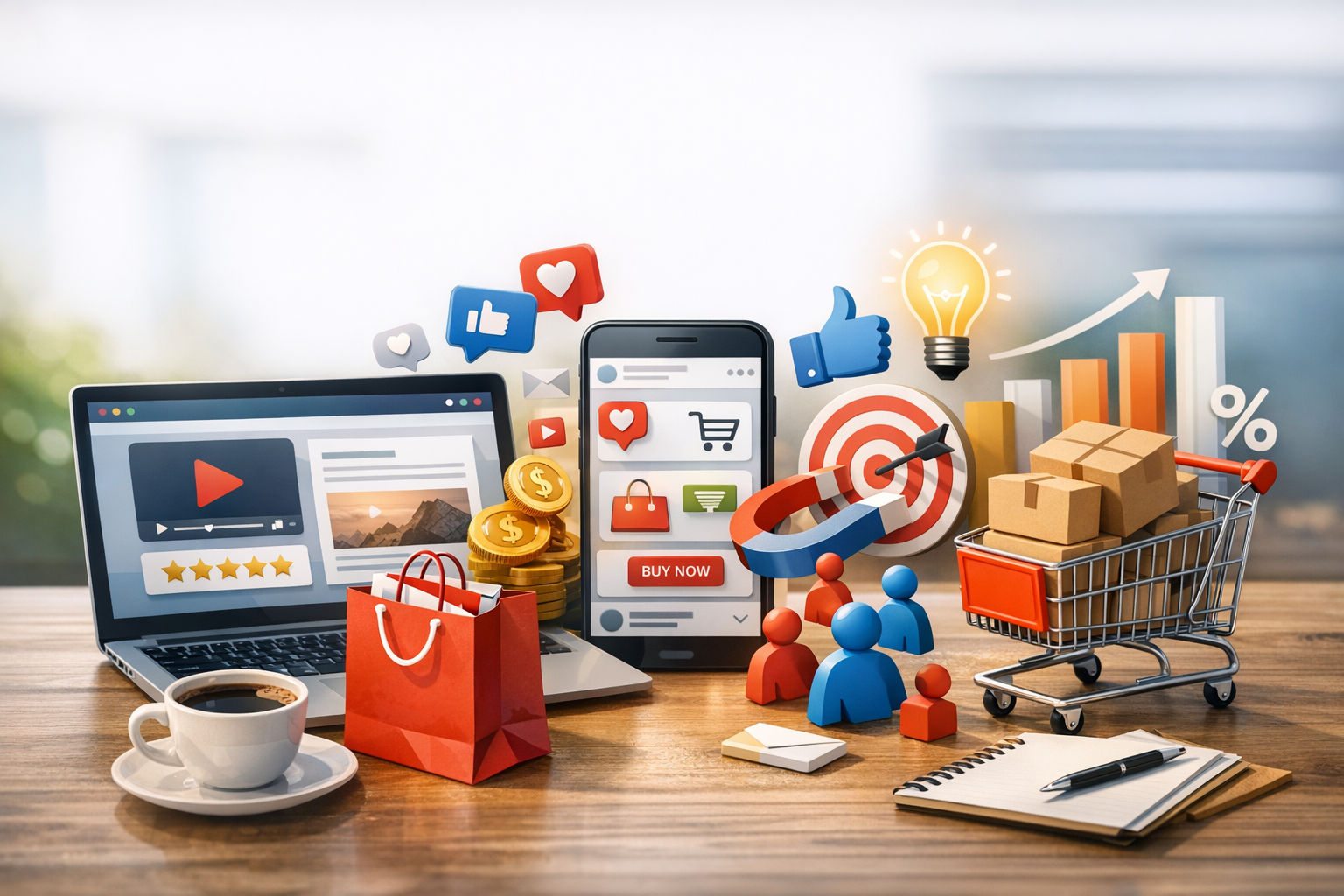
What Is B2C Content Marketing?
B2C (business-to-consumer) content marketing is the practice of creating and distributing helpful, entertaining, or inspiring content that attracts everyday consumers and encourages them to buy (and keep buying). Unlike traditional advertising, content marketing builds trust over time by answering questions, solving problems, and reflecting the lifestyle or identity your audience wants.
The best B2C content feels like it was made for real people, not “prospects.” It’s timely, easy to consume, and aligned with moments that matter—discovering a new brand, comparing options, making a purchase decision, or learning how to get the most out of what they bought.
How B2C Content Marketing Differs from B2B
Shorter buying cycles and faster decisions
Many B2C purchases happen quickly—sometimes in minutes. Your content should reduce friction and help someone decide with confidence. That often means clear product education, strong visuals, social proof, and a seamless path from content to checkout.
Emotion and identity play a bigger role
While B2B content often emphasizes ROI and business risk, B2C content frequently connects to personal preferences, aspirations, and values. Storytelling, community, and brand personality can be just as persuasive as features and price.
Distribution is platform-driven
B2C audiences spend time on social platforms, video feeds, and search—often on mobile. Winning B2C content marketing requires understanding platform formats (short-form video, creator partnerships, UGC, shoppable posts) and meeting customers where they already are.
Core Goals of B2C Content Marketing
Awareness
Introduce your brand to new audiences. This is where shareable, top-of-funnel content shines: short videos, social posts, quizzes, blog posts, and influencer collaborations.
Consideration and conversion
Help customers choose you. Comparison content, product demos, FAQs, reviews, and “how it works” explainers are powerful here—especially when paired with clear calls to action and strong on-page UX.
Retention and loyalty
Keep customers engaged after the purchase. Post-purchase emails, how-to guides, community content, recipes/ideas, maintenance tips, and loyalty program content can increase repeat purchases and reduce churn.
Know Your Audience: The Foundation of B2C Content
Build practical buyer personas
Personas don’t need to be complicated. Focus on what directly shapes content decisions:
- Motivations: Why do they buy? Convenience, status, health, fun, savings?
- Objections: What stops them? Price, skepticism, confusion, shipping speed, sizing?
- Triggers: What moments drive action? Seasons, life events, trends, limited-time offers.
- Preferred formats: Do they watch, read, skim, or listen?
Use customer data you already have
Great B2C content ideas are hiding in plain sight. Look at:
- On-site search terms and top FAQ topics
- Customer support tickets and chat transcripts
- Product reviews (yours and competitors’)
- Social comments, DMs, and community questions
- Email click data and abandoned cart reasons
B2C Content Types That Work (With Examples)
Short-form video (Reels, TikTok, Shorts)
Short video is ideal for discovery. Focus on one idea per clip—before/after, quick tips, unboxing, “3 ways to use,” or a relatable problem/solution. Keep it product-adjacent without making every post an ad.
UGC and creator content
User-generated content (UGC) builds trust quickly because it feels authentic. Encourage it with hashtags, challenges, review prompts, and reposting customers. Pair UGC with product pages and email flows to support conversions.
How-to guides and tutorials
Educational content reduces returns and increases satisfaction. For example: styling guides for apparel, setup walkthroughs for gadgets, “beginner routines” for wellness, or recipe collections for food brands.
Product pages that actually educate
In B2C, product pages are content. Strong pages include clear benefits, images that answer questions (scale, texture, fit), video demos, FAQs, shipping/returns clarity, and review highlights. Think of them as conversion content, not just catalog listings.
Seasonal and trend-based content
B2C demand often spikes around holidays, weather changes, and cultural moments. Create content calendars that anticipate peaks (gift guides, summer essentials, back-to-school checklists) and evergreen posts that you can refresh annually.
Email and SMS content
Email and SMS are content channels, not just promotional blasts. Welcome sequences, replenishment reminders, product education, and VIP content can lift revenue while improving customer experience.
Creating a B2C Content Strategy That Converts
Start with a clear content funnel
Map content to customer intent:
- Top-of-funnel (discover): entertaining or educational content that earns attention
- Middle-of-funnel (evaluate): comparisons, testimonials, demos, “why it works”
- Bottom-of-funnel (buy): offers, guarantees, shipping/returns clarity, bundles
- Post-purchase (keep): onboarding, usage tips, community, loyalty
Define your brand voice and creative rules
Consistency is a competitive advantage. Document a simple creative guide: your tone (playful vs. expert), visual style, words you use (and avoid), and the “promise” your content always delivers. In B2C, distinctiveness helps customers recognize you instantly in crowded feeds.
Plan campaigns, then build reusable evergreen assets
Campaigns drive spikes; evergreen content drives compounding growth. A healthy strategy includes both. For example, a holiday campaign can generate new angles and UGC, while evergreen “how to choose the right size” content keeps converting year-round.
SEO for B2C: How to Win Attention in Search
Target commercial and informational keywords
In B2C, SEO isn’t only blog content. It includes category pages, product pages, and buying guides. Aim for a mix of:
- Informational: “how to clean white sneakers,” “best skincare routine for oily skin”
- Commercial: “best running shoes for flat feet,” “air fryer under $100”
- Brand + product: “Brand X return policy,” “Brand X vs Brand Y”
Make content skimmable and mobile-first
Most B2C browsing happens on mobile. Use short paragraphs, descriptive subheads, bullet lists, comparison tables, and clear CTAs. Add original photos or short videos where possible to increase engagement and reduce bounce.
Refresh top performers regularly
Update best-performing pages with new FAQs, refreshed recommendations, better visuals, and internal links. Many B2C brands see strong results from “content maintenance” because it’s faster than publishing from scratch.
Distribution: Getting Your Content Seen
Pick primary channels, not all channels
It’s tempting to publish everywhere, but consistency matters more than presence. Choose 1–2 primary channels (e.g., Instagram + email, TikTok + SEO) and 1 supporting channel. Grow from there.
Repurpose content across formats
One strong idea can become many assets. For example:
- A blog post becomes a carousel, a short video, and an email tip series
- A creator video becomes product page media and paid social creative
- A webinar-style demo becomes short clips and an FAQ page
Use paid promotion strategically
Paid social can amplify what’s already working organically. Boost top-performing posts, retarget video viewers with product-focused content, and use lookalike audiences to scale. A helpful rule: use organic content to learn; use paid to multiply.
Measurement: Metrics That Matter in B2C
Track performance by funnel stage
Choose metrics that match intent:
- Awareness: reach, video views, follower growth, share rate
- Engagement: saves, comments, watch time, email click-through rate
- Conversion: add-to-cart, conversion rate, revenue per session, CPA/ROAS
- Retention: repeat purchase rate, LTV, churn, loyalty participation
Attribute results without overcomplicating it
Use a combination of UTM tracking, platform analytics, and e-commerce reporting. In B2C, journeys are often messy (someone sees you on TikTok, searches later, then buys via email). Focus on trends over time and incremental lifts from campaigns.
Common B2C Content Marketing Mistakes (and How to Avoid Them)
Posting only promotional content
If every post screams “buy now,” audiences tune out. Balance product posts with education, entertainment, and community-driven content that earns attention.
Ignoring the post-purchase experience
Many brands stop at conversion. But content that helps customers succeed—setup, care, ideas, inspiration—reduces returns and increases word of mouth.
Creating content without a clear next step
Every piece of content should guide the customer: read another article, watch a demo, view a collection, join the list, or shop a bundle. Clear CTAs don’t have to be pushy; they just need to be obvious.
Conclusion
B2C content marketing works when it respects the customer’s time and attention: it’s useful, entertaining, and easy to act on. Start with a deep understanding of your audience, build content across the funnel, and distribute consistently on the channels that matter most. With smart measurement and ongoing optimization, your content can become a reliable engine for awareness, sales, and long-term loyalty.
