
What Are Backlinks?
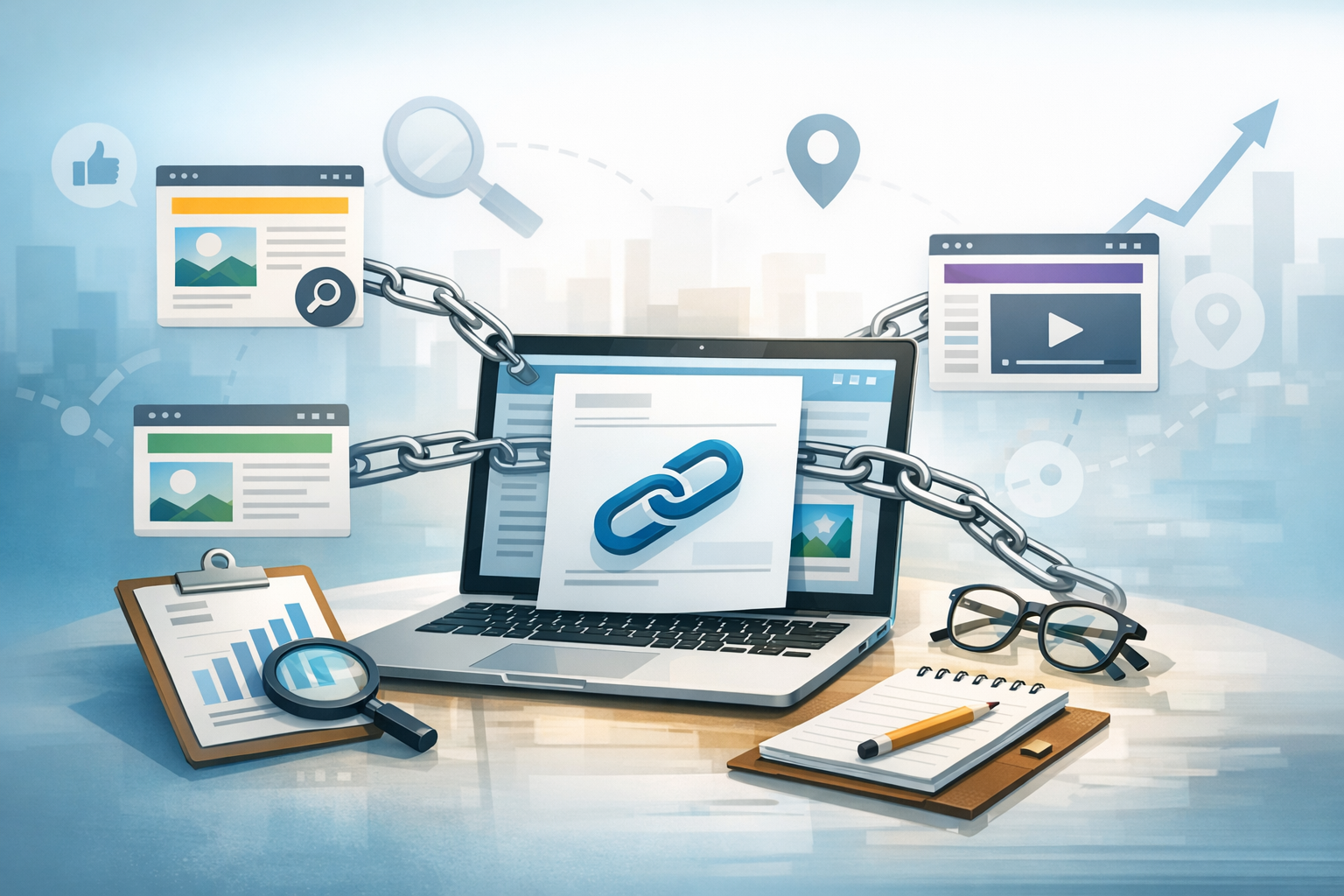
A backlink (also called an “inbound link”) is a link from one website to another. If another site links to a page on your site, you’ve earned a backlink. Search engines often treat backlinks as a signal of trust and authority—especially when they come from reputable, relevant websites.
Think of backlinks like recommendations. A mention from a respected source can help people (and search engines) view your content as more credible.
Backlinks vs. Internal Links
It’s easy to mix these up:
- Backlinks are links from other websites pointing to your site.
- Internal links are links within your own website that connect one page to another.
Both matter for SEO. Internal links help users and search engines navigate your site, while backlinks help build your site’s authority beyond your own domain.
Why Backlinks Matter for SEO
Backlinks can influence how your pages perform in search results. While they aren’t the only ranking factor, high-quality backlinks often correlate with stronger visibility, especially for competitive topics.
Authority and Trust Signals
When credible websites link to your page, it can act as a trust signal. In simple terms: if trusted sites cite you, search engines may be more likely to treat your content as valuable.
Not all links carry the same weight, though. A single link from a well-known, relevant publication can be more impactful than dozens of low-quality links.
Referral Traffic Benefits
Backlinks aren’t only for SEO—they can directly send people to your website. If a blog, newsletter, or resource page links to you, readers may click through and become subscribers, leads, or customers.
In many cases, the best backlinks are the ones that drive real, qualified traffic, not just “SEO value.”
Faster Discovery and Indexing
Search engines discover pages by crawling links. If your new content gets linked from a page that is crawled frequently, it can be found and indexed sooner. This doesn’t guarantee high rankings, but it can help your content enter the search ecosystem faster.
Types of Backlinks (And Which Ones You Want)
Understanding backlink types helps you focus on links that are most likely to help—not harm—your site.
Dofollow vs. Nofollow Links
- Dofollow links are standard links that may pass ranking signals (often referred to as “link equity”).
- Nofollow links include an attribute that tells search engines not to pass ranking signals in the same way.
Both can be valuable. Dofollow links are typically the goal for SEO, but nofollow links can still drive great referral traffic and build brand awareness. They can also look natural as part of a diverse link profile.
Editorial Links vs. Self-Made Links
Editorial links are given naturally—someone links to your content because it’s helpful. These are usually the strongest and safest.
Self-made links are created by you, such as in profiles, low-quality directories, comment sections, or forum signatures. Some can be legitimate, but many are low value and may be risky if abused.
Relevant vs. Irrelevant Links
Relevance matters. A link from a website in your niche (or a closely related topic) tends to be more meaningful than a link from a random, unrelated site.
For example, if you run a fitness blog, a backlink from a nutrition coach’s site is likely more relevant than one from an unrelated coupon directory.
What Makes a Backlink “High Quality”?
Beginners often assume “more backlinks” automatically means better rankings. In reality, quality beats quantity. Here are the key factors that tend to define a high-quality backlink.
Domain and Page Authority (In Plain English)
While different SEO tools use different metrics, the general idea is the same: some sites are more authoritative than others. Links from established, trusted websites tend to carry more weight than links from new or spammy sites.
Also, the strength of the specific page linking to you matters. A link from a popular, well-linked article can be stronger than a link from a rarely visited page.
Anchor Text Basics
Anchor text is the clickable text in a link. It helps describe what the linked page is about. Common anchor text types include:
- Branded: “Acme Co.”
- Generic: “click here”
- Exact/partial match: “beginner backlink guide”
- Naked URL: “https://example.com”
A natural mix is best. Over-optimizing anchor text (for example, trying to get the exact same keyword repeatedly) can look manipulative.
Placement, Context, and Link Neighborhood
Where the link appears matters. A backlink inside the main body of an article—surrounded by relevant context—often carries more value than a link hidden in a footer, sidebar, or a page filled with unrelated outbound links.
It also helps if the linking site keeps good “company.” A page that links out to spammy sites can be a warning sign.
Beginner-Friendly Ways to Earn Backlinks
You don’t need complicated tactics to start building backlinks. The most sustainable approach is to publish content worth linking to, then make sure the right people see it.
Create Link-Worthy Content (Examples)
Some content formats naturally attract backlinks because they’re useful references. Consider:
- Ultimate guides: Step-by-step resources that cover a topic thoroughly.
- Original research/data: Surveys, case studies, or industry statistics.
- Tools and templates: Checklists, calculators, swipe files, or spreadsheets.
- Resource lists: Curated lists of helpful tools, communities, or reading.
- Visual assets: Charts, diagrams, and infographics (with an embed option).
Before you create something, ask: “Would someone cite this as a source?” If the answer is yes, you’re on the right track.
Guest Posting (The Right Way)
Guest posting means writing an article for another website in your niche. Done well, it can help you build credibility, reach a new audience, and earn a contextual backlink.
Best practices:
- Choose reputable, relevant sites with real readership.
- Pitch topics that match their audience and content style.
- Focus on quality—write something you’d proudly publish on your own site.
- Link naturally (for example, referencing a related guide on your site as a helpful resource).
Avoid “guest post farms” that exist only to sell links or publish thin content. Those links are rarely helpful long-term.
Digital PR and Outreach Basics
Outreach is simply contacting people who might find your content valuable and asking them to consider linking to it. Keep it respectful and targeted:
- Find sites that already cover your topic.
- Identify where your content adds value (fills a gap, updates an outdated resource, adds data, etc.).
- Send a short, personalized message explaining why your content is worth including.
Tip: Outreach works best when your content is genuinely better or more current than what’s already out there.
Broken Link Building
Broken link building is a beginner-friendly strategy where you:
- Find a page in your niche that links to a broken (dead) resource.
- Create (or already have) a relevant replacement resource on your site.
- Email the site owner, letting them know about the broken link and suggesting your resource as a replacement.
This works because you’re helping them improve their page while earning a relevant backlink in return.
Local and Industry Directories (When They’re Worth It)
Directories can be useful if they’re legitimate and relevant—especially for local businesses. Examples include respected industry associations, chambers of commerce, or well-known local listings.
Skip low-quality directories that exist only to host links. If the directory doesn’t have standards, traffic, or credibility, it likely won’t help.
Common Backlink Mistakes to Avoid
Many beginners run into trouble by chasing shortcuts. Here are the most common pitfalls—and how to avoid them.
Buying Links and Spammy Tactics
Buying backlinks or participating in link schemes can lead to poor results and potential penalties. The risk often outweighs any short-term gains.
If someone promises “1,000 backlinks overnight,” that’s a red flag. Real links from real sites take effort.
Over-Optimized Anchor Text
Trying to force exact-match keyword anchors repeatedly can look unnatural. A healthier approach is to earn a varied anchor text profile that includes branded, URL, and natural phrase anchors.
Ignoring Relevance and Content Quality
A backlink can’t fix weak content. If your page doesn’t satisfy the search intent or provide value, people won’t stick around—and other sites won’t want to reference it.
Focus on content quality first, then promote it.
How to Track and Measure Your Backlinks
Tracking backlinks helps you understand what’s working, spot issues early, and find new opportunities.
Free and Paid Tools
Options you can use include:
- Google Search Console: Free, shows links to your site and top linked pages.
- Ahrefs / Semrush / Moz: Paid tools with deeper backlink databases, link metrics, and competitor research.
- Browser extensions: Helpful for quick checks, but don’t rely on them alone.
If you’re just starting, Google Search Console is an excellent baseline.
What to Monitor: Growth, Quality, and Relevance
Instead of obsessing over total link count, watch for:
- New referring domains: More unique websites linking to you is often a strong signal.
- Link quality: Are you earning links from reputable, relevant sites?
- Top linked pages: Which content attracts links naturally?
- Referral traffic: Are links bringing in visitors who engage?
Conclusion
Backlinks are one of the most important building blocks of SEO, but beginners don’t need gimmicks to succeed. Focus on creating truly helpful content, promoting it to the right audience, and earning relevant links from credible websites. Over time, a steady, quality-first approach to backlinks can improve your rankings, visibility, and traffic in a way that lasts.
