
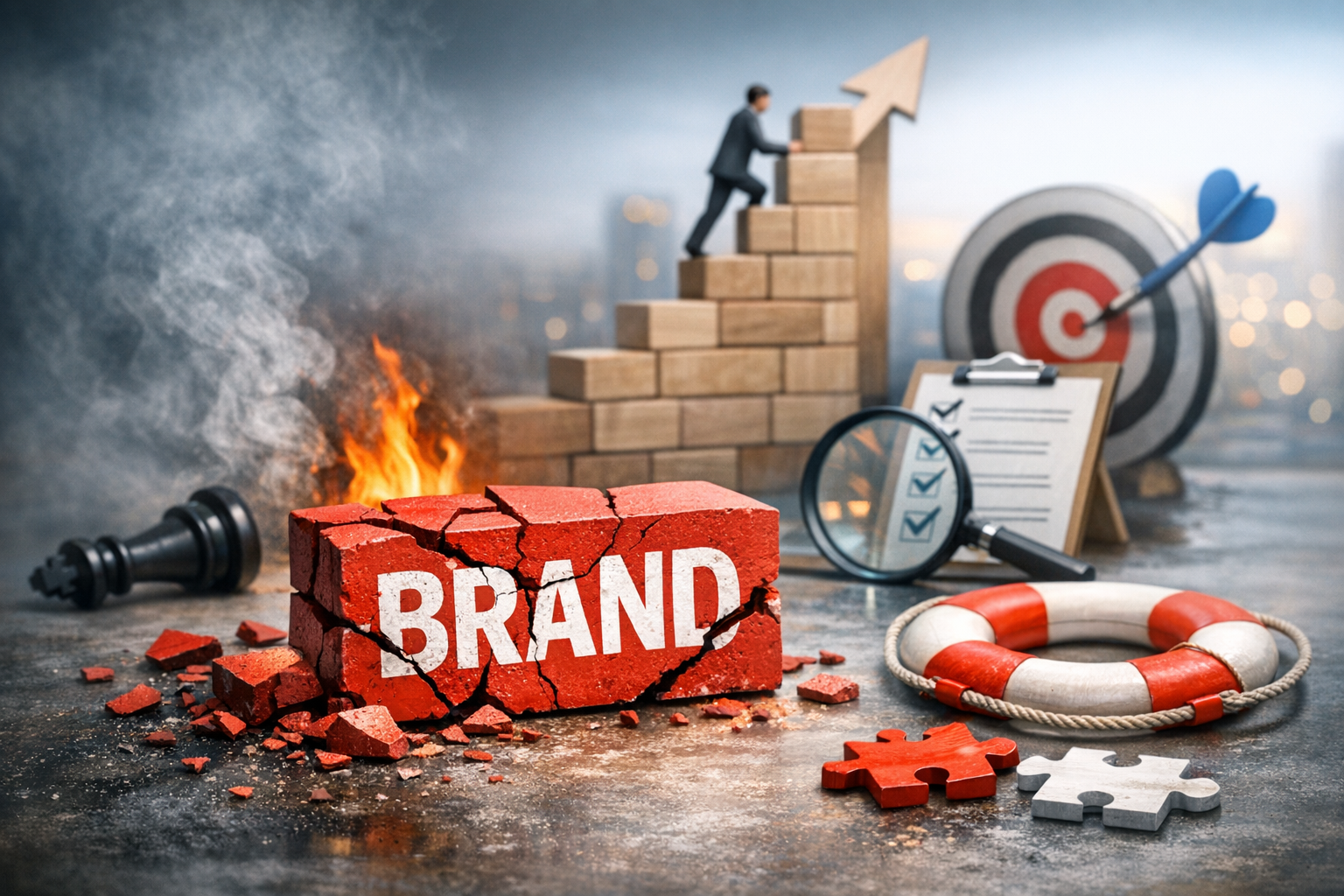
Introduction: Why Brand Crisis Recovery Matters
A brand crisis can happen fast—one viral post, a product failure, a public misstep, or a data breach—and the damage can spread faster than traditional PR can keep up. Brand crisis recovery is the process of stabilizing the situation, rebuilding trust, and turning hard lessons into stronger systems and relationships. The goal isn’t just to “get back to normal.” It’s to emerge more credible, more resilient, and clearer about what your brand stands for.
This guide lays out a step-by-step approach you can use before, during, and after a crisis to protect reputation, reduce financial impact, and rebuild confidence with customers, employees, and partners.
What Counts as a Brand Crisis?
A brand crisis is any event that significantly threatens your reputation, stakeholder trust, or ability to operate. Some crises are sudden and obvious (e.g., a safety issue), while others build slowly (e.g., repeated customer complaints that finally go public).
Common types of brand crises include:
- Product or service failures: recalls, defects, outages, quality issues.
- Customer experience breakdowns: mistreatment, discrimination claims, widespread service problems.
- Leadership or employee misconduct: harassment allegations, unethical behavior, compliance violations.
- Data security incidents: breaches, ransomware, mishandled customer data.
- Social or cultural missteps: tone-deaf campaigns, inappropriate messaging, insensitive partnerships.
- Operational disruptions: supply chain failures, safety incidents, environmental harm.
Not every negative comment is a crisis. The difference is scale, credibility, and consequence: how far it spreads, how believable it is, and how much harm it causes.
Immediate Response: The First 24–72 Hours
The earliest window often determines how severe a crisis becomes. Your objectives in the first 24–72 hours are to gather facts, prevent further harm, communicate clearly, and avoid missteps that escalate public anger.
1) Assemble a crisis response team
Move quickly to form a small decision-making group. Include representatives from leadership, legal, PR/communications, customer support, HR (if relevant), and security/IT (if relevant). Name one person as the final decision-maker and one as the single spokesperson (or a short list if multiple regions are involved).
Key actions:
- Open a dedicated internal channel (e.g., Slack/Teams) for crisis coordination.
- Create a shared document to track timelines, facts, decisions, and approvals.
- Set a regular cadence for updates (e.g., every 2–4 hours on day one).
2) Stop the bleeding: address immediate harm
If customers or employees are at risk, act first—then communicate. That might mean pausing a campaign, disabling a feature, recalling a product, freezing access, removing an offending post, or suspending an employee pending investigation. The public will judge you not only by what you say, but by what you do.
3) Get the facts—fast, but accurately
In a crisis, speed matters, but accuracy matters more. Don’t speculate. Confirm:
- What happened (and what didn’t happen).
- Who is affected and how many people may be impacted.
- What your team is doing right now to fix it.
- What you need to investigate further.
If information is incomplete, it’s acceptable to say, “We’re investigating and will share updates at [time/date].” What’s not acceptable is overconfident statements that later prove false.
4) Communicate early with a holding statement
A short, timely holding statement reduces rumor spread and shows you’re engaged. It should include:
- Acknowledgment of the situation.
- Empathy for those affected.
- Immediate actions taken.
- Commitment to updates and transparency.
- Where people can go for accurate information (a dedicated page or support channel).
Tip: Publish one “source of truth” page on your website and point all channels to it. This reduces conflicting messages and gives journalists and customers a reliable reference.
5) Align internal communications before external messaging
Your employees are your frontline reputation ambassadors, and they’ll be asked about the crisis by customers, friends, and partners. Share a clear internal update including what happened (to the extent appropriate), what to say, what not to say, and where to direct questions. Equip customer support with an approved script and escalation path.
Building a Recovery Strategy: From Damage Control to Rebuilding Trust
Once the situation is stabilized, the focus shifts from immediate response to long-term brand repair. Recovery is not a single apology—it’s consistent proof, over time, that the organization learned and changed.
1) Choose the right apology (and mean it)
Not all crises require the same language, but most benefit from a clear expression of accountability. A strong apology typically includes:
- Specificity: Acknowledge what happened without vague phrasing.
- Responsibility: Don’t hide behind “miscommunication” if the issue was a real failure.
- Empathy: Center the impact on people, not the inconvenience to the company.
- Remedy: Explain what you’re doing to make it right.
- Prevention: Share how you’ll prevent recurrence.
Avoid non-apologies like “We’re sorry you feel that way” or “Mistakes were made,” which often trigger backlash.
2) Provide restitution when appropriate
If customers suffered harm—financial loss, safety risk, or significant disruption—consider tangible remedies such as refunds, credits, replacements, or dedicated support. Restitution signals seriousness and reduces anger, especially when paired with clear instructions on how to claim help.
3) Demonstrate corrective action with visible changes
People regain trust when they see proof of change. Depending on the crisis type, corrective action might include:
- Independent audits or third-party reviews.
- New safety checks, QA processes, or compliance measures.
- Policy updates (privacy, moderation, HR reporting lines).
- Training programs and leadership changes.
- Product redesigns or improved customer service staffing.
When possible, publish a timeline: what’s done now, what’s in progress, and when stakeholders can expect completion.
4) Manage the narrative—without trying to “spin”
“Managing the narrative” doesn’t mean manipulating public perception. It means communicating consistently so the truth is easier to find than rumors. Use:
- Regular updates: Even if the update is “investigation ongoing.”
- FAQ pages: Answer common questions clearly and calmly.
- Media outreach: Proactively share verified facts and next steps.
- Social listening: Track sentiment and misinformation and correct it with evidence.
If you made a mistake, you don’t need perfect messaging—you need credible action and honest communication.
5) Engage key stakeholders directly
Different groups need different levels of detail and reassurance:
- Customers: What happened, how you’ll fix it, and how they’re protected.
- Employees: Safety, job stability, expectations, and values-based leadership.
- Partners and vendors: Operational continuity and shared risk mitigation.
- Investors: Financial exposure, recovery plans, and governance improvements.
- Communities/regulators: Compliance, accountability, and long-term safeguards.
Direct communication—calls, webinars, town halls, or stakeholder briefings—often prevents churn and reduces speculation.
Communication Best Practices During Recovery
In the recovery phase, your communication must balance transparency, legal considerations, and human empathy. Here are principles that consistently protect brands over time.
Be consistent across channels
Make sure your website, social posts, press statements, and customer support scripts align. Conflicting claims create distrust and invite more scrutiny.
Keep updates frequent and predictable
Silence is often interpreted as avoidance. Set expectations: “We will share another update by Friday at 5 PM ET.” Then follow through.
Use plain language, not corporate jargon
During a crisis, stakeholders want clarity more than polish. Simple, direct wording reads as more honest and reduces misunderstandings.
Empower customer support
Your support team will feel the crisis first. Give them:
- Clear policies for refunds/replacements/escalations.
- Approved wording and do’s/don’ts.
- Extra staffing or extended hours if needed.
- Mental health support and manager backup for difficult interactions.
Measuring Recovery: What Success Looks Like
Brand crisis recovery isn’t complete when headlines fade. It’s complete when trust and performance indicators stabilize and your improvements are operating reliably.
Track a mix of reputation, customer, and operational metrics, such as:
- Sentiment trends: social listening, review scores, brand favorability surveys.
- Customer behavior: churn, retention, repeat purchase, conversion rates.
- Support signals: ticket volume, complaint categories, resolution time.
- Media quality: shift from negative coverage to neutral/solutions-focused stories.
- Employee metrics: engagement surveys, retention, internal reporting confidence.
- Operational resilience: fewer incidents, improved audit results, faster response times.
Set realistic timelines. Some reputational damage resolves in weeks; trust after safety or ethics failures may take months or longer.
How to Prevent the Next Crisis (and Recover Faster If It Happens)
The best crisis recovery plan includes prevention and readiness. Even strong brands face unexpected issues—but prepared teams respond faster, make fewer mistakes, and recover more credibly.
Create a crisis playbook
Document roles, escalation paths, approval workflows, and pre-drafted templates for likely scenarios (product recall, data incident, executive misconduct, etc.). Include a media Q&A and a customer support script framework.
Run simulations and training
Tabletop exercises help teams practice decision-making under pressure. Include cross-functional participants and simulate realistic constraints: incomplete information, high social media volume, and legal concerns.
Invest in monitoring and early warning systems
Use social listening, review monitoring, and customer feedback analysis to detect patterns early. Many “sudden” crises show warning signs long before they go public.
Build trust before you need it
Brands recover faster when stakeholders already believe they generally act in good faith. Consistent values, transparent policies, and strong customer care create a reputational “reserve” you can draw on during hard moments.
Conclusion
Brand crisis recovery is a combination of fast stabilization, honest communication, and visible corrective action over time. When handled well, a crisis can become a turning point—strengthening your operations, clarifying your values, and rebuilding trust through consistent proof. The brands that recover best aren’t the ones that never stumble; they’re the ones that respond with accountability, empathy, and disciplined follow-through.
