
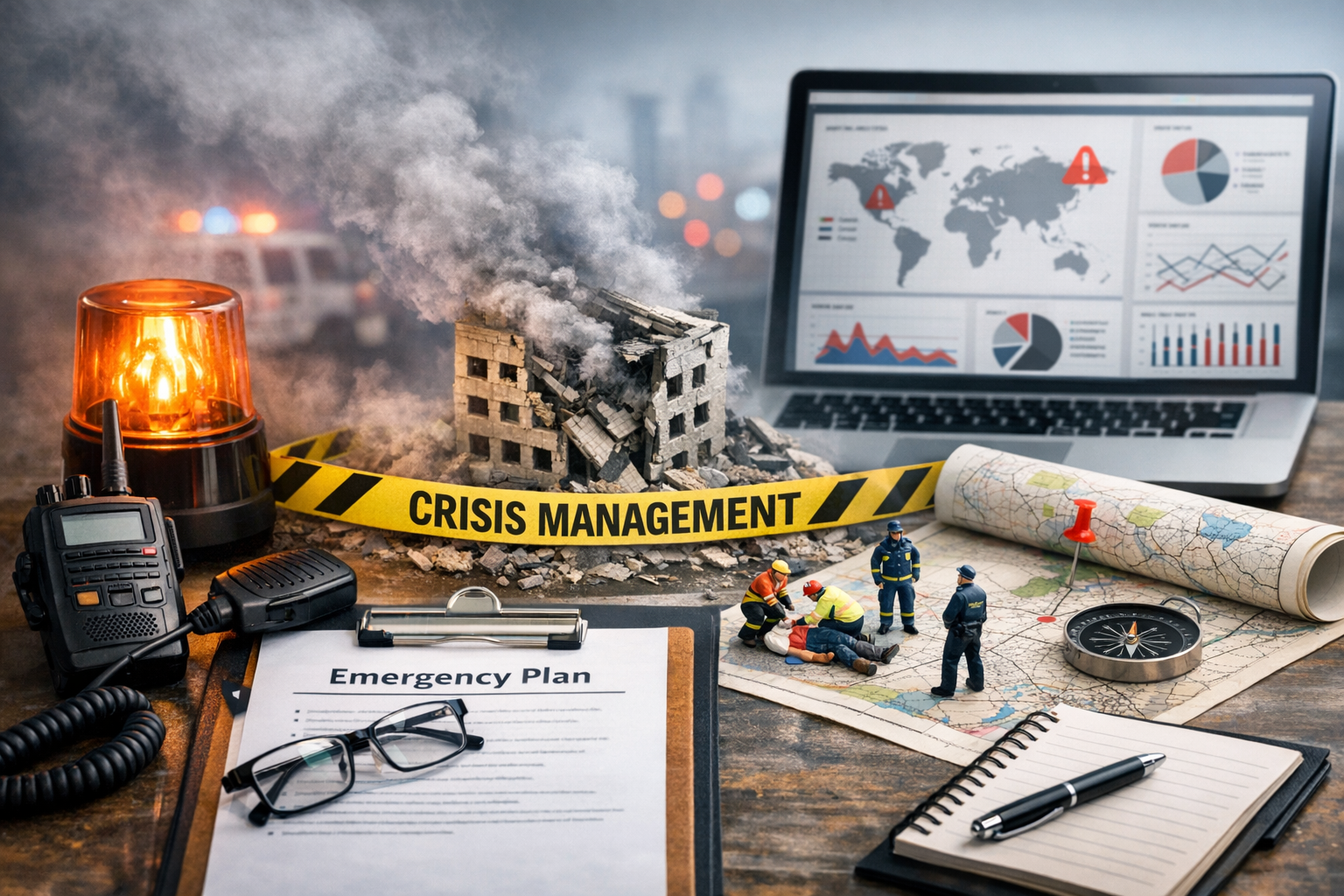
What Is Crisis Management?
Crisis management is the process of preparing for, responding to, and recovering from unexpected events that threaten people, operations, finances, reputation, or compliance. A “crisis” can be sudden (a data breach) or slow-building (a culture issue that erupts publicly), but the goal is the same: reduce harm, make sound decisions under pressure, communicate clearly, and return the organization to stable operations—ideally stronger than before.
Effective crisis management isn’t just for large corporations. Any organization—businesses, nonprofits, schools, healthcare providers, and public agencies—benefits from a clear plan, trained leaders, and a repeatable response system.
Why Crisis Management Matters
Crises move fast, and the cost of confusion compounds quickly. Without a plan, teams may delay decisions, share inconsistent information, or overlook critical stakeholders. With a solid crisis framework, organizations can:
- Protect people and customers by prioritizing safety and continuity of essential services.
- Reduce financial impact through faster containment, better coordination, and fewer operational disruptions.
- Preserve trust by communicating transparently and following through on commitments.
- Meet legal and regulatory obligations with documented decisions, clear ownership, and timely reporting.
- Learn and improve through structured after-action reviews and preventive changes.
Common Types of Crises Organizations Face
Crises vary by industry, but most fall into a few broad categories. Recognizing these helps you plan realistic scenarios.
Operational and Supply Chain Disruptions
Equipment failures, facility outages, transportation bottlenecks, supplier collapses, or natural disasters can halt delivery and production. The most resilient organizations maintain backup suppliers, alternative logistics routes, and tested continuity plans.
Cybersecurity and Data Incidents
Ransomware, credential theft, and data leaks can shut down systems and erode customer confidence. Cyber incidents often require rapid containment, forensic investigation, legal guidance, and clear notifications to affected parties.
People and Workplace Incidents
Workplace injuries, harassment allegations, executive misconduct, labor disputes, or public-facing employee behavior can create legal exposure and reputational damage. People-focused crises require careful documentation, empathy, and consistent HR and legal coordination.
Product, Service, and Customer Safety Issues
Defective products, contamination, service outages, or safety events can trigger recalls, refunds, regulatory scrutiny, and intense media attention. Organizations need decision rules for escalation, quality containment, and customer support surges.
Reputation and Communications Crises
Negative press, viral social media posts, misinformation, or brand-damaging partnerships can escalate quickly. Strong monitoring, a clear message strategy, and a defined approval process are essential to avoid contradictory statements.
Core Principles of Effective Crisis Management
While every crisis is unique, high-performing response teams follow consistent principles.
Speed with Discipline
Move quickly, but don’t improvise chaotically. Establish a structured cadence (for example, hourly briefings during early stages) so decisions are made with the best available facts and documented assumptions.
Clear Roles and Decision Rights
In a crisis, uncertainty about “who decides” is a major risk. Define who leads the response, who approves external statements, and who owns critical workstreams (legal, IT, operations, HR, customer support).
One Source of Truth
Create a central situation report (sitrep) that tracks what happened, what’s confirmed, what’s unknown, and what actions are underway. This reduces rumor-driven decisions and keeps teams aligned.
Stakeholder-Centered Communication
Customers, employees, regulators, partners, and the public need different details at different times. Communicate early, with empathy and accuracy, and update people as new information becomes available.
Continuous Learning
Every crisis should strengthen your organization. Build a habit of post-incident review, corrective actions, and follow-up testing—then integrate improvements into training and planning.
How to Build a Crisis Management Plan
A crisis management plan turns good intentions into a practical playbook. It should be short enough to use under pressure and specific enough to prevent confusion.
1) Identify and Prioritize Risks
Start with a risk assessment: list likely crisis scenarios, estimate their impact and probability, and identify early warning indicators. Prioritize the scenarios that could threaten safety, legal compliance, critical operations, or trust.
- Map dependencies (vendors, systems, key personnel, facilities).
- Define “triggers” for escalation (e.g., customer data exposure, injuries, major downtime).
- Document regulatory notification thresholds if applicable.
2) Form a Crisis Response Team
Assign a cross-functional team with clear backups. Typical roles include:
- Crisis Lead/Incident Commander: runs the response and sets priorities.
- Operations Lead: ensures continuity and coordinates logistics.
- IT/Security Lead: handles systems, investigation, and containment.
- Communications/PR Lead: manages messaging and media responses.
- Legal/Compliance Lead: advises on liability, reporting, and documentation.
- HR/People Lead: manages employee communications and support.
- Customer Support Lead: scales support and captures customer impact.
Include escalation paths to executives and the board when necessary.
3) Create Communication Protocols and Templates
Communication should be fast, consistent, and approved by the right people. Prepare in advance:
- Internal update templates (employees, managers, frontline staff).
- Customer notices (service disruption, safety alerts, breach notifications where applicable).
- Press statements and Q&A documents.
- Social media holding statements (“We’re aware… we’re investigating… we’ll share updates at…”).
Also define channels (email, Slack/Teams, SMS alerts, website banner, status page) and who can publish.
4) Set Up Tools, Documentation, and Contact Lists
In a crisis, time is wasted searching for information. Maintain:
- Up-to-date contact lists for leaders, vendors, emergency services, regulators, and advisors.
- A shared incident workspace (secure folder or incident management tool).
- Runbooks for common actions (system isolation, recall procedures, facility evacuation).
- A decision log for major choices and rationales.
5) Train and Run Simulations
Plans that aren’t practiced rarely work. Schedule tabletop exercises and simulations at least annually, and after major organizational changes. Focus on:
- Escalation speed: how fast the right people are engaged.
- Information flow: how updates reach decision-makers.
- Communication clarity: whether messages are accurate and aligned.
- Operational continuity: whether teams can maintain critical services.
What to Do During a Crisis: Step-by-Step
When a crisis hits, the first hours matter. A repeatable response sequence helps teams act decisively without missing key steps.
1) Stabilize and Assess
Prioritize safety and containment. Confirm what is known, what is suspected, and what is still unknown. If needed, pause affected operations to prevent further harm. Establish a rapid assessment team to gather facts and provide updates on a defined schedule.
2) Activate the Response Team and Set Objectives
Declare the incident level (for example: minor, major, critical) and activate the crisis response team accordingly. Set 2–4 immediate objectives, such as:
- Contain the incident and prevent spread.
- Restore essential services within a defined time window.
- Communicate with affected stakeholders by a specific deadline.
- Preserve evidence and ensure legal compliance.
3) Communicate Early—Even If Details Are Limited
Silence creates speculation. Share what you can responsibly share: what happened (at a high level), what you’re doing, and when you’ll update again. Avoid guessing. If facts are still emerging, say so. Empathy matters—especially when customers or employees are impacted.
4) Coordinate Operations, Legal, and Communications
Many crises escalate because teams act in isolation. Keep operations, legal, and communications tightly aligned. For example, in a cyber incident, containment actions may affect customer service; in a safety issue, legal guidance may shape recall language. Regular briefings ensure decisions remain consistent across functions.
5) Monitor, Adapt, and Document
Track incoming information (customer reports, system telemetry, media coverage, social posts) and adjust plans as facts change. Maintain a timeline of events and decisions—this is invaluable for compliance, insurance, and post-crisis learning.
How to Recover After a Crisis
Recovery is more than “getting back to normal.” It’s the stage where trust is rebuilt, root causes are addressed, and long-term resilience is strengthened.
Conduct an After-Action Review
Within 1–2 weeks (so details are fresh), hold a structured review:
- What happened and why?
- What worked well?
- Where did delays or confusion occur?
- What decisions had the biggest impact?
Invite representatives from all involved teams and capture insights without blame. The goal is improvement, not finger-pointing.
Implement Corrective and Preventive Actions
Translate lessons into changes: patch systems, update vendor requirements, revise training, improve monitoring, or adjust staffing. Assign owners and deadlines, and follow up until actions are complete.
Rebuild Trust with Stakeholders
Trust is restored through consistent actions over time. Provide clear updates on what changed, what safeguards were added, and how you’ll prevent a repeat. If customers were harmed, make remediation straightforward (credits, support, replacements) and communicate proactively.
Update the Crisis Plan and Retrain
Incorporate improvements into the crisis management plan and run a follow-up exercise to ensure the new process works under realistic pressure. Continuous refinement is how mature crisis programs are built.
Conclusion
Crisis management is a capability you can build before you need it. By defining roles, practicing scenarios, communicating clearly, and learning from every incident, organizations can respond faster, reduce harm, and protect the trust they’ve earned. The best time to strengthen your crisis plan is now—when you have the bandwidth to prepare thoughtfully.
