
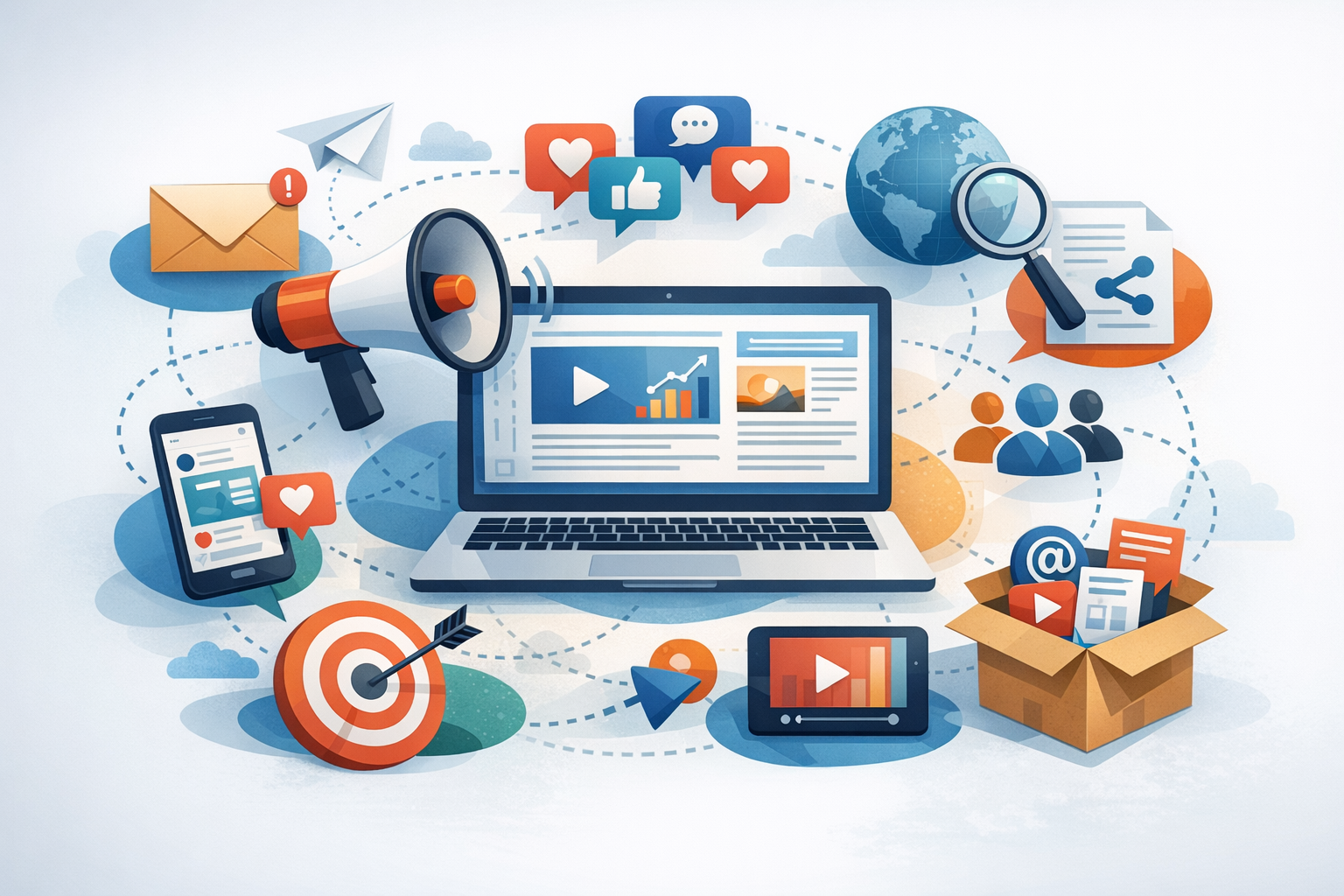
What Is Content Marketing Distribution?
Content marketing distribution is the process of promoting and delivering your content to the right people through the right channels—so it actually gets read, watched, clicked, and shared. Publishing is only step one. Distribution is everything that happens after you hit “publish,” including social promotion, email campaigns, partnerships, SEO optimization, and paid amplification.
A strong distribution plan helps you:
- Reach audiences beyond your existing followers
- Drive consistent traffic over time (not just a launch-day spike)
- Generate leads and revenue from content
- Learn what channels and messages resonate with your market
Why Content Distribution Matters More Than Ever
There’s more content than ever competing for attention. Even great content can underperform if it isn’t promoted intentionally. Distribution matters because:
- Organic reach is limited: Social platforms prioritize personal connections and paid placements, which reduces free visibility for brands.
- Audiences are fragmented: Your buyers spend time across multiple platforms, communities, and inboxes—no single channel covers everyone.
- Competition is intense: Many companies publish similar topics; the winner often has better promotion and repurposing.
In practice, distribution is how you turn content from a cost center into an asset that compounds.
The Three Types of Content Distribution Channels
Most distribution strategies combine three channel types. The key is knowing what each is best for and how to balance them.
Owned Distribution Channels
Owned channels are platforms you control. They’re typically the most sustainable long-term because you aren’t at the mercy of algorithm changes.
- Your website/blog: The home base for SEO and conversion.
- Email list: One of the highest-performing channels for repeat engagement.
- Webinars and events: Great for deeper education and lead capture.
- Community spaces: Slack/Discord groups, customer communities, forums you run.
Best for: Nurturing, retention, and converting existing audiences.
Earned Distribution Channels
Earned channels are third-party platforms where visibility comes from others sharing, featuring, or referencing you.
- PR mentions and media coverage
- Guest posts and contributed articles
- Podcasts and webinars with partners
- Influencer shares and organic community posts
- Backlinks from other websites
Best for: Credibility, authority, and reaching new audiences at low cost (though it takes time).
Paid Distribution Channels
Paid channels use advertising spend to place content in front of targeted audiences. Done well, paid distribution accelerates learning and results—especially for top content pieces with clear conversion paths.
- Social ads (LinkedIn, Meta, TikTok, X)
- Search ads (Google Ads, Microsoft Ads)
- Native advertising (Taboola/Outbrain and similar)
- Sponsorships (newsletters, podcasts, communities)
- Retargeting to re-engage site visitors
Best for: Fast reach, scalable lead generation, and promotion of proven content.
How to Build a Content Distribution Strategy
A distribution strategy is a repeatable plan that connects your content to your audience and business goals. Here’s a practical way to build one.
1) Set Clear Distribution Goals
Start by defining what success looks like for each content type. Common goals include:
- Awareness: impressions, reach, video views, branded search growth
- Engagement: time on page, scroll depth, comments, shares, email replies
- Lead generation: email sign-ups, demo requests, webinar registrations
- Revenue influence: pipeline created, assisted conversions, customer acquisition cost
Pick one primary goal per campaign so your channel choices and messaging stay focused.
2) Know Your Audience and Where They Spend Time
Effective distribution is less about being everywhere and more about being present where your ideal customers already pay attention. Build a simple channel map using:
- Customer interviews and sales call notes
- Website analytics (top referral sources, returning visitors)
- Social listening and community research
- Email data (open/click rates by segment)
Then match channels to audience intent. For example, LinkedIn may work well for B2B thought leadership, while YouTube might be stronger for tutorials and product comparisons.
3) Choose Your Channel Mix (Primary, Secondary, Experimental)
Assign roles so your team knows where to focus:
- Primary channels: 1–3 channels that get consistent effort every week.
- Secondary channels: used to repurpose and extend reach.
- Experimental channels: small tests with clear hypotheses and timelines.
This prevents scattered promotion and makes measurement easier.
4) Plan Distribution During Content Creation (Not After)
Distribution works best when it’s baked into production. Before writing or filming, decide:
- What the primary call-to-action will be
- What assets you’ll need (graphics, short clips, quote cards, email copy)
- Which sections can be turned into standalone social posts
- What partners or internal stakeholders should be involved early
This approach makes repurposing faster and ensures each piece has a clear path to results.
Tactical Playbook: Distributing Content Across Key Channels
Below are practical tactics you can apply immediately, regardless of whether you’re distributing blog posts, videos, newsletters, or downloadable resources.
Website & SEO Distribution
- Update and relaunch older posts: refresh stats, improve formatting, add internal links, and re-promote.
- Build topic clusters: support a pillar page with related articles that interlink and strengthen relevance.
- Optimize for click-through: compelling titles, meta descriptions, and rich snippets where relevant.
- Internal linking: link new content from high-traffic pages to pass authority and drive sessions.
Email Distribution
- Segment your list: tailor sends by role, industry, or lifecycle stage.
- Use multi-send sequences: launch email, reminder email, and a “last chance” email for webinars or gated assets.
- Repurpose into newsletters: turn key takeaways into a brief digest with a link to the full piece.
- Ask for replies: simple questions increase engagement signals and provide insights for future content.
Social Media Distribution
- Create multiple angles: share the same content as a contrarian take, a checklist, a story, a quote, and a data point.
- Stagger promotion: post on launch day, then reshare with new hooks over the next 2–4 weeks.
- Use native formats: carousels, short videos, and threads often outperform plain links.
- Empower employees: provide a “share kit” with suggested captions and assets to increase reach.
Partnerships & Community Distribution
- Co-create content: joint webinars, research reports, or interview series.
- Cross-promotion: swap newsletter placements or social mentions with complementary brands.
- Be genuinely helpful in communities: answer questions and share resources when relevant (avoid spam).
- Affiliate or referral relationships: incentivize distribution for bottom-of-funnel assets.
Paid Promotion That Doesn’t Waste Budget
- Promote proven pieces: start with content that already performs organically.
- Retarget high-intent visitors: show follow-up content or offers to readers who viewed key pages.
- Match ad format to goal: video views for awareness, lead forms for capture, conversion campaigns for demos.
- Test one variable at a time: creative, audience, offer, or landing page—so you learn quickly.
Repurposing: Multiply Reach Without Creating More From Scratch
Repurposing is one of the highest-leverage ways to improve distribution. A single strong piece can fuel weeks of promotion if you intentionally adapt it to each channel.
Examples of smart repurposing:
- Turn a blog post into a LinkedIn carousel, a short video script, and a newsletter section.
- Turn a webinar into short clips, a Q&A blog post, and a downloadable checklist.
- Turn customer interviews into case studies, quotes for social, and objections-handling sales enablement.
A useful rule of thumb: create one “core” asset and 5–15 “child” assets designed for distribution.
How to Measure Content Distribution Success
Distribution without measurement is guesswork. Track performance at three levels:
Channel Metrics
- Reach/impressions
- Clicks and click-through rate (CTR)
- Follower/subscriber growth
- Email open rate and click rate
Content Performance Metrics
- Pageviews, engaged sessions, time on page
- Video watch time and completion rate
- Saves, shares, comments, and mentions
- Backlinks and referral traffic
Business Impact Metrics
- Conversion rate to email sign-up or lead
- Cost per lead (for paid distribution)
- Pipeline influenced and revenue attributed/assisted
- Customer retention or expansion signals (for customer content)
Use UTMs for campaigns, define a consistent reporting cadence (weekly for channel health, monthly for impact), and keep a simple “what we learned” log to improve future distribution.
Common Content Distribution Mistakes to Avoid
- Only promoting once: most people miss your first post. Plan multiple waves.
- Using the same message everywhere: channels reward native, tailored formats.
- Skipping conversion paths: traffic without a next step is hard to monetize.
- Ignoring owned channels: building solely on rented platforms increases risk.
- Not documenting the process: repeatable distribution beats one-off effort.
Conclusion
Content marketing distribution is what turns strong ideas into real business outcomes. By combining owned, earned, and paid channels—then repurposing strategically and measuring what matters—you can create a system that consistently gets your content in front of the right audience. Start small with a focused channel mix, document what works, and build a repeatable distribution engine that compounds over time.
