
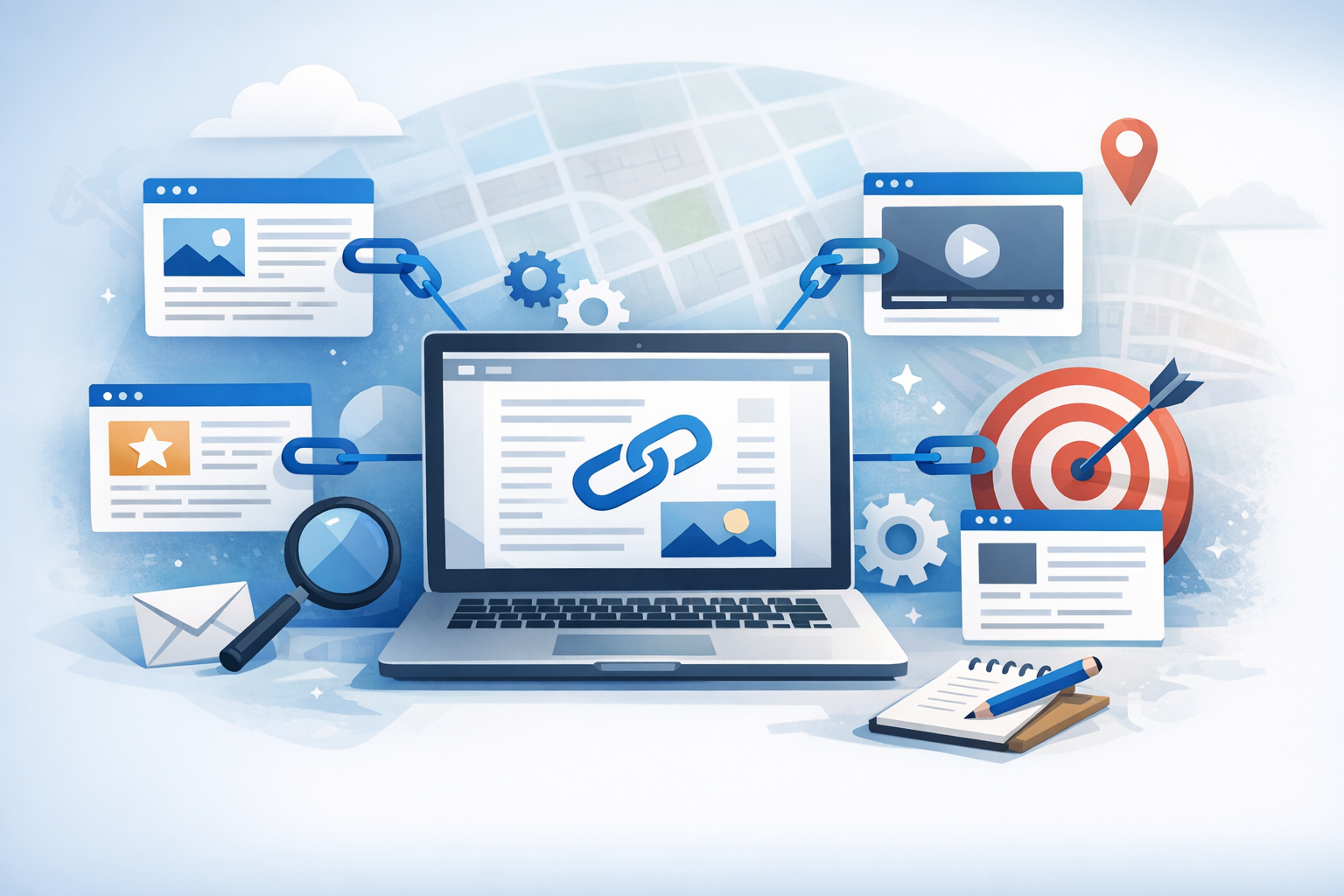
Backlinks—links from other websites pointing to yours—remain one of the strongest signals search engines use to evaluate credibility and authority. But not all links are equal, and building them the wrong way can waste time (or worse, invite penalties). This guide walks you through proven, white-hat ways to create backlinks that support long-term rankings, steady referral traffic, and brand trust.
What Are Backlinks (and Why They Matter)?
A backlink is simply a hyperlink on another site that points to a page on your website. In SEO terms, backlinks act like “votes” or endorsements—especially when they come from reputable, relevant websites.
Backlinks matter because they can:
- Improve search visibility: High-quality links can help your pages rank higher.
- Drive referral traffic: People click links, especially from relevant articles and directories.
- Build authority: Links from respected sources increase trust in your brand and content.
- Help discovery: Search engines can find and crawl your pages faster.
Quality vs. Quantity: What “Good” Backlinks Look Like
One strong backlink from a relevant, authoritative site can outweigh dozens of low-quality ones. When evaluating backlinks, prioritize:
- Relevance: The linking site and page relate to your topic or industry.
- Authority: The site has a solid reputation, strong editorial standards, and real audiences.
- Placement: In-content editorial links typically carry more value than footer or sidebar links.
- Natural anchors: Anchor text (the clickable words) should read naturally, not stuffed with exact-match keywords.
- Traffic potential: A link that sends actual visitors can be as valuable as SEO impact.
Core Principles Before You Start Building Backlinks
Before you begin outreach or content creation, set your foundation. Backlinks are easiest to earn when your site is worth linking to.
Make Your Site Link-Worthy
Ask yourself: “If I found this page on someone else’s site, would I link to it?” Link-worthy pages usually have at least one of these characteristics:
- Original research, data, or insights
- A uniquely helpful tutorial or checklist
- Tools, templates, calculators, or free resources
- Up-to-date, comprehensive guides
- Strong visuals (charts, infographics) that others can cite
Choose the Right Pages to Build Links To
Not every page deserves outreach. Typically, the best targets are:
- “Pillar” guides: Broad, evergreen content that can naturally earn links over time.
- Resource pages: Templates, tools, and downloadable assets.
- High-intent pages: Product/service pages can earn links, but it’s often easier to link-build to informational content and pass value internally.
Proven White-Hat Strategies to Create Backlinks
The strategies below focus on building links ethically and sustainably. They require effort, but they also compound over time.
1) Publish Linkable Assets (The “Earn Links” Approach)
Linkable assets are pages designed to attract citations. Consider creating:
- Original research: Run a survey, analyze public data, or publish industry benchmarks.
- Statistics roundups: Curate and regularly update credible stats (and cite sources).
- Ultimate guides: Deep, structured content that becomes a go-to reference.
- Tools and templates: Simple calculators, worksheets, scripts, or copy-and-paste templates.
Tip: Add “embed” options for charts or infographics with a default attribution link to make referencing easy.
2) Guest Posting (Done the Right Way)
Guest posting still works when it’s editorial, relevant, and valuable. The goal is not to dump a link—it’s to contribute a strong article to a site whose audience fits your niche.
Best practices:
- Target sites that publish high-quality content and have real engagement.
- Pitch specific topics tailored to their readers (avoid generic pitches).
- Link naturally—ideally to a helpful resource, not always a sales page.
- Build relationships for recurring contributions.
3) Link Inserts (Niche Edits) Through Value-Driven Outreach
A link insert is when your link is added to an existing article because it genuinely improves the content. This can be effective when you:
- Find relevant posts that already mention your topic
- Recommend your resource as an additional reference
- Explain exactly where it fits and why it helps readers
Avoid paying for links or pushing irrelevant placements—both are risky and often short-lived.
4) Broken Link Building
Broken link building is a win-win tactic: you help a site fix dead links while earning a backlink to your replacement resource.
- Find pages in your niche with broken outbound links.
- Create (or already have) a relevant replacement resource.
- Email the site owner with the exact broken URL and your suggested replacement.
Tip: This works best when your replacement is truly close in topic and quality (or better).
5) Digital PR and Newsworthy Pitches
Digital PR earns high-authority links by giving journalists and publishers something worth covering. Examples include:
- Data studies or trend reports
- Expert commentary on breaking industry news
- Unique stories (founder journey, customer impact, innovations)
If you can package your story with clear angles, quotes, and data, you’ll increase pickup rates.
6) Resource Page and Directory Links (Selectively)
Not all directories are spammy—some are genuinely useful. Focus on:
- Well-moderated industry directories
- Local business citations (especially for local SEO)
- Professional associations and chambers of commerce
- “Best tools/resources” pages in your niche
Rule of thumb: If the directory exists only for SEO and has thin content, skip it.
7) Partnerships, Testimonials, and Case Studies
Relationships create some of the most natural backlinks. Ideas:
- Provide a testimonial for a tool or vendor you legitimately use (many feature these with a link).
- Publish a case study featuring a partner and ask them to share it.
- Co-create content (webinars, reports, interviews) that both parties promote.
How to Run Backlink Outreach Without Being Spammy
Outreach works best when it’s personalized and helpful. Keep it short, specific, and reader-focused.
What to Include in a Good Outreach Email
- A clear reason you’re contacting them (reference the exact page/article)
- One specific suggestion (where your link fits, what it improves)
- A short description of your resource and why it’s useful
- A polite close with no pressure
Tip: Don’t attach files. Share a single URL and keep the request easy to evaluate.
Follow-Up Etiquette
If you don’t hear back, 1–2 follow-ups are reasonable. After that, move on. A good system beats endless chasing.
What to Avoid: Risky Backlink Tactics That Can Backfire
Some link-building tactics may look tempting because they’re fast, but they’re often low-quality and can harm performance over time.
- Buying links at scale: Especially on unrelated sites or networks.
- Private Blog Networks (PBNs): High risk and often unstable.
- Automated link building: Creates spam footprints.
- Comment/forum spam: Low value and can damage brand reputation.
- Over-optimized anchor text: Too many exact-match anchors can trigger algorithmic issues.
How to Measure Backlink Success
Backlink building should support business goals, not just vanity metrics. Track progress with a mix of SEO and real-world indicators.
Metrics to Watch
- Referring domains: Are you earning links from new, relevant websites?
- Link quality: Are the sites reputable and contextually aligned?
- Referral traffic: Do links send visitors who engage?
- Rankings: Are target pages improving for relevant queries?
- Conversions: Are visitors from referral sources subscribing, booking, or buying?
Don’t Forget Internal Linking
When you build backlinks to a strong informational page, use internal links to guide visitors (and authority) to your product, service, or conversion pages. This helps you turn link-building wins into measurable outcomes.
A Simple Backlink Plan You Can Start This Week
- Pick one linkable asset: A guide, template, tool, or data post that’s genuinely better than what’s already ranking.
- Build a prospect list: 50–100 relevant sites that have covered similar topics.
- Send 10 personalized emails per day: Keep pitches specific and helpful.
- Secure 1–2 guest post opportunities: Prioritize quality over quantity.
- Track results weekly: Links earned, traffic gained, and ranking movement.
Conclusion
To create backlinks that actually move the needle, focus on relevance, value, and relationships. Build pages worth citing, use outreach thoughtfully, and avoid shortcuts that compromise quality. With consistent effort, your backlink profile can become a long-term asset that drives both search visibility and real customers.
