
What Is a Link Building Agency?
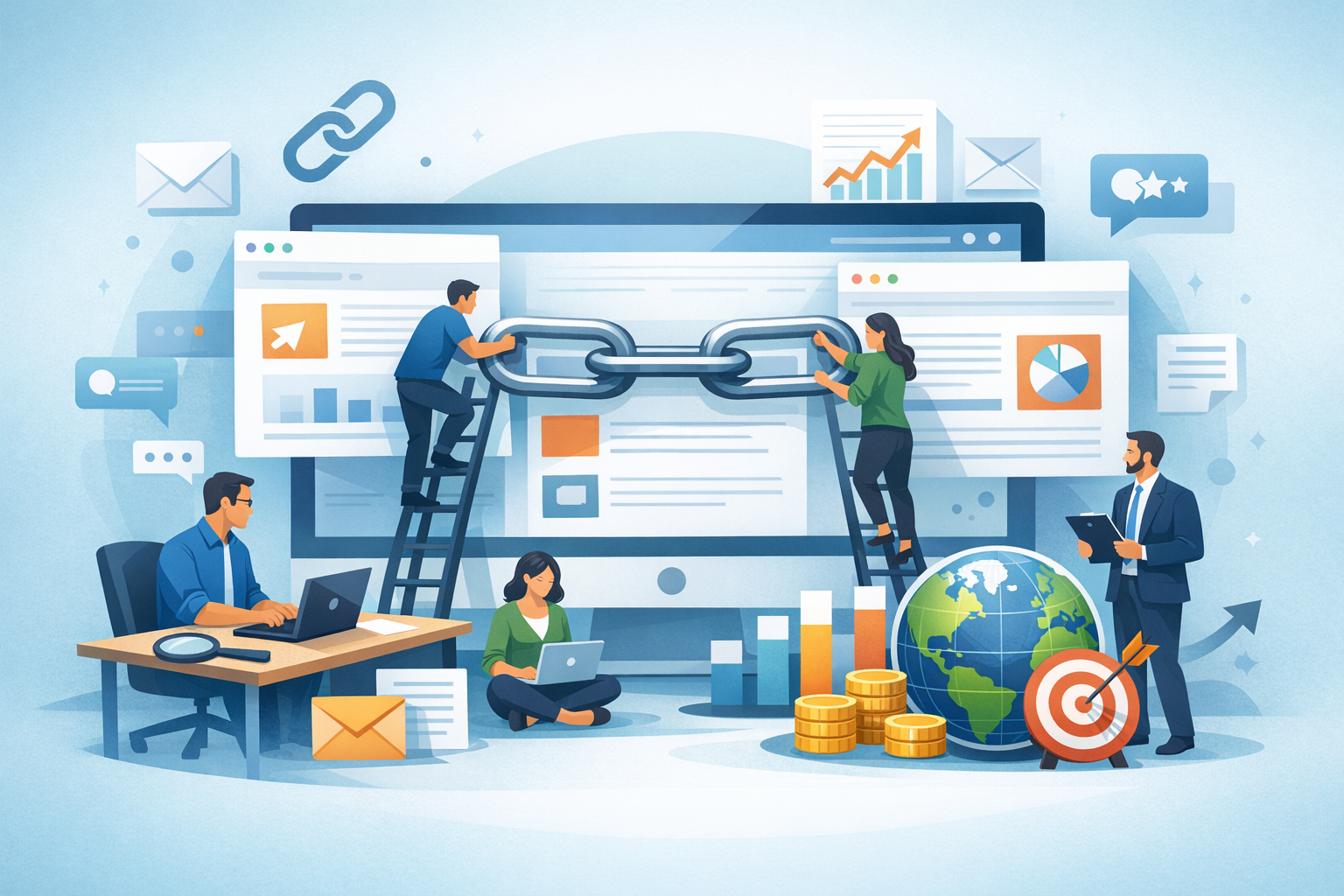
A link building agency is a specialized marketing partner that helps businesses earn backlinks (links from other websites pointing to yours). In SEO, high-quality backlinks act like “votes of confidence” that can improve your site’s authority, visibility, and ability to rank for competitive keywords.
Unlike general digital marketing firms, link building agencies focus on the strategy, outreach, content, and relationship-building required to secure relevant, editorially-placed links. The goal isn’t to collect as many links as possible—it’s to earn the right links from trustworthy sites that actually move the needle for search performance.
Why Businesses Hire a Link Building Agency
Link building is one of the most time-intensive parts of SEO. It requires research, content planning, prospecting, outreach, negotiation, and ongoing quality checks. Many teams hire an agency to speed up results and avoid costly missteps.
Faster access to expertise and processes
Agencies typically have proven frameworks for prospecting, pitching, and securing placements. They also understand what Google considers manipulative versus editorial, helping you avoid risky tactics.
Scalable outreach and relationship networks
Building links at scale often requires systems and relationships that take years to develop. Agencies may already have strong connections with publishers, editors, and industry sites—reducing the time from campaign launch to first placements.
More predictable SEO growth
Technical SEO and on-page improvements are essential, but once your site is optimized, backlinks often become a key lever for moving up in competitive search results. A good agency brings consistency, tracking, and iteration to help you build authority month after month.
Freeing up internal resources
In-house teams are often stretched across content, product marketing, analytics, and paid media. Outsourcing link building can free your team to focus on content quality, conversion rate optimization, and broader growth initiatives.
What a Link Building Agency Actually Does
Not all agencies operate the same way, but most successful ones provide a mix of strategy, execution, and reporting.
Link strategy and planning
This includes defining target pages (money pages and supporting content), setting monthly link goals, selecting anchor text approaches, and aligning links with business priorities like lead gen, ecommerce revenue, or local visibility.
Prospecting and qualification
Agencies build lists of potential linking sites and then qualify them based on relevance, quality, traffic, editorial standards, and likelihood of placement. Quality checks typically include:
- Topical relevance to your niche
- Organic traffic trends (not just “domain metrics”)
- Editorial integrity (real content, real audience)
- Outbound link patterns (not linking to anything and everything)
Content creation and content-led link earning
Many campaigns require new assets—statistics pages, tools, guides, original research, or expert roundups. Agencies may create content in-house or coordinate with your team to produce pieces that naturally attract links.
Outreach and digital PR
This is the relationship work: pitching editors, offering guest contributions, providing expert quotes, or promoting linkable assets. Strong agencies customize outreach rather than sending mass templates, which increases acceptance rates and placement quality.
Placement management and quality control
Once a link is secured, the agency checks that it’s indexed, dofollow (when appropriate), placed in a relevant context, and points to the correct URL with a natural anchor. They also keep an eye on link retention in case pages are updated or removed.
Reporting and performance tracking
Expect reporting that goes beyond “we built X links.” The best agencies tie link building to outcomes such as ranking improvements, organic traffic growth, and conversions. Transparent reports often include:
- Links earned (URL, target page, anchor, date)
- Quality indicators (relevance, traffic estimates, editorial notes)
- Ranking and visibility changes for target keyword sets
- Recommendations for next-month priorities
Types of Link Building Services Agencies Offer
Different tactics work for different industries, budgets, and risk tolerances. A reputable agency will recommend approaches that fit your goals and avoid shortcuts that can create long-term problems.
Guest posting (editorial guest contributions)
Guest posting can be effective when it’s truly editorial—meaning the content is valuable, the site is relevant, and the link is natural within the article. Quality matters more than volume.
Digital PR and HARO-style outreach
Digital PR focuses on earning links through newsworthy stories, data, expert commentary, and journalist outreach. This can generate high-authority links and brand credibility, especially for SaaS, finance, health, and B2B.
Resource page and link insert outreach
Some agencies earn links by suggesting your content as an addition to existing relevant pages. This can be efficient, but it requires careful vetting to ensure the placement is contextually appropriate and not on spammy, low-quality pages.
Broken link building
This tactic finds broken outbound links on other sites and offers your page as a replacement. It can be effective for evergreen topics and content libraries, especially when you have strong, relevant assets.
Content marketing and linkable assets
Creating “link magnets” (original research, free tools, calculators, templates, industry reports) is one of the most sustainable strategies. It often costs more upfront but can generate links over time without constant outreach.
Local citation and niche directory building (when appropriate)
For local businesses, consistent citations can support local SEO. However, this is different from traditional editorial link building, and it shouldn’t be the only strategy for competitive markets.
How to Choose the Right Link Building Agency
The right agency should feel like a strategic partner—clear on goals, transparent on methods, and honest about timelines. Use these criteria to evaluate options.
Look for a quality-first philosophy
Be cautious of agencies that promise a high number of links for a low fee. Cheap links often come from networks, thin sites, or paid placements that can put your domain at risk.
Ask about their link acquisition methods
A good agency can explain, in plain terms, how they earn links and why their approach is safe and effective. If the answer is vague (“proprietary system”) or overly salesy, consider it a red flag.
Review real examples and case studies
Ask for sample placements in your industry (or adjacent ones), and look at the sites themselves. Are they legitimate? Do they have real audiences? Is the content high quality?
Evaluate their reporting transparency
You should know exactly where links are coming from, which pages are being promoted, and what progress is being made. Avoid providers who won’t share placement URLs.
Check for strategic alignment
Link building works best when it supports a broader SEO plan: strong technical foundations, search-focused content, and a clear conversion pathway. The agency should be willing to coordinate with your SEO or content team.
Understand communication and turnaround times
Ask how often you’ll meet, how quickly they respond, and what the typical timeframe is from campaign start to first placements. Clear expectations reduce frustration on both sides.
Pricing Models: What Does a Link Building Agency Cost?
Pricing varies widely based on industry, difficulty, quality standards, and how content-heavy the campaign is. While exact numbers differ, most agencies use one of these models:
Monthly retainer
A set monthly fee for a defined scope (e.g., strategy + outreach + a target number of links). Retainers work well for steady, long-term authority building.
Per-link pricing
You pay for each link earned, sometimes with tiers based on site quality. This can be straightforward, but be sure quality standards are clearly defined so the incentive doesn’t become “quantity at any cost.”
Project-based campaigns
Common for digital PR pushes, linkable asset launches, or one-time competitive initiatives. This can be a good fit if you have a specific goal and timeline.
Hybrid models
Some agencies combine a base retainer with performance incentives, content production fees, or PR campaign add-ons.
Red Flags to Avoid When Hiring a Link Building Agency
Bad link building can damage your site’s reputation and waste budget. Watch for these warning signs:
- Guaranteed rankings: No one can promise specific positions in Google.
- Very cheap, high-volume offers: Often indicates link farms or low-quality networks.
- No transparency: Refusing to show placement URLs or explain tactics is risky.
- Irrelevant links: Links from unrelated sites rarely help and can look unnatural.
- Over-optimized anchors: Excessive exact-match anchors can trigger issues.
- “Private network” language: Suggests PBNs or manipulative tactics.
How to Measure Success with a Link Building Agency
Link building is a means to an end. Define success with a mix of link-level metrics and business outcomes.
Link quality and relevance
Look at topical relevance, organic traffic quality of the linking site, editorial context, and whether the link is likely to drive real referral traffic.
Ranking improvements for target pages
Track keyword movement for the pages you’re building links to (both primary and secondary keywords). Improvements often show over weeks to months, depending on competition.
Organic traffic growth
Measure changes in organic sessions to your target pages and related content clusters. Good links often lift the performance of a broader section of the site.
Conversions and revenue impact
Ultimately, measure leads, sign-ups, purchases, demo requests, or calls. Tie link building efforts to meaningful outcomes using analytics and attribution where possible.
Conclusion
A strong link building agency helps you earn credible, relevant backlinks that support long-term SEO growth—without relying on shortcuts that can backfire. By choosing an agency with transparent methods, quality standards, and reporting that ties links to real business goals, you’ll be in a much better position to build authority, improve rankings, and grow organic traffic steadily over time.
