
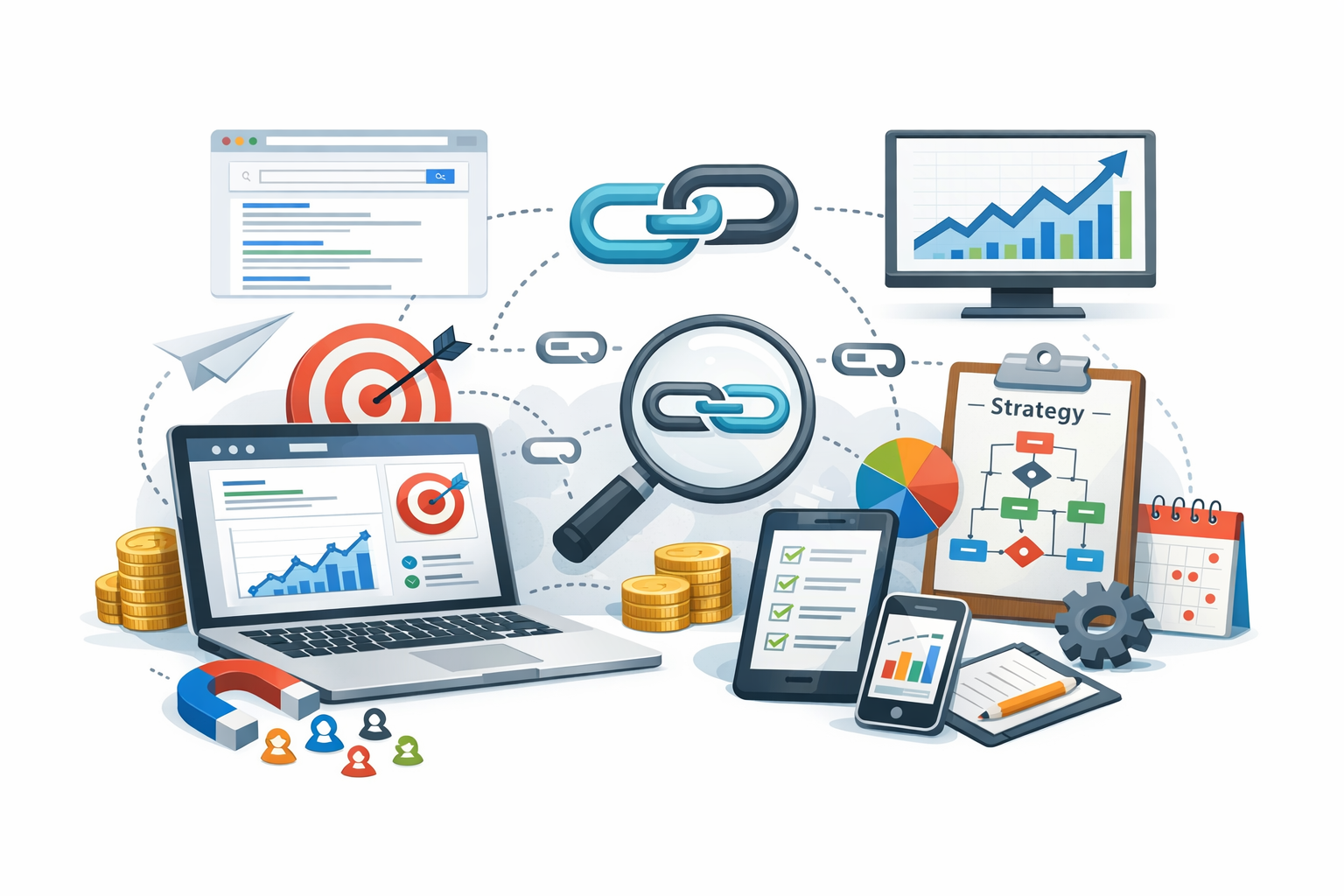
What Is Link Building Management?
Link building management is the end-to-end process of planning, executing, tracking, and improving efforts to earn backlinks from other websites. While “link building” often focuses on tactics (guest posts, digital PR, resource links, and so on), link building management is about ensuring those tactics run smoothly, stay aligned with SEO goals, and deliver measurable impact over time.
Effective management connects strategy to operations: defining what kinds of links you need, coordinating outreach, maintaining quality standards, monitoring performance, and optimizing the workflow as your campaigns scale.
Why Link Building Needs Management (Not Just Tactics)
Without a management layer, link building can become inconsistent and risky—links may be acquired without relevance, anchors may become over-optimized, outreach may be duplicated, or reporting may be unreliable. Solid management helps you:
- Protect quality by standardizing qualification criteria and avoiding spammy placements.
- Increase efficiency with repeatable processes, templates, and clear responsibilities.
- Improve outcomes by prioritizing pages and link opportunities that support business goals.
- Maintain accountability through clear KPIs and transparent reporting.
Core Components of Link Building Management
1) Goal Setting and KPI Alignment
Start with the “why.” Link building can support multiple outcomes, including higher rankings, increased referral traffic, and stronger brand visibility. Goals should be connected to broader marketing and business objectives.
- SEO goals: improve rankings for priority keywords, build topical authority, strengthen internal content hubs.
- Content goals: increase visibility and links to pillar pages, tools, research, or high-converting guides.
- Commercial goals: drive more qualified organic traffic to product/service pages via internal linking from linked assets.
Common KPIs to track include:
- Number of referring domains (new and total)
- Link quality metrics (site relevance, editorial nature, traffic signals)
- Link velocity (steady, natural growth over time)
- Referral traffic and assisted conversions
- Ranking movement for target pages/keywords
2) Target Page and Content Planning
Link building works best when you intentionally choose which pages deserve links. Many teams make the mistake of building links only to the homepage or randomly to new posts. Strong management means creating a clear map of:
- Primary targets: pages that directly support revenue or lead generation.
- Linkable assets: content that naturally earns links (original research, statistics pages, tools, templates, definitive guides).
- Support content: related articles that strengthen topical authority and enable internal linking.
A practical approach is to build links to linkable assets and then use internal linking to pass authority to commercial pages—keeping your backlink profile natural and sustainable.
3) Prospecting and Qualification Standards
Prospecting is where many campaigns either win or waste time. Link building management requires consistent criteria for what counts as a “good” opportunity.
Useful qualification checks include:
- Relevance: Is the site and specific page meaningfully related to your topic or industry?
- Editorial integrity: Does the site publish real content with clear authorship and standards?
- Organic visibility: Does it appear to earn search traffic (a signal of quality and indexation)?
- Outbound link behavior: Are links placed naturally, or is the site clearly selling placements?
- Indexation: Are recent pages indexed and updated?
Document these standards in a one-page checklist so everyone on the team qualifies opportunities the same way.
4) Outreach Workflow and Relationship Management
Outreach is a process, not a one-off email. Link building management involves building a repeatable workflow that increases response rates while keeping communication professional and consistent.
A solid outreach system typically includes:
- Contact discovery: find the right editor/author contact, not just a generic inbox.
- Personalization rules: define what must be customized (e.g., recent article reference) vs. templated.
- Follow-up schedule: a simple sequence (e.g., 2–3 follow-ups) with spacing and clear stop rules.
- Relationship tracking: note site preferences, response history, and successful formats.
Over time, relationship management becomes a competitive advantage. Partners who trust your content are more likely to link again, accept data contributions, or collaborate on co-marketing.
5) Anchor Text and Link Placement Controls
Anchor text and placement matter for both relevance and risk management. A well-managed program sets guidelines to keep anchors natural and varied.
- Anchor mix: prioritize branded, URL, and natural anchors; use exact-match sparingly.
- Context: aim for editorial placements within relevant paragraphs, not footers or unrelated sections.
- Link destination logic: match the linked page to the content context (avoid forcing a commercial page into an informational article).
Having a simple anchor policy prevents over-optimization and helps maintain a safe, credible backlink profile.
6) Tracking, Reporting, and Documentation
Link building management depends on accurate records. At minimum, maintain a live tracker that logs each placement and outreach activity. This reduces duplicate outreach, improves forecasting, and makes performance reporting far easier.
Include fields such as:
- Prospect domain and page URL
- Contact name/email and outreach status
- Target URL on your site
- Anchor text used (or requested)
- Link type (editorial, resource, mention, guest contribution, etc.)
- Date acquired and whether it’s dofollow/nofollow (when visible)
- Notes (negotiation details, content requirements, relationship history)
For reporting, avoid focusing only on “number of links.” Pair volume with quality signals and business impact, such as ranking shifts for target clusters and referral traffic that converts.
Best Practices for Managing Link Building Campaigns
Create a Consistent Monthly Cadence
Link building performs best with steady, consistent activity rather than sporadic bursts. Build a monthly cadence that includes:
- Prospecting and list building
- Outreach waves and follow-ups
- Content production or updates for linkable assets
- Placement tracking and link verification
- Monthly reporting and learnings review
Prioritize Quality Over Raw Volume
One strong, relevant editorial link can outperform dozens of weak placements. Management means establishing what “quality” means for your site and sticking to it, even under pressure to hit link quotas.
Build Systems, Not Heroics
Great link building results shouldn’t depend on one person’s memory or hustle. Document processes, standardize templates, and create checklists so performance remains stable as the team grows.
Keep Content Fresh and Link-Worthy
If you want consistent links, your assets need to earn them. Regularly refresh top-performing guides, expand statistics pages, and update examples. Freshness increases outreach success and helps pages maintain rankings after earning links.
Integrate Internal Linking Into the Plan
Backlinks are most powerful when combined with strategic internal linking. After a page earns links, make sure it passes authority to priority pages through contextual internal links. This is a key management step that many teams overlook.
Common Link Building Management Mistakes to Avoid
Chasing Metrics Instead of Relevance
Over-focusing on a single metric (like Domain Authority-style scores) can lead to irrelevant placements. Relevance and editorial context should be your first filters.
Poor Record-Keeping
If you don’t know who you contacted, what was promised, and where links went live, you’ll waste time and risk repeated outreach to the same sites. A central tracker is non-negotiable.
Over-Optimized Anchor Text
Exact-match anchor repetition is a common risk. A managed anchor strategy keeps your profile natural and resilient.
Ignoring Link Maintenance
Links can disappear due to site updates, content edits, or page removals. Periodically verify key links and reclaim broken or removed placements when appropriate.
Not Connecting Links to Business Outcomes
Links are a means to an end. If reporting stops at “we built X links,” it’s difficult to justify budgets and improve strategy. Tie link acquisition to rankings, traffic, and conversions.
How to Scale Link Building Management
Standardize Your Operating Procedures
Create simple SOPs for prospecting, qualification, outreach, content collaboration, and reporting. The goal is clarity: new team members should be able to contribute quickly without lowering quality.
Use a Tiered Prospecting Approach
Segment prospects by priority:
- Tier 1: highly relevant, high-impact sites (more personalization, relationship focus).
- Tier 2: relevant mid-tier opportunities (balanced personalization and scale).
- Tier 3: broader but still relevant sites (efficient outreach, stricter quality checks).
This helps allocate time where it matters and keeps outreach efficient.
Balance In-House, Freelance, and Agency Support
Scaling often requires additional hands. A managed program can combine:
- In-house strategy and QA to maintain standards and align with business priorities.
- Freelancers for prospecting, outreach support, or content production.
- Agencies for digital PR, large campaigns, or specialized niches—under clear guidelines.
The key is centralized oversight: one system for tracking, one set of standards, and one reporting structure.
Review Performance and Iterate Quarterly
Monthly reporting keeps you on track, but quarterly reviews are where strategic improvements happen. Evaluate which assets earn links most easily, which outreach angles convert best, and where links are driving meaningful outcomes. Then refine targets, templates, and content plans accordingly.
Conclusion
Link building management turns backlink acquisition from a scattered set of tasks into a reliable growth channel. By setting clear goals, qualifying prospects consistently, standardizing outreach, controlling anchors, and tracking results with disciplined reporting, you can earn better links, reduce risk, and scale what works. Treat link building like an ongoing program—not a one-time project—and the compounding benefits to authority, visibility, and organic performance will follow.
