
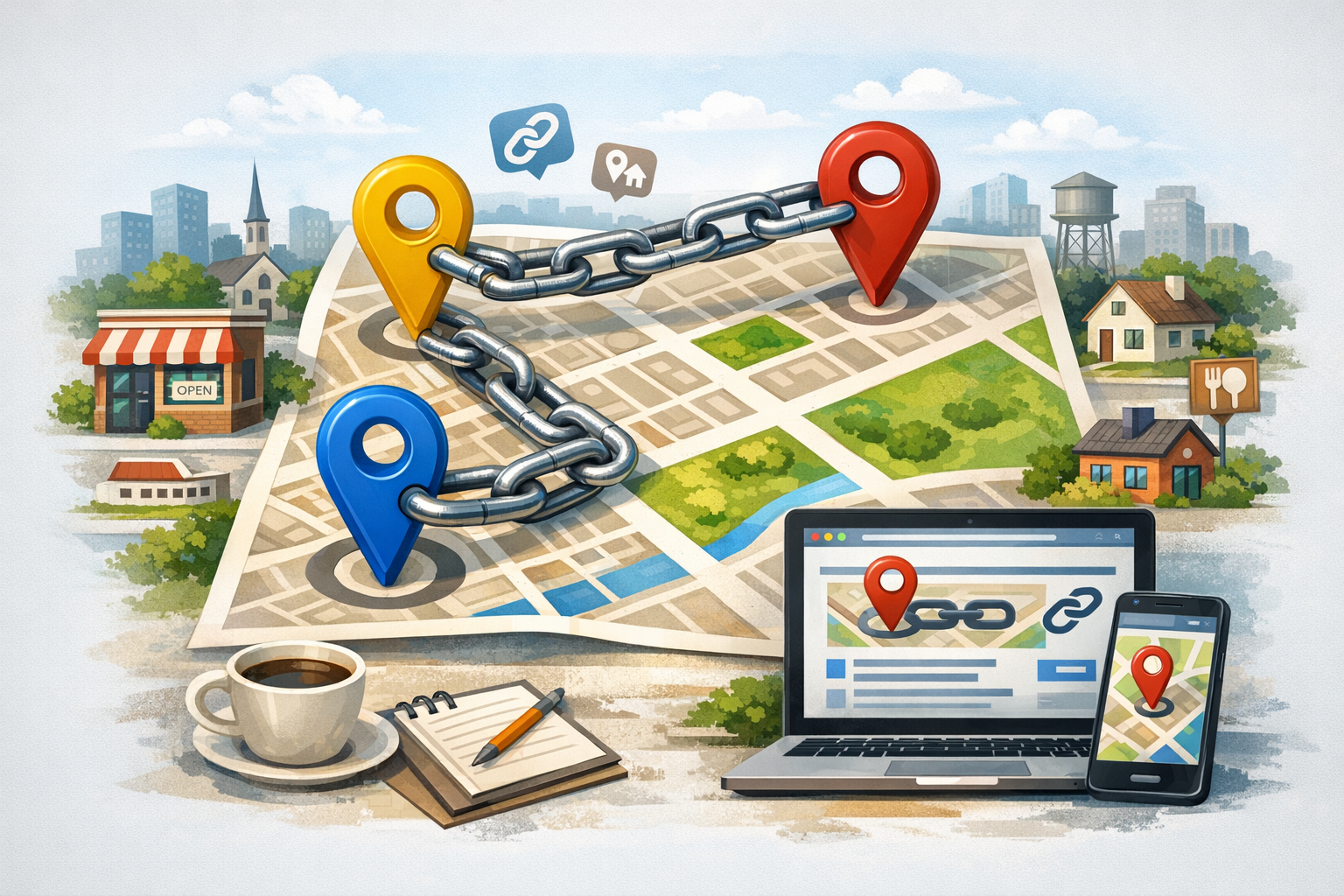
What Are Local Backlinks?
Local backlinks are links to your website from other websites that are relevant to your geographic area or local community. These can include links from local newspapers, chambers of commerce, city directories, neighborhood blogs, nearby schools, event pages, local charities, and regional business associations.
Unlike general backlinks, local backlinks send strong location signals to search engines: they indicate your business is genuinely connected to a specific area. For local SEO, that context is often just as important as raw link authority.
Why Local Backlinks Matter for Local SEO
Local backlinks help search engines understand relevance (what your business does), prominence (how well-known it is), and proximity cues (how connected it is to a place). When combined with a well-optimized Google Business Profile, consistent citations, and strong on-page SEO, local links can significantly improve local pack visibility and organic rankings for “near me” and city-based searches.
They build local authority and trust
When respected local organizations mention and link to you, it’s a trust signal to both users and search engines. A link from a city news site, a neighborhood association, or a well-known local blogger can carry outsized value because it’s contextually aligned with your service area.
They improve relevance for location-based keywords
Local backlinks often appear alongside place names, service descriptions, and topical details (for example, “HVAC company in Austin” or “dentist in North Park”). That surrounding text helps reinforce the connection between your business and your target location(s).
They drive high-intent referral traffic
Local links aren’t only for rankings. A link from an event calendar, “best of” list, or a partner business can send ready-to-buy visitors—people actively looking for local services.
What Makes a Backlink “Local” (and Valuable)?
Not every link from a nearby site is automatically helpful, and not every helpful link must come from a site based in your city. The best local backlinks typically share a few qualities:
- Geographic relevance: The site serves your city, neighborhood, county, or region.
- Topical relevance: The site’s content aligns with your industry (home services, legal, healthcare, hospitality, etc.).
- Editorial context: The link appears naturally within content (not buried in spammy footers or random blog comments).
- Quality and legitimacy: The site has real readers, real content, and a consistent publishing history.
- Accurate NAP context: Mentions that reinforce your name, address, and phone (even if not a formal “citation”) can help establish consistency.
Local vs. national backlinks
National backlinks from major publications can be powerful, but local links frequently punch above their weight for location-based searches. In many cases, a handful of strong local backlinks can outperform a bigger but less geographically relevant link profile—especially in competitive local markets.
Best Types of Local Backlinks to Pursue
To build a sustainable local backlink profile, focus on link opportunities that are earned through real relationships, community involvement, and useful content. Here are some of the best categories to prioritize.
Local business directories (quality over quantity)
Some directories are still worthwhile when they’re curated, local, and actually used by residents. Examples include chamber of commerce directories, tourism sites, downtown association member lists, and reputable local business directories.
Tip: Avoid low-quality “SEO directories” that exist only to sell listings. If the directory looks spammy, has thin content, or contains obviously fake businesses, skip it.
Chambers of commerce and business associations
Membership-based organizations often provide a member profile page with a link. These are typically highly relevant, trusted, and locally authoritative. If you’re not a member, consider joining—not only for the link, but also for networking opportunities that can generate even more local mentions.
Local news sites and publications
Coverage from local media is one of the most valuable local backlink sources. This could be a feature story, a quote in an article, a press release that’s actually picked up, or sponsorship coverage for community programs.
Angle ideas: business milestones, hiring announcements, community initiatives, local data insights, safety tips, seasonal guides, or expert commentary.
Sponsorships and community partnerships
Sponsoring a local sports team, school event, nonprofit fundraiser, or community festival often results in a link from a sponsor page. These links can be both locally relevant and highly trusted—especially when the organization has a strong web presence.
Best practice: Prioritize partnerships you genuinely support. A natural, community-based sponsorship strategy is more resilient and brand-positive than chasing links for their own sake.
Local bloggers, creators, and niche community sites
Neighborhood bloggers, “things to do” sites, local food and lifestyle creators, and city-focused resource sites can provide excellent links and referral traffic. These are especially useful for restaurants, boutiques, gyms, home services, and professional practices.
Collaboration ideas: interviews, guest features, giveaways, “behind the scenes” tours, product/service trials, or expert contributions.
Local schools, universities, and libraries
Educational organizations often maintain community resource pages, event calendars, scholarship listings, internship pages, and local partner directories. If you offer internships, host workshops, provide career talks, or sponsor a scholarship, you may earn a legitimate link from a .edu domain or trusted institution site.
Local events and calendars
If you host or participate in events—grand openings, workshops, free clinics, webinars for the community, pop-ups, or charity drives—local event listings can generate both links and local awareness.
How to Build Local Backlinks (Step-by-Step)
Effective local link building is more about process than one-off tactics. Use the steps below to create a repeatable system.
1) Audit your current local backlink profile
Start by reviewing your existing backlinks to understand what’s already working and where you have gaps.
- Identify your strongest local links (news, associations, partners).
- Find broken links or outdated URLs that need reclaiming.
- Spot suspicious links that could indicate spam or negative SEO.
Tools like Google Search Console, Ahrefs, Semrush, or Moz can help you export and evaluate your backlink profile.
2) Create a local link target list
Build a prospect list of local organizations and websites that make sense for your business. Aim for relevance first, then authority.
- Local media outlets and journalists
- Chamber of commerce and trade groups
- Neighborhood associations and community boards
- Local nonprofits you can support
- Local vendors, suppliers, and complementary businesses
- Event and tourism sites
3) Earn links through real relationships
The most reliable local backlinks often come from people who know your business. Look for partnership opportunities where a link is a natural byproduct:
- Co-host a community event with a partner business
- Provide a quote or quick expert tip for a local article
- Offer a venue, discount, or service for a nonprofit initiative
- Join local networking groups and follow up with member spotlights
4) Publish locally useful content that attracts links
Content is a powerful link magnet—especially when it’s genuinely useful to residents. Consider creating:
- Local guides: “Best neighborhoods for families in [City]” (if relevant), “Home maintenance checklist for [Region] climate,” or “Wedding venue checklist in [City].”
- Local data pages: pricing averages, seasonal trends, or survey results for your city.
- Resource pages: emergency resources, permit links, community hotlines, or vetted local vendor lists.
- Case studies: before/after projects with neighborhood references (as appropriate).
Then promote the content directly to local sites that would benefit from referencing it.
5) Use outreach that’s simple and specific
When you email local site owners, editors, or organization managers, keep it short and clear. Explain why your content or business is relevant to their audience, and make the “next step” easy.
Example outreach (customize it):
Hi [Name],
I’m [Your Name] with [Business] here in [City]. We put together a quick guide on [topic] that includes [unique local angle]. If you think it would help your readers, feel free to reference it here: [URL].
If you’d like, we can also provide a short quote for your next article on [related topic].
Thanks, [Name]
6) Reclaim unlinked brand mentions
Many local businesses are mentioned online without a link (in event recaps, sponsor lists, or local roundups). These are often easy wins. Search for your brand name, variations, and key staff names, then politely request a clickable link where it makes sense.
Common Mistakes to Avoid
Local backlink building can backfire if you chase volume over quality. Avoid these common pitfalls:
Buying links or using private blog networks (PBNs)
Paid link schemes and PBNs can lead to penalties or long-term ranking issues. Even if you see short-term gains, the risk usually outweighs the reward—especially for a local business that relies on consistent leads.
Overusing low-quality directories
Submitting to hundreds of generic directories rarely helps and can create a messy brand footprint. Stick to reputable, locally relevant directories and industry-specific listings that real people use.
Ignoring relevance and context
A link from an unrelated site, in an unrelated article, with no local connection, is unlikely to move the needle. Focus on links that make sense to humans first; search value typically follows.
Using the same anchor text repeatedly
Natural link profiles have variety. Encourage partners to use your brand name, URL, or a natural phrase rather than repeating exact-match keyword anchors like “best plumber in [city]” every time.
How to Measure the Impact of Local Backlinks
Local links can influence both organic rankings and local pack performance, but results often appear gradually. Track progress with a mix of SEO and business metrics:
- Local keyword rankings: monitor city and neighborhood terms (ideally with geo-specific tracking).
- Google Business Profile insights: calls, website clicks, direction requests.
- Referral traffic: see which local sites send visitors and conversions.
- Conversions: form submissions, calls, bookings, quote requests.
- Indexation and crawl signals: in Google Search Console, ensure key pages are being crawled and indexed properly.
Also pay attention to qualitative signals: increased brand recognition in your community, more partnership opportunities, and more inbound requests from local organizations can indicate your local authority is growing.
Conclusion
Local backlinks are one of the most practical ways to strengthen your local SEO because they combine authority, relevance, and community trust. Focus on earning links through real local relationships, reputable organizations, and genuinely useful content. With consistent effort, a strong local backlink profile can improve visibility, increase referral traffic, and bring in more high-intent customers from your area.
