
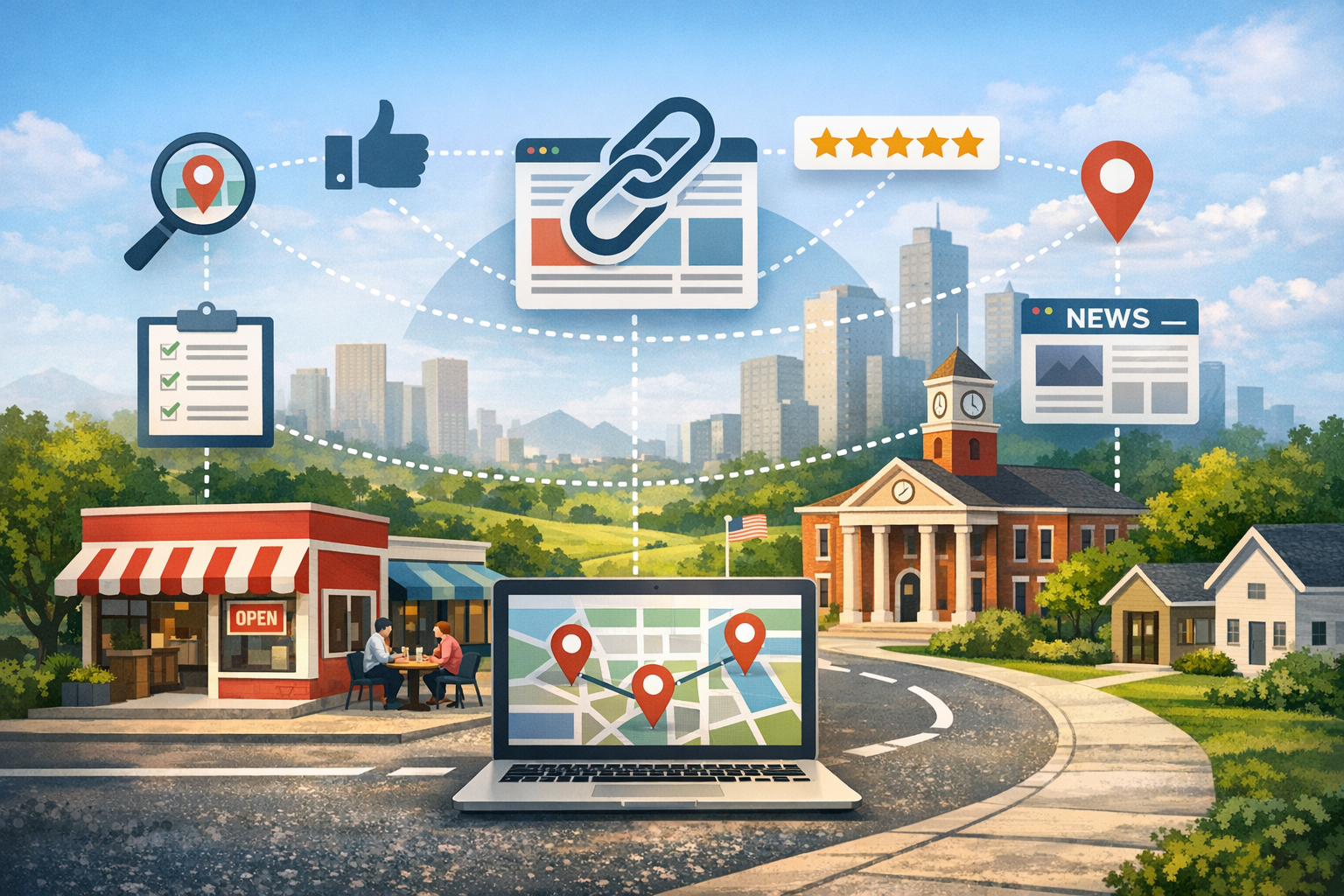
What Is Local Link Building?
Local link building is the process of earning backlinks from websites that are relevant to your geographic area—think local news sites, chambers of commerce, neighborhood blogs, schools, nonprofits, and regional business directories. These links help search engines understand that your business is trusted and established in a specific location, which can improve visibility for local searches like “plumber in Austin” or “best dentist near me.”
Unlike broad, national link building, local link building focuses on relationships and real-world connections. It’s less about chasing massive sites and more about earning mentions where your customers actually live, work, and search.
Why Local Links Matter for Local SEO
Local links are powerful because they reinforce your relevance and prominence in a region. When reputable local organizations link to your site, they act as signals of trust that complement other local SEO factors such as your Google Business Profile, reviews, and on-page location signals.
- Improved local rankings: Quality local backlinks can support better placement in local pack and organic results.
- More referral traffic: Links from local publications and community pages can send ready-to-buy visitors.
- Stronger brand authority: Mentions by recognizable local brands build credibility with customers and search engines.
- Defensible competitive advantage: Local links are often relationship-based, making them harder for competitors to copy.
What Makes a “Good” Local Backlink?
Not all local links are equal. Use these criteria to judge whether a link is worth pursuing:
- Local relevance: The site serves your city/region or has a strong local audience.
- Topical relevance: The site aligns with your industry or customer needs (a home improvement blog linking to a roofing company, for example).
- Editorial placement: Links placed naturally in content (articles, resource pages) are usually stronger than low-quality directory listings.
- Trust and quality: Real businesses, real organizations, real readership—avoid spammy sites with thin content.
- Clean outbound linking: If a site links to anything and everything, your link may carry little value.
Local Link Building Strategies That Work
The best local link building is built on genuine community involvement and useful resources. Here are proven approaches you can implement regardless of industry.
1) Claim and Optimize Core Local Citations
Start with reputable, consistent listings (often called citations). While not every citation is a powerful backlink, a strong foundation helps trust and discoverability.
- Google Business Profile (not a traditional backlink, but essential)
- Bing Places
- Apple Business Connect
- Yelp (industry-dependent)
- Facebook Page
- Industry-specific directories (legal, medical, home services, etc.)
Tip: Ensure your NAP (Name, Address, Phone) is identical everywhere. Inconsistencies can weaken local trust signals.
2) Join Local Business Organizations
Memberships often include a directory profile with a link back to your website and, more importantly, open doors to collaboration.
- Chamber of Commerce
- Downtown business associations
- Local networking groups (BNI chapters, industry meetups)
- Tourism boards (especially for hospitality and attractions)
These links tend to be highly relevant and stable, and they signal that your business is part of the local economy.
3) Sponsor Community Events and Local Causes
Sponsorships can earn you a link on event pages, partner pages, and promotional content. Choose sponsorships that align with your audience and values.
- Charity runs and school fundraisers
- Local sports teams
- Community festivals
- Nonprofit partner pages
Make it count: Ask for a sponsor mention that includes your business name, location, and a link to a relevant page (not always the homepage). For example, a caterer sponsoring a wedding expo could link to a “wedding catering” service page.
4) Earn Local PR Mentions (Digital PR, But Local)
Local journalists and editors are often looking for stories with community impact. Even small announcements can earn coverage and backlinks:
- Grand openings, expansions, and relocations
- Hiring announcements or major milestones
- Unique data or trends you can share (e.g., “most common HVAC issues this summer”)
- Expert commentary on timely local topics
Outreach tip: Pitch a concise email with a clear angle, why it matters locally, and a quick quote they can use. Include a link to a page with supporting details.
5) Create Local Resource Pages People Actually Need
Resource content attracts links naturally—especially if it solves a local problem. Think beyond generic blog posts and create pages that local sites would be proud to reference.
- “Moving to [City] checklist” (great for realtors, movers, utilities)
- “Best parks/trails in [City]” (outdoor brands, physical therapy clinics)
- “Permit requirements in [City]” (contractors, architects)
- “Emergency preparedness guide for [Region]” (insurance, restoration)
Once published, reach out to local bloggers, neighborhood associations, HOAs, and city resource pages that might list your guide.
6) Build Links Through Local Partnerships
Many businesses share customers with complementary local services. Partner pages, co-marketing, or joint events can lead to strong backlinks.
- Photographers + venues
- Gyms + nutritionists
- Roofers + solar installers
- Daycares + pediatric dentists
Simple approach: Create a “Trusted Local Partners” page and invite partners to do the same. Keep it curated—quality over quantity.
7) Offer Scholarships or Educational Support (Ethically)
Local scholarships can earn links from schools and community organizations. The key is to do this responsibly: create something real, valuable, and aligned with your business—never a “link scheme.”
- Partner with a local school program
- Offer internship opportunities and publish a clear program page
- Support trade schools if your business is in the trades
Best practice: Focus on long-term community support. A legitimate program is more likely to earn durable links and positive brand recognition.
8) Reclaim Unlinked Local Mentions
Sometimes your business is already mentioned on local sites without a link. This is one of the quickest wins in local link building.
- Search for your brand name and common variations.
- Identify pages that mention you without linking.
- Reach out politely and request a link for readers’ convenience.
What to say: Keep it short—thank them for the mention, provide the correct URL, and explain that a link helps visitors find you easily.
How to Do Local Link Outreach (Without Feeling Spammy)
Local outreach works best when it’s personal and specific. You’re not mass-emailing strangers—you’re building relationships in your community.
- Use a real person and signature: Emails from “marketing@” can feel generic. A named sender builds trust.
- Reference something specific: Mention an article they published or a local initiative they support.
- Make a clear ask: Suggest exactly where the link could fit and what URL to use.
- Offer value: Provide a quote, a resource, a discount for members, or a co-branded event.
- Follow up once: A single friendly follow-up is usually enough.
Common Local Link Building Mistakes to Avoid
- Paying for low-quality directory links: If it looks spammy, it probably is.
- Over-optimizing anchor text: Natural anchors (brand name, URL, “learn more”) are safer than stuffing keywords.
- Ignoring relevance: A link from a real local site beats a random high-metric site with no connection to your area.
- Building links to the homepage only: Deep links to service, location, and resource pages look more natural and help conversions.
- One-and-done campaigns: Local link building works best as an ongoing habit, not a single project.
How to Track Results and Measure Success
Measure local link building by impact, not just link count. A handful of strong local links can outperform dozens of weak ones.
- Rankings: Track local keyword positions for your primary services and locations.
- Google Business Profile visibility: Monitor calls, direction requests, and website clicks.
- Referral traffic: In analytics, check which local sites send visitors and how those visitors behave.
- Conversions: Calls, form fills, bookings—tie link efforts to business outcomes.
- Link quality: Review new backlinks for relevance and legitimacy, not just metrics.
Conclusion
Local link building is one of the most sustainable ways to strengthen your local SEO because it’s rooted in real community connections. Start with solid local listings, then focus on partnerships, PR, resources, and sponsorships that genuinely serve your area. With consistent effort and a value-first approach, you’ll earn links that boost rankings, drive local traffic, and build long-term trust in your market.
