
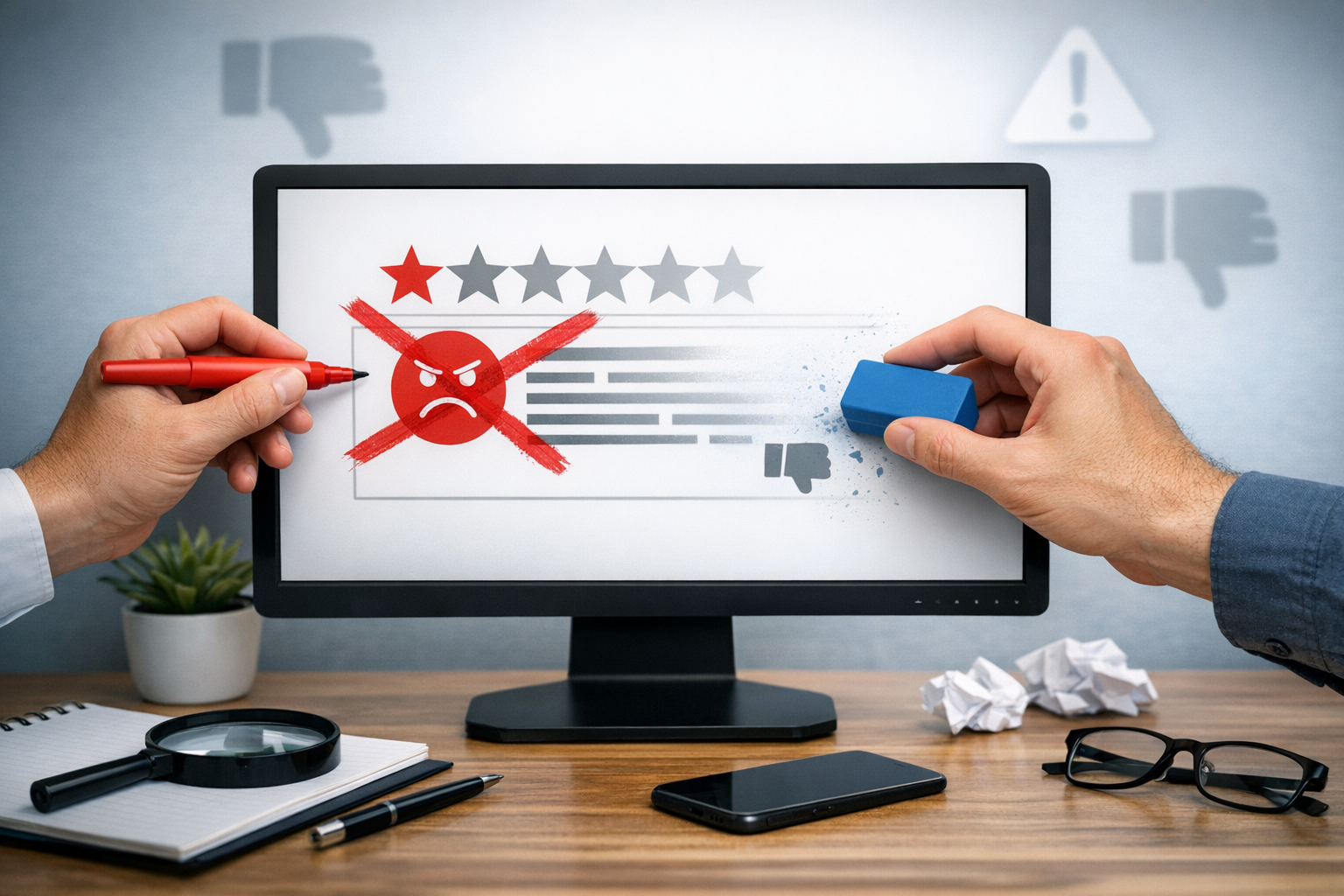
Understanding Negative Review Removal
Negative reviews can feel personal—especially when you’ve worked hard to deliver a great customer experience. But before you rush into “negative review removal,” it helps to understand what removal actually means, when it’s possible, and when the better strategy is response and reputation building.
In most cases, legitimate customer feedback (even if harsh) won’t be removed by Google, Yelp, Facebook, TripAdvisor, or industry-specific platforms. That said, many reviews do violate platform rules and can be taken down when reported properly. The key is knowing how to evaluate a review, what evidence to gather, and which steps to take so you’re using your time effectively.
When Negative Review Removal Is Possible
Review platforms generally remove content that breaks their policies—not content that simply reflects a bad experience. If a review crosses the line into prohibited behavior, you may have a strong case for removal.
Reviews That Violate Platform Policies
Each platform has its own rules, but common policy violations include:
- Hate speech, harassment, or threats directed at staff or owners
- Profanity or graphic language (depending on platform standards)
- Discriminatory comments about protected characteristics
- Personal information (phone numbers, addresses, medical details)
- Impersonation (someone posing as a customer or employee)
- Spam or irrelevant content unrelated to an actual customer experience
If the review clearly fits one of these categories, removal is often possible—though it may still take persistence and proper documentation.
Fake or Fraudulent Reviews
Fake reviews are one of the most common reasons businesses seek negative review removal. Signals a review may be fraudulent include:
- No customer record matching the reviewer’s name, username, or details provided
- The review describes services you don’t offer or events that never occurred
- Multiple reviews posted in a short time with similar wording
- Competitor-like language (pricing comparisons, calls to choose another business)
Platforms may remove fraudulent reviews, but you’ll typically need to explain why it’s fake and provide context that supports your claim—without sharing confidential customer data publicly.
Competitor or Conflict-of-Interest Reviews
Some platforms prohibit reviews from competitors, former employees, or anyone with a conflict of interest. Removal may be possible if:
- The reviewer is a competitor or linked to a competing company
- The reviewer is a current/former employee or contractor (where prohibited)
- The review appears to be part of a coordinated campaign
These can be harder to prove, but evidence such as business affiliations, public profiles, or patterns across multiple listings can help.
Extortion, Blackmail, or “Pay to Remove” Demands
If a reviewer demands money, freebies, or special treatment in exchange for removing (or not posting) a negative review, that’s often a violation. Document any messages and report the review using the platform’s procedures. When possible, keep communication on-platform or in writing so you have a clear record.
When Negative Reviews Usually Can’t Be Removed
It’s frustrating, but many negative reviews are allowed as long as they reflect someone’s opinion or experience—even if you believe they’re unfair.
Honest Customer Opinions
Statements like “service was slow,” “price was too high,” or “I wouldn’t come back” are typically protected opinions. Even if the review is one-sided, platforms generally won’t remove it unless it contains policy violations.
Reviews With Minor Inaccuracies
A review can be “wrong” and still remain live. For example, if a reviewer misremembers dates, staff names, or small details, many platforms treat that as part of normal consumer expression—unless the inaccuracies are substantial and provably deceptive.
Low-Star Ratings Without Text
A one-star rating with no comment can be difficult to challenge. Most platforms allow users to rate without providing details, and removal is rare unless there’s clear evidence of abuse (e.g., mass ratings from bots).
How to Remove Negative Reviews (Step-by-Step)
If you believe a review violates policy, take a structured approach. This improves your odds of success and keeps your efforts organized.
1) Identify the Platform’s Rules
Start by reading the platform’s review policies (Google, Yelp, Facebook, etc.). Look for the exact category the review violates—spam, conflict of interest, hate speech, personal info, and so on. Your report is more effective when it references the correct rule.
2) Gather Evidence (Without Breaking Privacy Rules)
Collect documentation that supports your case, such as:
- Screenshots of the review and the reviewer profile
- Order records or appointment logs showing no matching customer (keep private)
- Messages showing extortion or threats
- Proof of competitor affiliation (public information only)
Avoid posting private customer information publicly in your response—focus on what you can share safely.
3) Flag/Report the Review Through Official Channels
Most platforms offer a “report,” “flag,” or “complain” option. Use it first. Provide a clear explanation of the policy violation and keep it factual. Emotional language can weaken your credibility and distract from the issue.
4) Follow Up and Escalate When Appropriate
If you don’t get a decision within a reasonable timeframe, follow up through business support channels (where available). For some platforms, escalation may include:
- Submitting additional details through support forms
- Requesting a second review of the decision
- Using verified business support or merchant dashboards
Keep a log of dates, case numbers, and responses so you don’t duplicate efforts.
5) Consider Legal Options (Only for Serious Cases)
If a review includes defamatory statements presented as fact, threats, doxxing, or ongoing harassment, it may warrant legal advice. A lawyer can help you determine whether a takedown request, cease-and-desist letter, or other action is appropriate. Legal routes are typically reserved for high-impact situations because they can be time-consuming and costly.
Best Practices When You Can’t Remove a Negative Review
When removal isn’t possible, your public response and long-term review strategy matter even more. Many potential customers read not just the review—but how you handle it.
Respond Calmly and Professionally
A strong response is:
- Polite (even if the reviewer isn’t)
- Brief and easy to scan
- Solution-oriented with a path to resolution
- Non-defensive and free of blame
Example framework:
- Thank them for the feedback
- Acknowledge the concern
- Share a next step (contact info or invitation to resolve)
- Reinforce your standards and desire to improve
Take the Conversation Offline
Offer a clear way to contact you (phone/email) and invite them to discuss details privately. This reduces back-and-forth in public and shows readers you’re willing to make things right.
Address Real Issues Internally
Even unfair reviews can highlight gaps—slow response times, unclear communication, billing confusion, or inconsistent service. Review your processes, train your team, and fix recurring pain points. Then, if appropriate, mention improvements in a future update or response.
Generate More Positive Reviews Ethically
One of the best ways to reduce the impact of a negative review is to earn more positive ones—without incentives that violate platform rules. Practical tactics include:
- Ask happy customers shortly after a successful transaction
- Use a simple follow-up email or SMS with a direct review link
- Train staff on when and how to ask
- Make it part of your customer success process
A steady flow of authentic reviews improves your overall rating and helps one negative comment look like an outlier rather than a trend.
Common Mistakes to Avoid
When dealing with negative review removal, certain actions can backfire and create bigger reputation problems.
Arguing or Exposing Private Information
Public arguments rarely change minds and can make your business look unprofessional. Sharing customer details (even to “prove” you’re right) can violate privacy expectations and platform policies.
Using Questionable “Removal” Services
Be cautious of anyone promising guaranteed negative review removal. Some services rely on risky tactics (fake accounts, mass reporting, or policy manipulation) that can lead to penalties, listing suspensions, or worse. Choose transparent providers who follow platform rules and focus on legitimate dispute processes.
Ignoring Reviews Entirely
No response can be interpreted as indifference. Even a short, professional reply can reassure potential customers that you care and are actively improving.
Conclusion
Negative review removal is possible in clear-cut cases like policy violations, fake reviews, conflicts of interest, and extortion—but many negative reviews will remain if they reflect a customer’s opinion. The most effective approach is a combination of smart reporting, calm public responses, and a consistent plan to earn more positive feedback over time. With the right process, you can protect your reputation and build stronger trust with future customers.
