
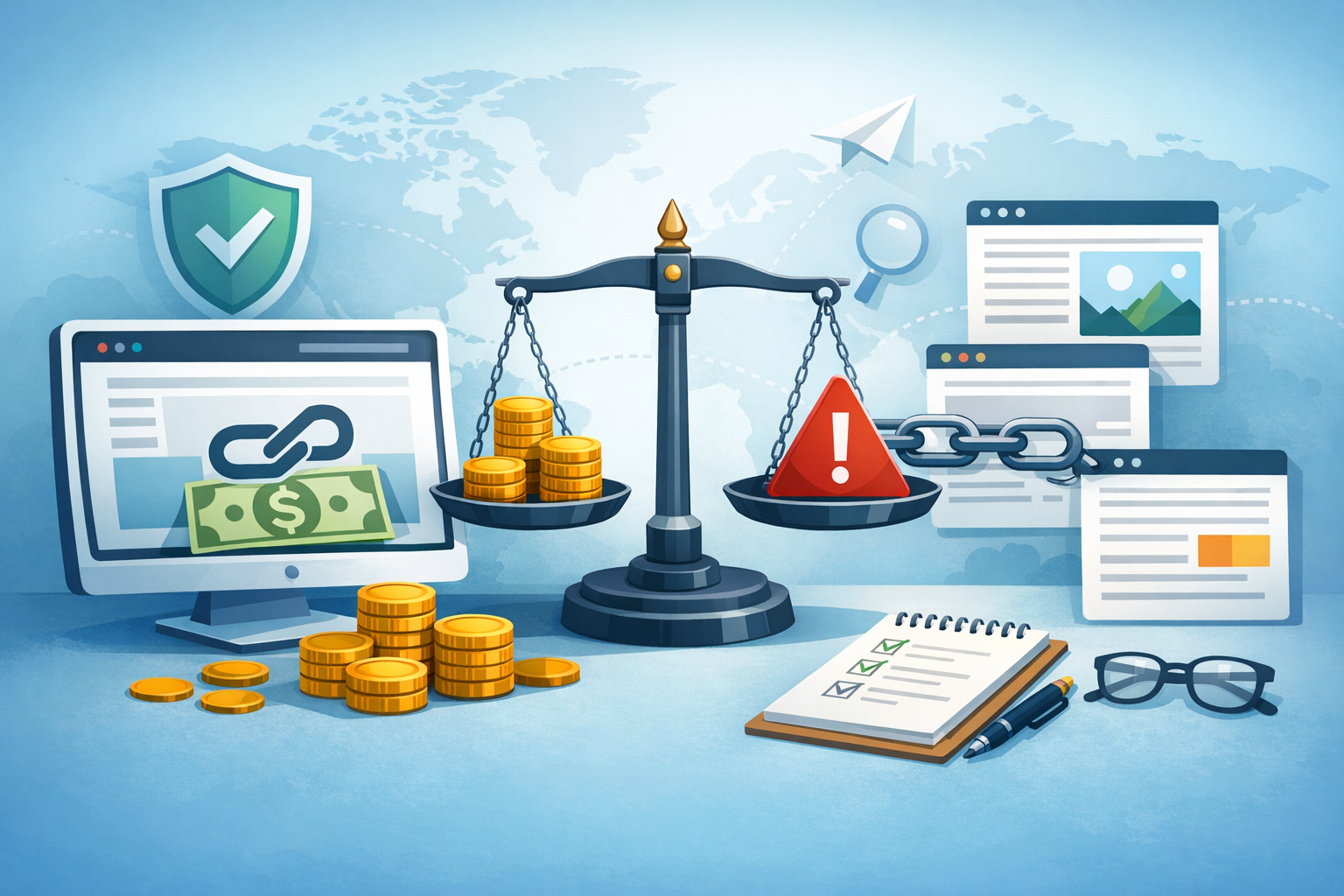
What Is Paid Link Building?
Paid link building is the practice of exchanging money (or something of value) for a backlink to your website. That “something of value” might be a direct payment, a free product, a sponsorship, a service exchange, or any incentive that influences whether a link is placed.
In simple terms: if a link exists primarily because you paid for it, it falls under paid link building. This can range from purchasing a sponsored mention on a reputable publication to buying placements on low-quality sites that exist only to sell links.
Why Businesses Consider Paying for Links
Businesses explore paid link building because links remain a major ranking factor in organic search. High-quality backlinks can improve visibility, drive referral traffic, and build brand credibility. Paid placements can also feel faster and more predictable than earning links through PR, content marketing, or outreach—especially in competitive niches.
How Paid Links Differ From Earned Links
Earned links happen organically because someone chooses to reference your content, product, or expertise. Paid links happen because an incentive influenced the decision to link.
- Earned: editorially given, usually sustainable, and aligns with search engine guidelines.
- Paid: can be legitimate when properly disclosed (e.g., sponsored links) but can also violate guidelines if intended to manipulate rankings.
Is Paid Link Building Against Google’s Guidelines?
Google’s stance is clear: buying or selling links that pass PageRank for the purpose of manipulating rankings violates its spam policies. However, not all paid links are “bad”—the key is whether the link is intended to pass ranking signals without proper attributes and disclosure.
Google’s View on Buying and Selling Links
Google considers certain practices link spam, including paying for dofollow links, exchanging goods/services for links without proper disclosure, or using large-scale guest posting campaigns primarily for links. These can trigger manual actions or algorithmic devaluation.
Understanding nofollow, sponsored, and ugc
Link attributes help search engines understand why a link exists:
rel="sponsored": for links that are advertisements, sponsorships, or paid placements.rel="nofollow": a signal that you don’t want to pass ranking credit through the link.rel="ugc": for user-generated content (forums, comments).
If you’re paying for a placement, using sponsored (or nofollow) is the safest approach to remain compliant.
The Risks: Manual Actions, Algorithmic Devaluation, and Reputation Damage
Paid link building can backfire in three main ways:
- Manual actions: A human reviewer may penalize your site if they detect unnatural links.
- Algorithmic devaluation: Search systems may simply ignore paid/manipulative links, wasting your budget.
- Brand risk: Low-quality sponsored content can harm trust with customers and partners.
Types of Paid Link Building (And How They Work)
“Paid link building” covers a wide spectrum. Some methods are more like legitimate advertising and PR; others are purely manipulative. Understanding the categories helps you make better decisions—and avoid costly mistakes.
Sponsored Content and Advertorials
Sponsored posts are paid articles placed on a publisher’s site. When done well, they can drive relevant referral traffic and brand awareness. From an SEO perspective, the safest approach is to ensure outbound links use rel="sponsored" (or nofollow) and that the piece is clearly labeled as sponsored.
Niche Edits and Paid Insertions
Niche edits (also called link insertions) involve paying to add a link into an existing article. This is attractive because existing pages may already have authority and traffic. The risk is that many niche-edit networks operate in a non-editorial way—links are inserted because money changes hands, not because it improves the content.
Guest Posts with Placement Fees
Some sites charge a “review” or “publishing” fee for guest contributions. Paying a fee doesn’t automatically make it spam, but problems arise when the main purpose is to buy followed links at scale. If a guest post exists primarily for link manipulation, it can become a liability.
Link Building Agencies and Brokers
Agencies and brokers often sell “link packages” based on metrics (Domain Rating/Authority, traffic, niche relevance). Quality varies dramatically. The biggest risk: you may not know where links are coming from, whether the sites are part of a network, or whether the placements are actually editorial.
Private Blog Networks (PBNs)
PBNs are networks of sites built or acquired to link to a “money site.” They can produce short-term results, but they’re high-risk because footprints are detectable, and links may be discounted or penalized. For most brands, the downside outweighs the upside.
Pros and Cons of Paid Link Building
Paid link building isn’t a single tactic—it’s a set of options with trade-offs. The real question is what you’re buying: legitimate exposure or artificial ranking signals.
Pros: Speed, Scale, and Predictability
- Faster placements: Paying can reduce the time needed to secure coverage.
- More predictable output: You can often estimate how many placements you’ll get per month.
- Access to publishers: Sponsorships can open doors that cold outreach might not.
Cons: Risk, Cost, and Diminishing Returns
- Guideline risk: Followed paid links intended to boost rankings can violate policies.
- Wasted spend: Low-quality links may be ignored algorithmically.
- Diminishing ROI: As you scale, maintaining quality and relevance becomes harder.
How to Do Paid Link Building Safely (Best Practices)
If you decide to invest in paid placements, treat them like brand marketing and partnerships first—and SEO second. The goal is to earn value even if the link passes no ranking signals.
Prioritize Relevance and Real Audiences Over Metrics
Metrics like DA/DR can be manipulated. Instead, look for signs a site has a real audience:
- Consistent publishing schedule and original content
- Engaged readership (comments, community, newsletter presence)
- Real organic traffic and rankings for relevant keywords
- Editorial standards (clear authors, bios, and sourcing)
Insist on Transparency and Proper Disclosure
If money changes hands, the relationship should be transparent. Ask publishers about labeling (e.g., “Sponsored”), and request appropriate link attributes such as rel="sponsored". This doesn’t eliminate all SEO value—you can still gain referral traffic, brand lift, and secondary earned links.
Focus on Editorial Value: Would This Link Exist Without SEO?
A helpful litmus test: if the link makes the article more useful to readers, it’s less likely to look manipulative. Aim for links that genuinely support a claim, provide a resource, or improve the user’s understanding.
Vary Link Types and Build a Natural Profile
A natural backlink profile includes a mix of:
- Brand mentions
- Homepage and deep links
- Followed and nofollow/sponsored links
- Different anchor text types (brand, URL, partial match)
If every paid placement uses keyword-rich anchors pointing to money pages, it can raise flags.
Track Outcomes Beyond Rankings
Measure success with more than position changes. Track:
- Referral traffic quality (time on site, conversions)
- Assisted conversions and lead quality
- Brand search lift
- Secondary effects (earned links, social shares, partnerships)
How to Vet Paid Link Opportunities (A Checklist)
Before paying for a link placement, do a quick but thorough review. This helps you avoid spammy sites, link networks, and expensive placements that deliver no real value.
Quality Signals to Look For
- Topical alignment: The site’s theme and audience match your niche.
- Real authorship: Author pages, credentials, and consistent bylines.
- Content depth: Articles that are useful, not thin or duplicated.
- Healthy link neighborhoods: Outbound links point to legitimate sources, not casinos/pharma/payday loans.
- Traffic and indexing: The site ranks for relevant terms and appears regularly in search results.
Red Flags and Common Scams
- “Guaranteed DA/DR” packages: Overemphasis on metrics instead of relevance.
- Sites with obvious footprints: Similar templates, authors, and content patterns across many domains.
- Massive outbound linking: Pages stuffed with unrelated external links.
- Too-good-to-be-true pricing: Extremely cheap links often come from low-quality networks.
- No editorial review: Instant acceptance of any topic/anchor is a warning sign.
Questions to Ask Before You Pay
- Will the post be labeled as sponsored?
- What link attributes will be used (
sponsored/nofollow/follow)? - Will the content be written by the publisher or by you?
- How long will the content remain live?
- Can you see example posts and performance data (traffic, engagement)?
Alternatives to Paid Link Building (Lower Risk, Long-Term)
If you want link growth without the policy and quality risks, there are proven strategies that earn editorial links naturally. They typically take more effort upfront—but they compound over time.
Digital PR and Data-Driven Campaigns
Create newsworthy assets: original research, industry reports, surveys, or expert commentary. Pitch journalists and editors with real angles. These links are typically editorial, high-trust, and resilient.
Linkable Assets (Tools, Guides, Statistics Pages)
Build resources that people actually reference: calculators, templates, free tools, definitive guides, and regularly updated statistics pages. These assets attract natural links because they save others time and improve their content.
Partnerships, Sponsorships, and Community Involvement
Sponsoring events, contributing to scholarships, or partnering with associations can generate real exposure and mentions. Even when links are tagged as sponsored, the brand benefits can be substantial—especially when the audience is a good fit.
Conclusion
Paid link building can deliver visibility and partnerships when approached as sponsored marketing—not as a shortcut to manipulate rankings. If you choose to pay for placements, prioritize relevance, real audiences, and transparency, and measure success by traffic and business outcomes (not just link counts). For most brands, a balanced strategy that combines ethical sponsorships with earned links through PR and linkable assets is the safest path to long-term growth.
