
Introduction
Online reviews can make or break a purchase decision. Whether you’re choosing a restaurant, a software tool, or a local contractor, reviews often act as the fastest shortcut to “Can I trust this?” That’s why review suppression—the practice of limiting or discouraging certain customers from leaving reviews—has become a serious concern for consumers, brands, and platforms alike.
In this guide, we’ll break down what review suppression looks like, why it happens, the risks involved, and what ethical alternatives can help you build trust without manipulating feedback.
What Is Review Suppression?
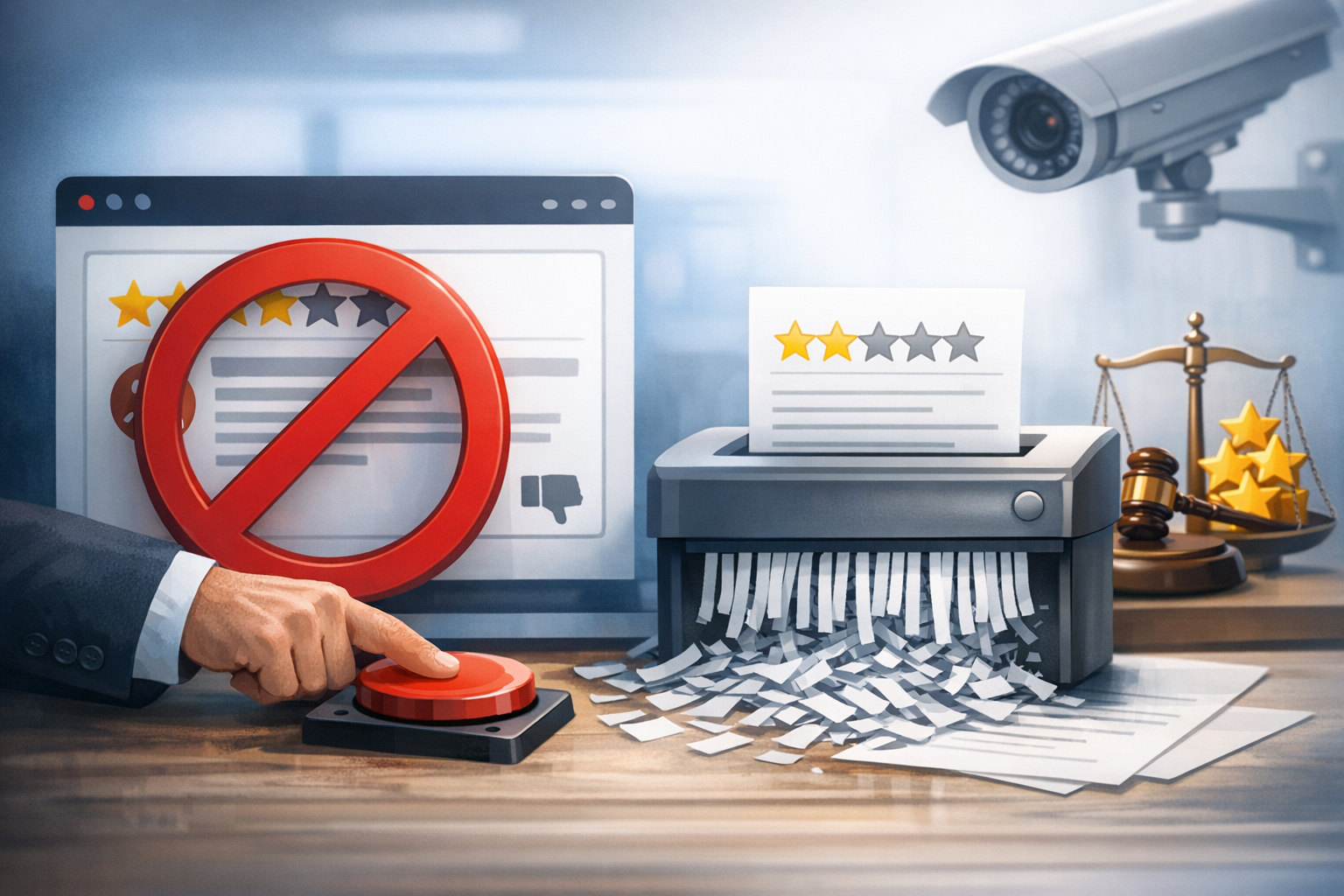
Review suppression is any strategy—intentional or accidental—that reduces the likelihood that some people (often unhappy customers) will post reviews, while allowing or encouraging other customers (often happy ones) to share feedback publicly. The outcome is a skewed online reputation that may look better than the full customer experience actually is.
Review suppression can take many forms. Some are blatant and against platform policies; others are subtle “process choices” that still distort the review landscape.
Common Forms of Review Suppression
- Selective review requests: Asking only satisfied customers to leave reviews while ignoring those who had issues.
- Gating reviews: Using a pre-survey (“Are you happy? Yes/No”) and sending only “Yes” respondents to a public review site.
- Making reviews difficult: Removing links, hiding instructions, or requiring extra steps that reduce follow-through—especially for frustrated customers.
- Pressuring customers: Reaching out to unhappy reviewers to request removal rather than addressing the root problem.
- Incentive imbalance: Offering perks only for public positive reviews (often prohibited), or encouraging customers to “wait” until their issue is resolved before reviewing—without following up equally.
- Filtering through internal channels: Directing complaints into private support pipelines while promoting public review links only to those likely to rate highly.
Why Review Suppression Happens
Most businesses don’t set out to deceive customers. Review suppression often grows out of fear, pressure, and misunderstanding—especially when ratings affect revenue, rankings, and customer trust.
Pressure to Maintain High Star Ratings
Star ratings influence click-through rates, conversion rates, and even local search visibility. A drop from 4.6 to 4.2 can feel catastrophic for a small business, especially in competitive markets. When teams are judged by rating averages, the temptation to “manage” feedback increases.
Misguided Reputation Management
Some marketing playbooks frame negative reviews as something to minimize at all costs rather than signals to learn from. That can lead to tactics like review gating or only sending review requests to customers who “seem happy.”
Operational Overload
When customer support is stretched thin, a business may unintentionally suppress reviews by not following up consistently, not providing clear review pathways, or prioritizing outreach to the easiest cases. The result can still be biased feedback, even without malicious intent.
How Review Suppression Impacts Consumers and Businesses
Review suppression doesn’t just “clean up” a profile—it changes decision-making for real people. Over time, it can also harm the very businesses using it.
For Consumers: Less Accurate Decision-Making
When negative experiences are underrepresented, buyers may choose products or services that aren’t a good fit. That leads to disappointment, returns, disputes, and reduced trust in review platforms overall.
For Businesses: Long-Term Trust Erosion
In the short term, a curated rating can look helpful. But patterns often emerge: customers notice when reviews feel too uniformly positive, too vague, or inconsistent with their experience. Once trust is lost, it’s hard to rebuild.
For Teams: Lost Learning Opportunities
Negative reviews (when legitimate) are free feedback about what’s broken: communication gaps, product defects, unclear expectations, or service issues. Suppressing them removes a key input that could improve operations.
Is Review Suppression Against the Rules?
In many cases, yes—at least when it involves manipulating who can review, incentivizing only positive reviews, or interfering with the integrity of the feedback process. Major platforms commonly prohibit tactics that distort review authenticity.
Even when a tactic isn’t explicitly listed, if it systematically filters out negative reviews, it can violate the spirit (and sometimes the letter) of platform policies.
Platform Policies and Enforcement
Different platforms have different rules, but many share common principles:
- No review gating: Routing unhappy customers away from public review sites.
- No conditional incentives: Rewards offered specifically for positive reviews (or for changing/removing negative ones).
- No intimidation or harassment: Pressuring reviewers to delete feedback.
- No misrepresentation: Fake reviews or reviews posted by employees, affiliates, or others without disclosure.
Enforcement can include removed reviews, profile penalties, ranking drops, or even account suspension—depending on the platform and severity.
Legal and Ethical Considerations
Beyond platform policy, review manipulation can raise legal and regulatory concerns in some regions, particularly if it misleads consumers. Even when a tactic is technically “allowed,” it may still be unethical if it creates a distorted picture of customer experience.
How to Spot Review Suppression (Red Flags)
If you’re a consumer—or a business auditing your reputation practices—here are common signals that suppression may be happening.
Unnaturally High Ratings with Little Detail
A profile filled with short, generic praise (e.g., “Great service!”) and very few moderate or critical reviews can be a sign of selective review collection—though it can also happen organically in some industries.
Sudden Review Spikes After Campaigns
If reviews arrive in large bursts that align with marketing pushes, email blasts, or check-in prompts, it may indicate the business is only soliciting reviews under certain conditions.
Overuse of “We Resolved It—Please Remove” Patterns
It’s normal to ask customers to update a review after a problem is fixed. It’s not normal to treat removal as the primary goal rather than resolution and learning.
Ethical Alternatives to Review Suppression
The best reputation strategy is a strong customer experience paired with a fair, consistent review process. Here are practical alternatives that protect trust and still help you improve ratings over time.
Ask Everyone for Reviews (Not Just Happy Customers)
Use a consistent, automated approach to request reviews from all customers after a clear milestone (purchase delivered, service completed, onboarding finished). Consistency reduces bias and protects credibility.
Use Private Feedback Without Gating Public Reviews
You can collect private feedback to improve operations—just avoid using it to filter who gets a public review link. A better approach is:
- Send one message with two clear options: Leave a public review and contact support.
- Make both options equally visible and easy to use.
- Ensure the public review path is available to everyone, regardless of sentiment.
Respond to Negative Reviews Professionally
Public responses show accountability and can win back trust even when the review stays up. A strong response typically includes:
- A brief apology or acknowledgment of the experience
- A commitment to fix the issue or learn from it
- An invitation to continue the conversation offline (without demanding removal)
Fix the Root Causes That Generate Bad Reviews
If negative reviews keep mentioning the same problems, treat them as a diagnostic tool. Common “root cause” areas include:
- Slow response times
- Unclear pricing or policies
- Inconsistent service quality across locations or staff
- Product quality control or shipping issues
When you reduce friction in the actual experience, ratings often improve naturally—without needing to control the narrative.
Best Practices for Building a Trustworthy Review Strategy
If you want better reviews and stronger trust, focus on transparency and repeatability.
Create a Simple, Compliant Review Request Process
Keep review requests short, timely, and easy:
- Ask soon after the experience, while it’s fresh
- Use one clear link to the review platform
- Avoid loaded language like “Leave us a 5-star review”
- Make sure the process is accessible on mobile
Train Staff on What Not to Do
Many policy violations happen at the front line: a well-meaning employee offers a discount “if you change that review,” or asks only certain customers for feedback. Provide simple guidelines, examples, and a clear escalation path for complaints.
Monitor Trends, Not Just Star Averages
Instead of obsessing over a decimal point in your rating, track:
- Recurring themes in negative feedback
- Response time to reviews
- Volume of reviews over time
- Customer satisfaction and retention metrics
This helps you improve the experience rather than “manage” perception.
Conclusion
Review suppression might seem like a quick fix for protecting a brand’s reputation, but it often backfires—damaging trust, limiting learning, and creating risk with platforms and customers. The most sustainable approach is simple: invite feedback fairly, respond with professionalism, and use criticism as fuel for improvement. In the long run, transparency is the best reputation strategy you can have.
