
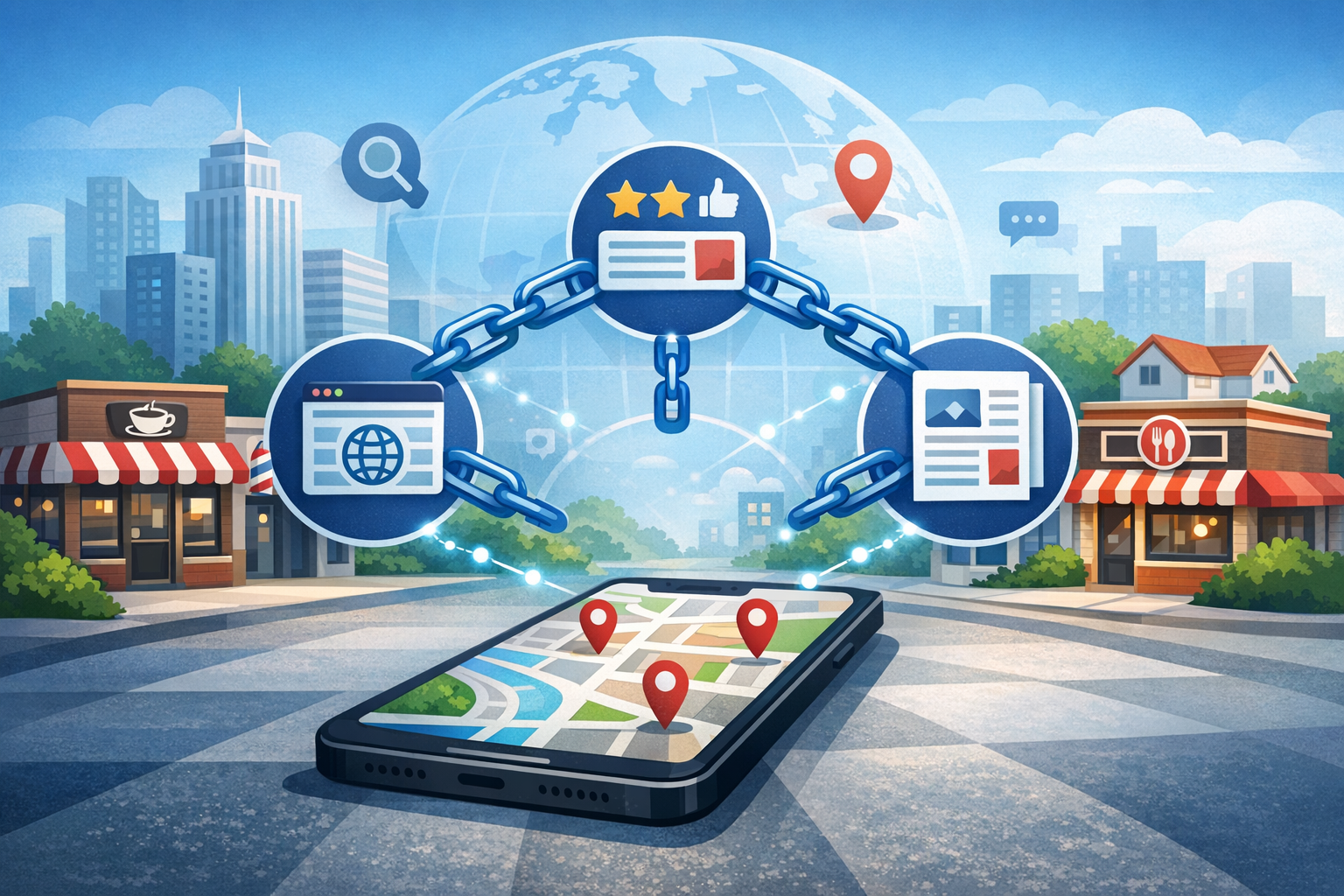
What Is Local SEO Link Building?
Local SEO link building is the process of earning backlinks from websites that are relevant to your location, industry, or community—so search engines better understand your business’s local authority. Unlike general link building, which often targets high-authority sites anywhere on the web, local link building focuses on signals that reinforce where you operate and who you serve.
When reputable local sites link to your business, it can improve visibility in local search results (including the map pack) and drive real referral traffic from people in your area. Done well, it also strengthens trust—both with search engines and with potential customers.
Why Links Matter for Local Rankings
Backlinks remain a strong ranking factor because they function like endorsements. For local businesses, the most valuable endorsements tend to come from sources tied to your community and niche.
- Authority and trust: Quality local links can signal legitimacy and prominence.
- Local relevance: Links from city or regional sites reinforce geographic association.
- Discovery and traffic: People actually click local links—especially from community pages, event calendars, and local press.
- Competitive edge: In many cities, competitors may have similar on-page SEO; local link signals can be a differentiator.
Foundational Local Link Assets to Set Up First
Before outreach, make sure you have “linkable” destinations and consistent business information. This helps you convert opportunities into lasting value.
Optimize Your Core Pages for Linkability
Links are easier to earn when the target page is genuinely useful. At minimum, ensure these pages are strong:
- Homepage: Clear value proposition, service area, and trust elements.
- Location pages: Unique content per location, embedded map, directions, service details, and local FAQs.
- Service pages: Specific services, examples, pricing guidance (if possible), and calls to action.
- About page: Community involvement, team, and business story—great for local press links.
- Contact page: NAP (name, address, phone), hours, and appointment/contact options.
Ensure NAP Consistency and Business Details
Local link building works best when your business information is consistent across your website and the web. Use the same business name format, address formatting, and phone number everywhere. This supports trust and helps reduce confusion when you’re listed (and linked) on local sites.
Create One “Local Resource” Worth Linking To
If you publish a genuinely helpful local resource, outreach gets easier. Examples include:
- A neighborhood guide related to your service (e.g., “Best dog-friendly parks in Austin” for a pet business)
- A seasonal checklist (e.g., “Winter home maintenance checklist for Minneapolis homeowners”)
- A local pricing or permit guide (where relevant)
- A “moving to” or “new resident” guide (useful for real estate, home services, healthcare)
High-Impact Local Link Building Strategies
The most sustainable local links come from relationships, community participation, and useful contributions—not shortcuts. The strategies below are practical for most local businesses.
1) Local Citations and Business Directories (Done Right)
While some directories are low value, the right mix of legitimate local and industry directories can help with visibility and discovery. Focus on quality and relevance:
- Core platforms: Google Business Profile, Apple Business Connect, Bing Places, Yelp (if relevant in your market).
- Industry directories: Trade associations, licensing boards, professional directories.
- Local directories: Chamber of Commerce, city business listings, local tourism sites.
Tips: Avoid spammy “submit to 1,000 directories” offers. Prioritize directories that rank, get traffic, and are edited/maintained. Keep categories and descriptions consistent.
2) Chamber of Commerce, Business Associations, and BIDs
Membership organizations often include a member directory link, and those links tend to be locally relevant and trusted. Consider joining:
- Chamber of Commerce
- Downtown associations or business improvement districts (BIDs)
- Local networking groups with online member profiles
To maximize value, complete your profile thoroughly and look for extra visibility opportunities like sponsorships, speaking slots, or member spotlights.
3) Sponsor Local Events, Teams, and Charities
Sponsorships can earn strong local links while supporting your community. Common options include:
- Youth sports teams
- School fundraisers
- Local 5Ks and charity events
- Community festivals
Best practice: Ask for a link from the event’s sponsor page to a relevant page on your site (often the homepage or a dedicated community page). Keep it authentic—sponsor organizations you actually want to be associated with.
4) Local PR: Pitch Stories, Not Sales
Local newspapers, radio stations, podcasts, and community blogs still influence what people read—and what gets linked. Instead of pitching “We’re the best,” pitch something newsworthy:
- A new location opening
- A unique community initiative
- Data you can share (e.g., local trends you see in your industry)
- Expert commentary on a local issue related to your services
Create a simple press page with your business details, founder bio, photos, and contact information. Make it easy for journalists to reference you and include a link.
5) Partner With Complementary Local Businesses
Local partnerships are one of the most reliable ways to earn relevant links. Look for businesses that serve the same customers without competing with you, such as:
- A wedding photographer partnering with a venue or florist
- A plumber partnering with a remodeling contractor
- A physical therapist partnering with a gym
Ways to create link-worthy collaboration:
- Co-create a local guide or checklist
- Offer a bundled promotion and list each other as partners
- Exchange testimonials (real, specific ones) with a link to the partner’s site
- Host a workshop together and list it on both sites and event calendars
6) Earn Links via Local Resource Pages and “Best Of” Lists
Many local organizations maintain resource pages like “Recommended vendors,” “Local services,” or “Community resources.” These can be excellent link targets. Prospects include:
- Neighborhood associations
- Libraries and community centers
- Universities and alumni pages (where appropriate)
- Local bloggers curating “best of” lists
Outreach tip: Make it about their audience. Explain why your business is a fit and provide the exact URL and short description they can paste in.
7) Local Event Calendars and Community Listings
Running or participating in local events creates natural link opportunities. Even simple events can work:
- Open house
- Free class or demo
- Charity drive
- Seasonal promotion with a community angle
Submit the event to local calendars hosted by news sites, tourism boards, parks departments, and community organizations. These links often drive real traffic close to the event date.
8) Local Scholarships and Grants (Use Carefully)
Scholarships can attract links from schools and community organizations, but this tactic has been widely abused. If you choose to do it, keep it legitimate:
- Offer a meaningful amount and a clear purpose
- Make eligibility criteria reasonable and transparent
- Promote locally (not just “links for SEO”)
- Show winners and outcomes
If it’s not something you’d proudly do without SEO benefits, it’s probably not a great fit.
How to Do Local Link Outreach (Without Feeling Spammy)
Effective outreach is targeted and personal. The goal is to match a genuine opportunity to the right contact—not to blast templates at hundreds of sites.
Build a Target List Based on Relevance
Create a simple spreadsheet with columns for website, contact name, email, type (news, directory, nonprofit, partner), and notes. Prioritize:
- Local relevance: Same city/region or clearly local audience
- Topical relevance: Related to your service or customer needs
- Quality signals: Real content, real organization, real engagement
Write a Short, Helpful Pitch
Keep outreach concise and specific. Mention the page you’re referencing, why you’re a good fit, and what you’re asking for.
Example outreach email:
Hi [Name],
I noticed your [resource page / event page] includes recommendations for [category]. We serve [city/area] and specialize in [specific service].
If you’re still updating the list, would you consider adding us? Here’s the best page to link: [URL]. Suggested description: “[1 sentence description].”
Thanks for maintaining this resource—happy to share it with our customers as well.
Best,
[Name]
Follow Up Once (Then Move On)
A single polite follow-up 5–7 days later is usually enough. If there’s no response, focus on other opportunities. Consistency beats persistence that damages your reputation.
What to Avoid: Local Link Building Mistakes
- Buying links or joining link schemes: Risky and often obvious. Poor-quality links can harm trust.
- Over-optimized anchor text: Repeated “city + service” anchors can look unnatural. Branded and natural anchors are safer.
- Irrelevant directories: If a directory exists only to sell listings, skip it.
- One-and-done campaigns: Local link building works best as a steady monthly habit.
- Linking only to your homepage: When appropriate, earn links to service pages, location pages, and useful resources.
How to Measure Success
Local link building isn’t just about counting links. Track outcomes that connect to visibility and revenue:
- Local rankings: Movement for “service + city” and “near me” terms (track from within your service area if possible).
- Google Business Profile performance: Calls, direction requests, website clicks.
- Referral traffic: Which links send visitors and leads.
- Conversions: Form fills, calls, bookings from referral sources.
- Link quality: Relevance, legitimacy, and whether the page is indexed and maintained.
Conclusion
Local SEO link building works best when it reflects real community presence: partnerships, sponsorships, local PR, and helpful resources. Start with strong on-site pages, pursue locally relevant opportunities, and keep outreach personal and specific. Over time, a steady stream of authentic local links can improve rankings, increase trust, and bring in more nearby customers.
