
What Is Customer Feedback Management?
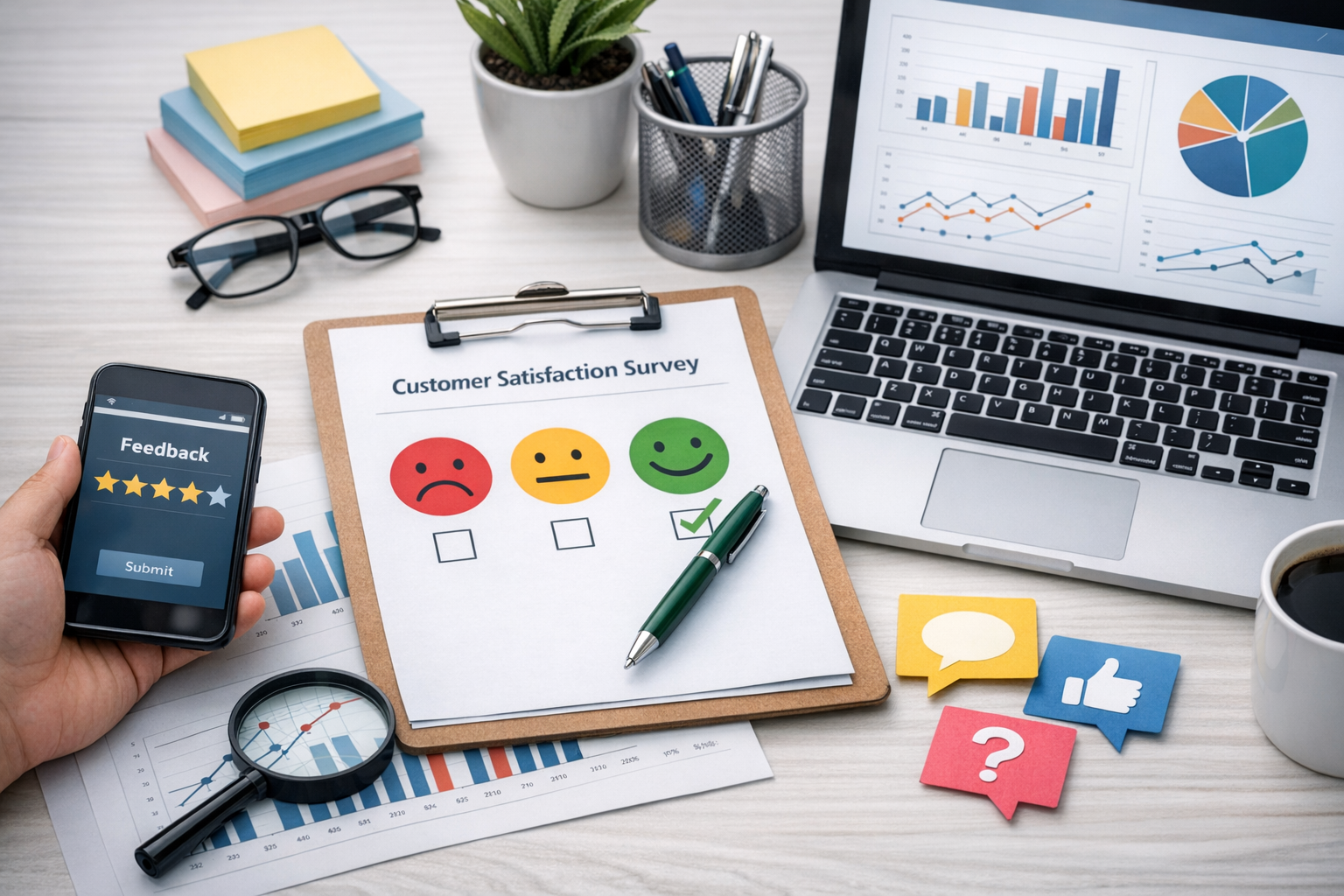
Customer feedback management is the structured process of collecting, organizing, analyzing, and acting on feedback from customers across every touchpoint—then closing the loop by communicating what you changed. It’s more than running a survey once a quarter. Done well, it’s an ongoing system that helps you understand customer needs, reduce churn, prioritize product and service improvements, and build trust.
Feedback can be explicit (surveys, reviews, interviews) or implicit (product usage, support tickets, website behavior). The goal is to turn all of that signal into clear, measurable actions that improve the customer experience and the business.
Why Customer Feedback Management Matters
Customers are already telling you what’s working and what isn’t—through reviews, support conversations, churn reasons, and day-to-day product usage. Managing that feedback intentionally matters because it helps you:
- Improve retention: Fix recurring pain points before they drive customers away.
- Increase customer satisfaction: Address issues that create friction and highlight what customers value most.
- Prioritize smarter: Focus roadmaps and operational changes on the highest-impact needs.
- Strengthen brand trust: “You said, we did” messaging proves you listen and act.
- Reduce support load: Eliminating common problems lowers ticket volume and improves response times.
Most importantly, feedback management turns reactive problem-solving into proactive improvement.
Types of Customer Feedback to Collect
A strong feedback program blends multiple sources so you don’t over-rely on a single channel or a vocal minority. Here are the most common types:
Direct feedback (solicited)
- Customer satisfaction (CSAT) surveys: “How satisfied are you?” typically after support interactions or key moments.
- Net Promoter Score (NPS): Measures loyalty with “How likely are you to recommend us?”
- Customer effort score (CES): Gauges how easy it was to complete a task.
- Interviews and focus groups: Great for depth and context, especially for product discovery.
Indirect feedback (unsolicited)
- Online reviews: G2, Google, Yelp, Trustpilot, app stores, industry forums.
- Social media mentions: Public praise and complaints can reveal trends quickly.
- Support tickets and chat logs: Rich, real-world descriptions of friction.
- Sales notes: Objections and lost-deal reasons highlight gaps and positioning issues.
Behavioral feedback (observed)
- Product analytics: Drop-off points, feature adoption, time to value.
- Website analytics: Pages with high exits, repeated searches, abandoned forms.
- Churn and renewal data: Reasons for leaving, contract downgrades, expansion blockers.
When these inputs align, you can be confident you’re seeing a real pattern—not a one-off complaint.
How to Build a Customer Feedback Management Process
An effective process is repeatable, easy for teams to adopt, and tied to business outcomes. Use the steps below as a practical framework.
1) Define goals and success metrics
Start by clarifying what you want feedback to accomplish. Common goals include reducing churn, improving onboarding, increasing feature adoption, or lifting review ratings.
Pair each goal with measurable outcomes, such as:
- Decrease churn by X% over Y months
- Increase NPS by X points
- Reduce average first response time for support
- Increase onboarding completion rate
2) Map key touchpoints
Identify where feedback will be most useful and least disruptive. Typical touchpoints include:
- After onboarding milestones
- Following support interactions
- After a purchase or renewal
- After feature usage (e.g., first time using a new tool)
- At cancellation or downgrade
This approach prevents survey fatigue and ensures feedback is tied to meaningful moments.
3) Choose feedback channels and tools
Select channels based on your audience and how they interact with you. For example, in-app prompts work well for SaaS products, while SMS surveys can be effective for local services.
Useful tools may include:
- Survey platforms (for NPS/CSAT/CES)
- Help desk software (ticket tagging and reporting)
- Product analytics (behavioral insights)
- Review monitoring tools
- A central repository (CRM, data warehouse, or feedback platform) to unify data
The key is not the toolset—it’s whether feedback ends up centralized, searchable, and actionable.
4) Collect feedback consistently (and ethically)
Consistency matters: if you only collect feedback when something goes wrong, your view will be skewed. Set a regular cadence, define trigger events, and keep requests brief.
Also, be transparent. Let customers know how their input will be used, avoid collecting unnecessary personal data, and respect privacy regulations relevant to your region and industry.
5) Centralize and categorize feedback
Feedback becomes manageable when it’s organized. Create a simple taxonomy to tag and group feedback, such as:
- Category: Billing, onboarding, performance, usability, support, integrations
- Type: Bug, feature request, complaint, compliment, question
- Severity: Low/medium/high impact
- Customer segment: New users, power users, enterprise, SMB
Centralization prevents feedback from getting trapped in individual inboxes or siloed systems.
6) Analyze patterns and prioritize actions
Not all feedback should be treated equally. Look for themes and quantify them where possible:
- How often does this issue appear?
- Which customer segment is affected?
- Does it correlate with churn, low CSAT, or low adoption?
- What’s the estimated effort to fix versus the impact?
A simple prioritization method is to score items by impact (customer value + business value) and effort (time, complexity, risk). High-impact, low-effort items become quick wins; high-impact, high-effort items become roadmap candidates.
7) Close the loop with customers
Closing the loop means following up to acknowledge feedback and share outcomes. This step is where many programs fail—and where trust is built.
- Respond quickly: Even if you can’t fix something immediately, confirm you’ve heard it.
- Be specific: Share what changed, when it will be available, and how it helps.
- Set expectations: If you’re not implementing a request, explain why respectfully.
When customers see their input leading to real improvements, they’re more likely to provide thoughtful feedback again.
8) Share insights internally and assign ownership
Feedback is cross-functional by nature. Create a routine for sharing insights with teams like product, support, marketing, and operations. Then assign clear ownership so action items don’t stall.
Helpful practices include:
- A monthly feedback report with top themes and trends
- A shared backlog of feedback-driven initiatives
- Defined service-level expectations for responding to high-severity issues
Best Practices for Customer Feedback Management
Once your process is in place, these best practices help you get higher-quality insights while keeping the experience respectful for customers.
Keep surveys short and focused
Ask one clear question at a time and avoid lengthy forms. If you need depth, follow up with a small subset of customers for interviews.
Ask at the right moment
Timing improves accuracy. For example, ask a CSAT question right after a support resolution or prompt for feedback after a customer completes onboarding.
Balance quantitative and qualitative input
Scores like NPS and CSAT provide trend visibility, while open-text comments reveal the “why.” Use both to avoid blind spots.
Segment your results
Overall averages can hide problems. Segment feedback by plan type, lifecycle stage, geography, or usage level to uncover meaningful differences.
Reduce bias and survey fatigue
Avoid always sampling the same group. Rotate who receives surveys and make it easy to opt out. Also, be careful not to lead respondents with loaded questions.
Make feedback visible and actionable
Turn feedback into clear items teams can act on—complete with examples, frequency, and customer impact. A quote plus a metric is often more persuasive than either alone.
Common Challenges (and How to Solve Them)
Even well-intentioned programs run into predictable obstacles. Here’s how to handle the most common ones.
Too much feedback, not enough clarity
Solution: Introduce a consistent tagging system, focus on top recurring themes, and use impact/effort scoring to prioritize. Build a “top 10 issues” view that updates automatically.
Low response rates
Solution: Improve timing, shorten surveys, personalize invitations, and explain the benefit of responding. Consider offering optional follow-up interviews for deeper insights rather than adding more survey questions.
Siloed data across teams
Solution: Centralize feedback in a shared system (or integrate your tools) so product, support, and leadership are working from the same source of truth.
No follow-through after collecting feedback
Solution: Assign ownership and deadlines, and make feedback outcomes part of regular team rituals (weekly triage, monthly review). Commit to closing the loop with customers, even when the answer is “not now.”
Conflicting requests from different customer segments
Solution: Prioritize based on strategic fit and segment value. If enterprise and SMB need different workflows, consider configurable options rather than a one-size-fits-all solution.
Conclusion
Customer feedback management works best when it’s treated as a system—not a one-time initiative. By collecting feedback at key touchpoints, centralizing and analyzing it consistently, and closing the loop with customers, you can turn everyday comments into meaningful improvements that increase satisfaction, loyalty, and long-term growth.
